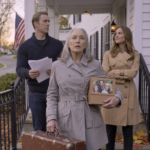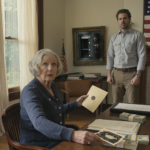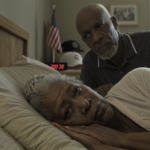
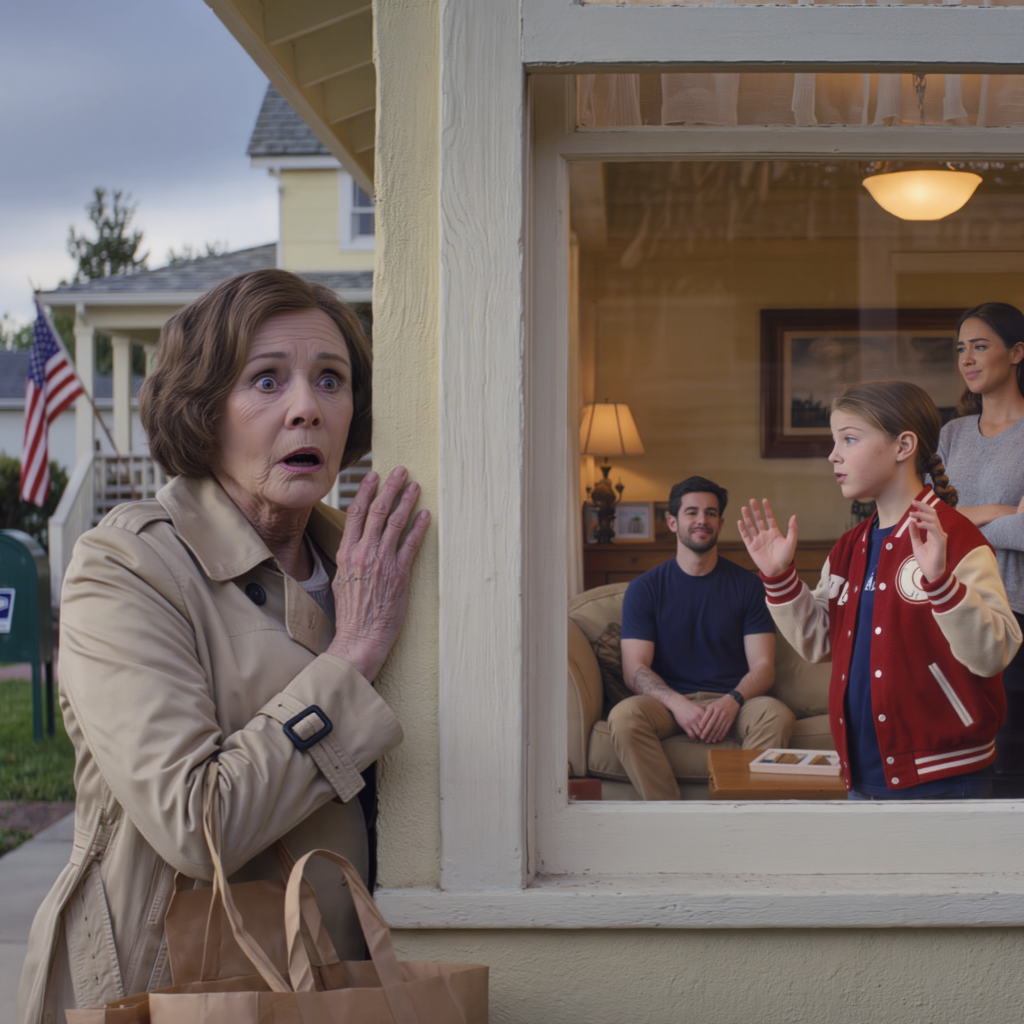
“She ruined our lives, Joel. We’re stuck because of her. I wish she’d just die already.”
That’s what I heard. Clear as crystal, from my own daughter’s mouth, as I walked through the front door with my arms heavy with groceries.
The plastic bag slipped from my hands and thudded to the floor. Eggs cracked, milk leaked, celery rolled under the hall table.
But I didn’t move. I couldn’t.
I don’t know what stunned me more—that Brenda said it, or that Joel just nodded like a man agreeing with the weather report.
They didn’t see me. I stood behind the hallway arch, my heart rattling inside my ribs like a frightened bird.
Joel’s voice joined hers, calm as ever. “It’s not like she’s got much time left anyway. I mean… how long do old ladies live? Another couple years.”
He laughed. Laughed.
“Not if she keeps forgetting her meds,” Brenda muttered. “And I’m not reminding her. If she croaks, that house is ours. It’s what we deserve after all this.”
The sound that came out of me was small. Almost not human.
A breath? A choke? I don’t know.
But they heard it.
Brenda turned, eyes wide. “Mom.”
I didn’t answer.
Joel mumbled something. Brenda took a step forward, then another, like I was a deer she didn’t want to startle.
“Mom, it’s not what it sounded like.”
I bent and picked up a cracked egg. The yolk oozed through my fingers.
Joel scratched the back of his neck. “You shouldn’t sneak around like that.”
That was all he had to say.
I walked past them, yolk dripping from my hand. I didn’t stop to explain, or scream, or cry.
Not then.
I went straight to my bedroom, locked the door, and sat on the edge of the bed.
That house—the one they were so eager to claim—was bought with my nursing wages and my late husband’s union pension.
Every brick in the foundation, every coat of paint on the walls, was earned through sacrifice.
I let them move in when Joel lost his job, back when Kevin was still pretending to take community college seriously.
“Just for a few months, Mom,” Brenda had said, her voice sweet syrup. “Until we’re back on our feet.”
That was four years ago.
I stared at the bedside lamp, its soft amber glow warming the corner of the room.
Brenda hadn’t changed the bulb in three years, even though she passed through this room constantly to do laundry.
Joel had never once offered to help clean or cook.
And Kevin—he didn’t speak unless he wanted a ride or a check.
I listened for footsteps, for an apology, for anything.
They didn’t come.
Instead, I heard the TV click on in the living room, the sound of canned laughter. Some late-night sitcom.
They were done with it already—done with me.
The grocery bags sat out in the hall until midnight.
No one picked them up.
I didn’t sleep. I just sat there bone-stiff, eyes dry.
I thought about all the meals I’d cooked that went cold on the stove when Kevin didn’t show up for dinner.
All the times I turned the heat down in my own room so they’d be more comfortable.
The time I used my Social Security check to cover Joel’s credit card minimum just so his score wouldn’t tank.
I didn’t need to ask myself why they said what they said.
I knew they saw me as furniture, as dead weight, as a checkbook with a slow heartbeat.
At some point in the early morning hours, I whispered aloud, “They want me gone.”
Saying it made it real—more real than I was ready for.
But I also felt something stir. Just the beginning of it.
A small ember. A heat I hadn’t felt in years.
Not grief. Not yet.
Something else.
The knowing.
I didn’t have a plan. Not then.
But I knew something was going to change.
Because for the first time since I was a widow with two jobs and a little girl who called me her hero, I was done being quiet.
I was done being useful.
Done being used.
Let them wonder what’s next.
Let them wonder who I become when I’m no longer their doormat.
Let them wonder just how much fire is left in an old woman’s soul.
I didn’t sleep that night.
My body lay in bed, but my mind—my mind just kept spinning.
I stared at the ceiling, counting every crack in the plaster.
The tiny water stain near the fan looked like a ghost if I let my eyes blur enough.
Funny how I never noticed it before.
Strange what you start seeing once the fog lifts.
They meant every word.
That’s what I kept coming back to.
Not in a fit of anger. Not in some outburst they’d later cry over and beg forgiveness for.
No.
It had been calm.
Planned.
Real.
Brenda’s voice flat and sharp.
Joel’s quiet agreement.
Like they’d talked about it before.
Like they had a timeline.
I thought about the first night they moved in.
I’d made pot roast.
Brenda brought a bottle of wine I’d never heard of, said it paired better than my usual red.
Joel offered to fix the leaky bathroom faucet and never did.
They were grateful at first.
Or pretended well enough.
They promised it was temporary.
But it’s amazing how permanent temporary becomes when you stop pushing back.
Four years later, and somehow I was the guest.
The walls of this house used to hum with life.
Kevin and his sister—before she moved up north—running up and down the hallway.
Brenda baking cookies with me in the kitchen, long before she rolled her eyes at my “antique” recipes.
Joel pretending to care about football just so we could watch together on Sundays.
We’d cheer, curse, drink soda, laugh.
Now I cook and they eat without thanks.
I clean and they dirty without pause.
I offer and they take.
They’ve built a life within mine, and I’ve shrunk into the walls like old wallpaper.
I turned my head toward the nightstand.
An old photo of me and Tom.
My husband, God rest him, smiled back—taken in ’76.
I wore a yellow blouse with daisies, and I’d just passed my RN exams.
He used to say, “Ela can stitch up a wound and make you laugh while doing it.”
He’d never have let this happen.
If he were here, Brenda would never have dared.
But I’m not the woman I used to be.
Or maybe I am.
Maybe I’ve just let too much slide.
Because that’s what we do, isn’t it?
Mothers—we patch holes, smooth edges, make things work even when they don’t deserve it.
Even when it breaks us.
Around 3:00 a.m., I sat up.
My joints groaned in protest, but I didn’t care.
I padded to the window and opened it a crack.
Cool air drifted in, carrying the scent of dew and distant jasmine.
The world outside didn’t care about Brenda’s cruelty.
The crickets chirped.
The streetlamp buzzed.
The universe kept spinning like nothing had happened.
But something had.
Something broke.
I went into the kitchen and, sure enough, there they were.
The bags of groceries I’d dropped hours ago, still sitting where I left them.
Eggs crusted on the floor.
Milk pooling under a crushed cereal box.
No one had cleaned it.
No one had cared.
I cleaned it.
Of course I did.
Still quiet.
Still invisible.
Back in my room, I sat down with a cup of weak tea and tried calling my sister, Diane.
I just needed to hear a familiar voice—someone who remembered me before I became this.
It rang four times before she answered, voice groggy and irritable.
“Elaine, you okay?”
I opened my mouth to speak, but nothing came.
After a pause, I forced it out. “I think something’s wrong.”
She sighed. “You’ve always been too dramatic, Lane. It’s late. Call me tomorrow.”
Click.
That was that.
I didn’t try anyone else.
Later that morning, I didn’t make breakfast.
For the first time in years, I stayed in my room, sipping the same tea long gone cold.
I waited to see if they’d notice.
Brenda passed by once, knocking on the door like I was a tenant.
“Hey, uh… are you making waffles or something? Kevin’s hungry.”
I didn’t answer.
She walked away without a second knock.
No one came back.
No one checked.
By evening, I was still in my robe.
My stomach empty.
My spirit hollower than it had ever been.
That’s when it really hit me.
It wasn’t just what they said.
It was what they didn’t do after.
No apology.
No concern.
Not even a pretend moment of care.
They didn’t miss me.
They didn’t even see me.
I was a ghost in my own home.
But ghosts can haunt.
Christmas used to be my favorite season.
I remember the year Kevin was ten.
The tree nearly scraped the ceiling because Joel insisted we needed a real tree, not one of those plastic ones like his parents had.
Brenda and I spent hours stringing popcorn garland while Kevin lay under the tree with a flashlight, inspecting the underside like it was a secret world.
That year, I made four pies—apple, pecan, sweet potato, and a chocolate cream Kevin asked for specifically.
He drew me a card that said, “World’s Best Pie Grandma,” complete with glitter and a crooked heart.
Back then, Brenda still called me Mom—not Elaine, clipped and cold like she does now.
That name always fell from her mouth like a complaint.
The fridge used to be covered with drawings, school photos, and handprint turkeys.
Now it’s spotless. Sterile.
Nothing but a magnet from Brenda’s wellness retreat in Sedona and a passive-aggressive calendar that says things like Boundaries Are Beautiful.
I whispered to myself that morning, barely above a breath, that life is gone.
I think I always knew.
I don’t know when exactly it began to disappear.
Probably not all at once.
Just little things—small changes that seemed too petty to protest.
Brenda brushing off my meatloaf as “too 1950s.”
Joel rolling his eyes when I asked if Kevin needed a ride.
Kevin snapping, “I’m not five, Grandma.”
It all seemed so harmless at the time.
But now I can see it.
It wasn’t harmless.
It was erosion.
A slow, steady tide wearing away at me until there was almost nothing left—until I didn’t even notice myself fading.
That morning, I stood in the kitchen staring at the empty stove.
No breakfast.
No coffee.
No one seemed to care.
I watched as Brenda rifled through the pantry and grabbed a granola bar for herself, muttering, “Guess we’re fending for ourselves again.”
Kevin slumped into a chair, face buried in his phone.
Joel wandered in barefoot, yawning, and said, “Is there any bacon?”
No one looked at me.
I turned away and went back to my room.
That’s when I opened the old photo box under my bed.
Ten years of birthdays, holidays, camping trips, first days of school.
There I was in every single one.
Behind the cake, beside the car, holding a coat, wiping a nose—always behind, always helping, always giving, and always fading.
Just a little more.
I found the photo from our fortieth wedding anniversary.
Tom had passed just a few months before, but Brenda insisted we still have the party.
“He wouldn’t want us moping,” she’d said.
But she made it about herself like always.
New dress.
New haircut.
Fluttering around guests like a celebrity.
I was in the corner of the photo holding a pie, smiling, yes—but the kind of smile you wear when you know the person you need most isn’t coming back.
Still, I’d held the family together.
I cooked, cleaned, hosted, babysat.
I never asked for anything.
Never said no.
And they loved me for that.
But not now.
Not since I started slowing down.
Not since I became inconvenient.
That’s the cruel part of love that nobody warns you about.
When you’re useful, you’re adored.
When you stop being useful, you become invisible.
I pressed my fingers to the edge of the photo until the paper bent and cracked.
The house was quiet that afternoon.
I don’t think anyone even realized I’d been in my room all day.
That I hadn’t eaten.
That my face was puffy from crying.
I didn’t let them see.
I did the unthinkable.
I skipped dinner.
Didn’t cook.
Didn’t call anyone to the table.
I stayed in my room with the blinds drawn and a blanket across my lap.
I waited to hear some sign that they missed it—that they wondered if I was okay.
But nothing came.
No knock.
No call.
No footsteps.
They ordered pizza.
I heard the delivery guy at the door.
Brenda laughing at something Joel said.
Kevin asking if they got garlic knots.
Plates clinking.
A soda can fizzing open.
And that was the moment something inside me began to truly shift.
It wasn’t a breakdown.
It was something cleaner.
Sharper.
I didn’t cry.
I didn’t rage.
I just listened.
And I knew I wouldn’t be here much longer.
Not like this.
The next morning, I made an effort.
I brushed my hair, put on a blouse that didn’t have soup stains or memories sewn into the sleeves, and added a touch of lipstick.
Not because I expected anything, but because I needed to remember what it felt like to be a woman with intention.
Then I picked up the phone.
First I tried my sister again.
Diane answered after three rings.
“Lane.”
I—my voice cracked on the first word.
I cleared my throat. “I just needed to talk to someone.”
A long pause.
Then a sigh.
“Are you still going on about that little argument? You always were sensitive.”
“It wasn’t little,” I said gently. “Brenda said she wished I would die.”
“Well,” she replied after a beat, “we all say things we don’t mean when we’re frustrated.”
“Joel agreed with her.”
That got her quiet for a second.
Then she said, “Well… you let them live there, didn’t you?”
The way she said it—like it was a footnote in my obituary.
“You let them. So this is your bed. Lie in it.”
I hung up before I could hear anything else.
I stared at the cordless phone for a long time after that.
It was one of those cheap models with big buttons and a little screen that always blinked LOW BATTERY.
Just one of the many things in this house that didn’t work the way it used to.
I wanted connection.
Comfort.
Just someone to say, “You don’t deserve that.”
Instead, all I got was blame.
I thought about calling someone from church.
The women’s circle met every Wednesday, and I hadn’t been in weeks.
I used to bring deviled eggs and hand-embroidered napkins.
They called me Miss Elaine and told me my lemon bars were sinful.
I dialed the number for Denise, a pleasant woman with neat hair and a clipboard always tucked under her arm.
“Elaine,” she said brightly. “It’s been a while. How are you?”
I opened my mouth, but nothing came out.
How do you tell someone that your daughter wishes you were dead?
That your son-in-law nods along?
That you feel more like a ghost than a person?
“I’m fine,” I lied. “Just wanted to say hello.”
We talked about the upcoming bake sale, about who would be bringing what, about how the youth pastor was getting a little too creative with sermon themes.
After five minutes of shallow chatter, she had to go.
Something about a vet appointment for her shih tzu.
That was it.
That was all the world had to offer me in the way of lifelines.
That night, I didn’t make dinner again.
No one came looking for me.
Joel grilled a few hamburgers out back.
Kevin stood in the kitchen, scrolling on his phone, eating directly from the pan.
Brenda passed my door once and said, “Are you still in a mood?”
I said, “Nothing.”
She scoffed and walked away.
They didn’t even notice the leftovers in the fridge were gone.
I’d thrown them out.
All of them.
The soup I made Sunday.
The pot roast from Monday.
The homemade biscuits from the freezer.
All of it into the trash.
It was petty, and it felt good.
That night, I made myself a grilled cheese and sat at the kitchen table alone.
I didn’t feel sad.
Just empty, like I’d pulled the plug on something and was watching it drain away.
After dinner, I walked the length of the hallway and looked at the pictures still hanging on the wall.
Kevin’s first steps.
Brenda’s graduation.
Joel and Brenda on their wedding day—smiling like two people who actually liked each other.
All framed, all placed with care.
None of them included me.
I went into my room and opened the little cedar chest at the foot of my bed.
I hadn’t touched it in years.
Inside were a few keepsakes.
Tom’s Navy pin.
The apron Kevin made for me in second grade.
My nursing license certificate, yellowed and curling at the edges.
There was also a letter—one I wrote but never sent—to myself.
I’d written it after Tom died.
“You are stronger than this moment,” it read. “You have gotten through worse. You will not disappear.”
I read that letter three times.
Then I folded it and tucked it into my pocket.
Because the truth had settled.
No one was coming to save me.
No one was going to say the words I needed to hear.
So I would say them to myself, and I would act accordingly.
There’s something hollow about a sacrifice no one remembers.
That’s what I kept thinking the next day as I sat on the edge of my bed holding the receipts.
Not recent ones, no.
These were tucked in an old envelope—yellowing, brittle.
But I’d kept them like a fool keeps love letters.
Proof that I had once mattered.
The first was for $12,460.
A second mortgage I took out to pay off Joel’s credit cards.
Brenda had come to me in tears, saying they were drowning in debt, that Joel had made a mistake with a bad investment.
I remembered the day like it was yesterday.
Kevin was sixteen and had just crashed Joel’s car into a mailbox.
I’d made a pot of chili, thinking food might soften the tension.
Brenda cried over her bowl.
Joel wouldn’t look at me.
“We just need a little breathing room, Mom,” she’d said. “Just until Joel finds another job.”
That was four years ago.
The second receipt was from the pawn shop.
$1,800 for my grandmother’s diamond ring.
I’d worn it every Christmas for thirty years, passed down through three generations of women.
I sold it to cover Kevin’s startup business expenses.
He wanted to build an app—something about finding the nearest taco truck.
He called it Tac-Go.
It failed in six months.
He never said thank you.
Just told me I didn’t get the vision.
Then there was the Alaska cruise.
I’d been dreaming of it since Tom died.
I used to circle travel ads in the back of Reader’s Digest just to feel like it was possible.
When Brenda called and said they were short for Kevin’s tuition again, I gave her the money I had saved.
Every last penny.
I told myself that’s what mothers do.
We give up things so our children can have better lives.
I believed that down to my marrow.
But you know what I learned?
There’s a difference between giving and being drained dry.
One is love.
The other is survival for everyone but you.
And somewhere along the way, I stopped being a mother and started being a reservoir.
They took and took until there was nothing left to pour.
It was nearly noon when I wandered into the kitchen and saw Kevin sitting at the table, eating cereal from the box.
The milk jug sat wide open in front of him.
“Hey,” I said, trying to keep my voice even. “I need to talk to you.”
He didn’t look up.
“I’m kind of in the middle of something.”
“You’re eating cornflakes,” I said.
He shrugged. “Yeah. What’s up?”
I held the pawn receipt in my hand.
“Do you remember this?”
He blinked at it, confused. “What is that?”
“It’s the money I got when I sold my ring,” I said softly. “To help you.”
He looked annoyed. “Okay. And?”
“And nothing,” I said, stepping back. “Just wanted to see if you remembered.”
He turned back to his phone.
“Look, I didn’t ask you to do that. You offered. Nobody forced you.”
And just like that, my last illusion died.
They didn’t remember because they never valued it in the first place.
I went back to my room, sat on the edge of my bed, and stared at the ring box I’d kept.
Empty now.
Still tucked in the back of my vanity like it held something sacred.
I used to think there was power in quiet love.
That dignity meant not asking for thanks.
Now I see that silence just teaches people how to forget you.
So I opened a notebook—one I used to keep grocery lists in.
I turned to a blank page and wrote, in all caps: THINGS I GAVE UP.
The list was long—longer than I expected.
Not just things.
Parts of me.
My comfort.
My hobbies.
My name.
Mom, they’d called me.
Grandma.
Lady.
But never Elaine.
I wrote until my hand cramped.
Then I flipped to the next page and wrote: THINGS I’M TAKING BACK.
It was a shorter list.
But it was mine.
That night, I didn’t cook.
I didn’t clean.
I didn’t answer when Brenda shouted down the hall, “Did you use up all the laundry detergent again?”
Instead, I opened the old suitcase Tom and I had used on our honeymoon.
The zipper stuck like it hadn’t been moved in years.
It hadn’t.
I didn’t know what I was packing for.
I just knew I wouldn’t stay much longer.
Not with people who couldn’t remember the cost of my love.
I don’t know what made me check the family tablet that night.
Maybe I was looking for a reason.
Maybe I already knew one was there.
It was left on the kitchen counter like it always was.
Kevin had been watching one of those twitchy video game streams, and I guess he forgot to log out.
I only meant to turn it off.
But the screen lit up with a text mid-conversation, blinking at me like an open wound.
“Brenda, if she dies, we can finally sell this dump. We deserve better.”
And right below it, Joel’s response.
“Her life insurance should cover the condo down payment. Just saying.”
I stood there a long time, my hand hovering over the screen.
They didn’t even try to hide it anymore.
The house—they called it a dump.
The one Tom and I built with our own hands.
Brick by brick.
Mortgage by mortgage.
The same one Brenda brought Kevin home to from the hospital when she still cried from gratitude and postpartum hormones.
They wanted it gone.
Wanted me gone.
And they were planning around my death like it was a moving-out date.
I didn’t cry.
My eyes burned, but they stayed dry.
That felt important somehow.
Instead, I took a slow breath—then another.
Then I reached down, turned off the tablet, and left it right where I found it.
No drama.
No confrontation.
They didn’t deserve the sound of my rage.
I walked back to my room with steps so light I barely heard the floorboards creak.
It was 11:07 p.m.
By 11:30, the suitcase was full.
Not of much—just the essentials.
A week’s worth of clothes.
My wedding photo in its silver frame.
The letter from Tom I still kept in my jewelry box.
A small tin of tea bags.
My passport, just in case I remembered how to dream again.
And the notebook—the one that now had three pages of THINGS I’M TAKING BACK.
I laid it on top like a signature.
At 1:45 a.m., I took a final look around my bedroom.
The rose-print curtains I sewed myself back in ’93.
The dent in the carpet where my rocking chair used to be.
The dent in my soul from where I stayed too long.
I didn’t leave a note.
There was nothing left to explain.
No goodbyes to write.
They’d never listened when I was in the room.
Let them sit in the silence.
I sat in the living room, fully dressed, suitcase at my feet, waiting for the world to turn just a bit more.
The clock ticked so loud it felt like it might crack the air.
At 4:30 a.m., I walked out the front door for the last time.
The air was damp and cold, but I didn’t shiver.
The birds weren’t awake yet, and the world felt clean—empty—like it had been waiting for me.
I walked three blocks to the bus stop, dragging my old suitcase behind me.
A woman alone.
Old enough to be ignored.
Invisible enough to be left alone.
Perfect.
When the bus pulled up, the driver raised an eyebrow.
“You sure about this, ma’am?”
“I’m more sure than I’ve been in years.”
He gave a slow nod and took my cash.
I sat in the middle seat.
No one else boarded.
The world outside the windows blurred.
Dim streetlights.
Sleeping houses.
Trees with their arms still bare from winter.
All of it passed in silence.
No calls.
No texts.
No one knew I was gone.
By the time the sun rose, I was halfway to nowhere, clutching my purse and a paper cup of bad coffee.
It tasted like freedom.
I didn’t know where I was going exactly.
Just that I had $2,100 in savings, a retirement card tucked in my wallet, and the name of a senior cooperative I’d once heard about from an old friend.
The bus rocked gently.
My eyes drifted closed for a moment, and for the first time in a long, long time, I slept.
Not out of exhaustion.
Out of relief.
Because I had left, and there was no going back.
I didn’t even realize how heavy the silence had become until I was away from it.
For the first time in years, I could hear myself think.
Not Brenda’s voice snapping from across the kitchen.
Not Joel’s footsteps overhead.
Not Kevin’s music thumping through the walls.
Just the steady hush of the road under the bus wheels and the quiet flutter of my own breath.
I watched the sunrise from the window seat.
Pale gold light pouring across fields I didn’t recognize.
The kind of morning you miss when you’re always too busy cooking someone else’s breakfast.
There were no goodbyes.
And for once, that didn’t feel tragic.
It felt right.
I’d spent decades making myself indispensable only to find out I was disposable.
I gave them everything—my money, my time, my home, my name—and they didn’t even feel the need to hide their betrayal.
They were so comfortable in my sacrifice, so entitled to my love, that they could plan my funeral without flinching.
Well.
Let them open the door and find the empty hallway.
Let them call my name and hear no reply.
Let them stand in the kitchen and realize the fridge is empty, the laundry undone, the bills unpaid.
Let them feel the weight of what they lost.
It took four hours and two transfers to reach the next town.
Nothing special.
Just a place with a small station and a diner that smelled like burnt toast and bleach.
I sat at the corner booth by the window, stirring my coffee until the cream disappeared.
The waitress was young, blonde ponytail, kind eyes.
She brought me a hot plate of scrambled eggs without asking questions.
I liked that.
I liked that no one needed to know who I was or what I’d left behind.
I was just another woman passing through with a suitcase and tired feet.
After breakfast, I walked two blocks to the local library.
I hadn’t been in a library in years.
The smell of paper and quiet purpose hit me in the chest like a song I’d forgotten I loved.
I asked the woman at the desk if I could use a computer for a while.
She handed me a guest pass, smiled, and said, “Take your time.”
I did.
I searched for senior housing within a hundred-mile radius.
Not the fancy kind with fountains and security gates.
Just something clean, safe, and quiet.
A place where I could hear myself think.
A place where no one would shout down the hall if I forgot the mayonnaise.
A place where I could be me—not just Mom, or burden, or problem.
That’s when I saw it.
Sunset Grove Co-op Senior Living.
Shared garden.
Modest rooms.
Community meals.
Not assisted living.
Just living—together.
Independent.
Simple.
Human dignity.
I jotted down the number and called from the library phone.
A woman answered on the second ring.
“Sunset Grove. This is Miriam.”
“Hi,” I said. My voice cracked. “I was wondering if you had any availability for someone quiet.”
There was a pause.
Then her voice—warm like tea and honey.
“We always make room for someone like that.”
She gave me an address.
Two towns over.
A bus could get me there in an hour.
I thanked her.
She said, “Take your time. No rush. We don’t close our doors.”
When I hung up, I realized I was crying.
Not loud.
Not messy.
Just soft tears falling down like rain onto dry earth.
I hadn’t felt kindness in so long that it surprised me.
And it healed something I didn’t know was broken.
Back on the bus, I passed the same fields, the same hills.
But this time, I felt lighter.
I had no plan.
No grand speech.
No vengeance in my pocket.
Just motion.
Just a choice.
I would find a room.
I would breathe again.
I would reclaim whatever pieces of myself hadn’t been stomped flat by years of servitude.
When I arrived, Sunset Grove looked like any other modest complex—vinyl siding, a porch swing, planters full of marigolds.
Nothing fancy.
But the woman who met me at the door—Miriam—looked me in the eye and smiled like she saw me.
And that… that felt like the beginning of something sacred.
The room was small.
Not quaint.
Not charming.
Just small.
A twin bed.
A dresser with a chipped corner.
A little round table by the window.
The radiator clanked when it turned on, and the bathroom smelled faintly of lavender and bleach.
It wasn’t the kind of place I’d ever dreamed about retiring to.
But it was clean.
It was warm.
And it was mine.
For the first three days, I barely spoke to anyone.
I kept to myself, ate crackers for dinner, kept my shoes by the bed and my bag packed—just in case I changed my mind and wanted to leave.
I wasn’t ready to unpack yet.
Not just my suitcase.
All the pieces of what I’d left behind.
Grief isn’t always about death.
Sometimes it’s about survival.
I grieved what I’d given up.
But worse than that, I grieved how easily they let me go.
No one had called.
No one had messaged.
No police.
No “where are you?”
Not even a text from Kevin asking if I’d seen his earbuds.
I’d always believed that my presence mattered, that I was a thread in the fabric of that family holding things together.
Turns out I was just a patch they’d grown tired of.
By the fourth night, the room felt colder.
Or maybe I did.
My hands ached.
My back hurt.
And the blanket I’d brought wasn’t enough.
I stared out the window at the alley behind the building.
A single streetlight flickered over the garbage bins.
A cat wandered through the snowless January slush—lean and indifferent.
The loneliness was different now.
Not sharp and humiliating like it had been in that house.
This was slow.
Dull.
Heavy.
It sat beside me like an old friend I hadn’t seen in a while.
Familiar.
But no less cruel.
I started to wonder if I really was the problem.
Maybe I was too controlling.
Maybe my presence was suffocating.
Maybe Brenda had been right.
Maybe Kevin had been right.
I was alone now, and they were… what?
Free?
Maybe I had been the thing holding them back.
That thought lingered the next morning as I made myself a mug of instant coffee in the shared kitchen.
The spoon clinked against the ceramic, loud in the quiet.
A woman with short gray hair was reading the paper at the other end of the table.
She wore orthopedic shoes and a cardigan that looked hand-knit.
She glanced up.
“You’re the new one.”
I nodded. “Elaine.”
She folded the paper. “You look like someone who doesn’t sleep.”
I huffed a laugh. “That obvious?”
She stood and poured herself another cup, then added a second spoonful of sugar to mine.
“You’ll want that today,” she said.
I didn’t know what she meant, but I took it.
Her name was Mrs. Diaz.
Used to be a nurse, too.
Said we probably met at a shift change twenty years ago at County General.
“I remember faces,” she said. “Not knees.”
Then she pointed to hers and winked.
She didn’t ask why I was there.
That was the kindest part.
She just said, “If you ever want real coffee, I keep a stash in my room. Colombian. I hide it from the rest of these instant-drinking heathens.”
That night, I found a knock on my door just after seven.
It was her.
She had two mugs of that strong, real coffee.
“Couldn’t sleep,” she said. “Figured you couldn’t either.”
We sat on my twin bed and passed the sugar back and forth.
I didn’t tell her everything.
Just said I’d needed to get away.
That my daughter and I weren’t aligned.
She nodded like she knew all about that.
Maybe she did.
Before she left, she looked at me kindly and said, “You know, Elaine… people like us. We’re the fixers. We don’t leave the mess. We clean it. So when the mess is us… well, we don’t know what to do, do we?”
I nodded slowly.
“Just don’t confuse being used with being needed,” she added. “They feel the same, but only one leaves you empty.”
After she left, I sat in the silence and let myself cry.
Not because I was broken.
Because for the first time in a long time, I felt seen.
Three days later, I found myself walking with Mrs. Diaz through the little courtyard behind the building, even though my knees didn’t want me to.
“I don’t garden anymore,” she said, bending stiffly to pull a weed anyway. “But I don’t like seeing things die if I can help it.”
I knew exactly what she meant.
We worked side by side for an hour, clearing dead leaves and dry branches from the soil beds.
No one asked us to.
But something about making space for new things to grow felt like medicine.
“You could plant some of those marigolds,” she said, pointing to a tray near the wall. “Bright little buggers. Hard to kill.”
Like me, I thought.
Later that week, I sat in on a co-op meeting just to listen.
They needed help planning the spring luncheon.
I didn’t raise my hand, but afterward, one of the residents—Evelyn, I think her name was—asked if I’d mind helping with the first-aid table.
“You’re a nurse, right?” she said. “We usually do blood pressure checks for the neighborhood seniors. Basic stuff.”
It startled me how good it felt to say, “Yes, I can help.”
That night, I dug out my old CPR notes and started brushing up.
I found a pamphlet online about fall prevention and started sketching out a little display board in pencil.
I hadn’t created anything in years.
Not a casserole.
Not a calendar.
Not even a holiday card.
For so long, my hands only moved to serve other people’s needs.
But now they were moving for me.
I started sitting outside in the mornings with a thermos of real coffee.
The courtyard was noisy with birds and wind, but it was the kind of noise that made you feel alive.
Not small.
I didn’t miss Brenda’s clipped tone.
Or Joel’s complaints.
Or Kevin’s door slamming for the thousandth time.
What I missed was harder to name.
The idea of family.
The fantasy that I mattered just for being me—not what I could do for them.
But I was learning.
Slowly.
The first time I laughed—really laughed—it surprised me.
One of the younger volunteers spilled an entire pitcher of lemonade across the floor, slipped in it, and ended up flat on her back, giggling like a child.
She wasn’t hurt, thank goodness.
But I couldn’t help it.
This big, belly-deep laugh just burst out of me.
Mrs. Diaz clapped her hands.
“Now that’s a sound I’ve missed.”
And from that moment on, something clicked.
I wasn’t just surviving anymore.
I was starting to live.
The following week, I found an old journal at the bottom of my suitcase.
I opened it and turned to a blank page.
In careful cursive, I wrote: THINGS I KNOW NOW.
It became a ritual.
Each morning after coffee, I’d write one sentence in that journal.
Some were angry.
They were never going to love me the way I needed.
Some were forgiving.
Brenda is broken in ways I cannot fix.
And some were revelations.
Being useful is not the same as being valued.
You don’t owe anyone your silence.
You can leave and still be whole.
I didn’t read back over them.
Not yet.
But I kept writing.
Mrs. Diaz saw me one afternoon and asked if I was working on a novel.
I smiled. “Just trying to remember what I know.”
“We’ll make sure you include the part where old women are tougher than they look,” she said, tipping her head toward a man trying—and failing—to lift a flower pot. “Especially when men forget it.”
She made me laugh again.
One afternoon, I got brave and asked if I could teach a short first-aid class for the local teens who helped out at the co-op.
I expected hesitation—maybe a polite “We’ll think about it.”
But Miriam clapped her hands and said, “Why didn’t you offer sooner?”
That Friday, I stood in front of a folding table with a few basic supplies and five skeptical teenagers.
And for the first time in years, I felt like myself.
I was Elaine again.
Not just someone’s mother.
Not a burden.
Not a ghost.
Elaine.
With a steady voice, a sharp mind, and hands that still knew how to heal.
I went to bed that night with my hair smelling of fresh air and my soul quieter than it had been in years.
I didn’t know what was coming next.
But for the first time in a long time, I was ready.
It was a Tuesday afternoon when I finally said it out loud.
Mrs. Diaz and I were sitting under the big oak tree near the end of the courtyard, watching squirrels scurry like they were late for appointments.
A soft breeze carried the scent of fresh soil and cut grass.
We’d just finished watering the marigolds, and my knees were singing protest, but I didn’t mind.
I was sipping her famous Colombian coffee when I felt the words rise.
“They didn’t love me,” I said.
She didn’t look surprised.
She just turned her head slightly, waiting.
“They used me,” I said a little louder.
All those years—all those meals and checks and babysitting and birthday parties—they weren’t loving me.
They were tolerating me.
As long as I gave.
She nodded like she’d known it all along.
“And… and I let them.”
My voice cracked at the edge.
“I let them because I thought love was doing. I thought if I just did enough, gave enough, stayed quiet enough, they’d see me, appreciate me, love me back.”
Mrs. Diaz didn’t pity me.
She just looked straight at me—calm and steady.
“You’re not the first woman to believe that,” she said. “You won’t be the last.”
I breathed deep, letting the truth settle in.
It didn’t crush me.
Not the way I feared it would.
It freed me.
That night, I wrote it in the journal.
They didn’t love me.
They used me.
And I’m still worthy.
I underlined the last sentence three times.
The next morning, I baked banana bread in the co-op’s shared kitchen and left half the loaf wrapped in foil outside Mrs. Diaz’s door.
The rest I set out for the volunteers, who practically inhaled it.
By noon, I had two requests for the recipe and one shy teenager asking if I’d teach them how to cook.
Real stuff.
Not frozen junk.
Something in me lit up.
Not the old fire of obligation.
Not guilt or duty.
Joy.
I said yes.
The next page in my journal:
Being needed is nice, but being seen is better.
One afternoon, I found myself thinking about the house.
Not with longing.
Not even with anger.
Just clarity.
I hadn’t taken Brenda off the deed after Tom died.
It hadn’t seemed important.
I trusted her.
Now I knew better.
I didn’t want revenge.
But I wanted closure.
So I called a lawyer.
Mr. Gallagher was kind, brisk, and used to working with women who’d waited too long to say enough.
He walked me through every step—removing Brenda’s name from the deed, filing for full ownership, protecting my accounts, rerouting everything through a secure trust.
“I didn’t even know you could do that,” I said, astonished.
He smiled. “You’d be surprised what you can do once you realize you don’t owe anyone an explanation.”
After we finalized the paperwork, he looked at me and said, “Do you want to sell?”
I stared at the folder in my lap.
And slowly… I smiled.
“Yes,” I said quietly. “No notice. No warning. Cash buyer. As cash as they come.”
It took less than two weeks.
The house sold fast—modest as it was, the market had picked up.
I had the funds wired to a new account in my name alone.
No joint access.
No forwarding address.
When the final deposit hit, I sat on the end of my bed in the little room at the co-op, holding the confirmation slip like a golden ticket.
All those years of sacrifice.
All that love weaponized and taken for granted.
I wasn’t getting it back.
But I was getting something better.
Myself.
My life.
That evening, I stood in the bathroom mirror brushing my hair and said it again.
“You’re still worthy.”
My reflection didn’t argue.
The next journal entry came without hesitation.
You don’t have to set yourself on fire to keep others warm.
I tucked the paper into my dresser drawer beside the letter from Tom.
Not because I needed permission from the past.
Because I think he’d be proud.
I could almost hear his voice in that moment—soft, steady.
That’s my girl.
And for the first time in years, I believed it.
The bank teller didn’t blink when I withdrew $10,000 in cash.
She just smiled politely, as if it were normal for a seventy-two-year-old woman to walk out with an envelope thick enough to raise questions.
But I suppose women like me tend to disappear in plain sight.
It felt strange holding it in my hand.
Money I didn’t have to ask permission for, hide in birthday cards, or quietly funnel into someone else’s debt.
Mine.
All of it.
And that was just the beginning.
In the weeks that followed, I made more quiet changes.
Clean ones.
Legal ones.
I canceled the auto-drafts that covered Kevin’s car insurance.
Took myself off Joel and Brenda’s cell phone plan.
Called the life insurance company and updated the beneficiary.
No more vague “family member” listed.
I even updated my will.
Mrs. Diaz helped me find a local legal clinic where a kind woman named Judith sat me down and said, “Tell me what you want to happen, not what you think should happen. What do you want?”
So I told her.
No guilt.
No shame.
No Brenda.
I set aside a small portion for a local scholarship fund for future nurses.
Tom would have liked that.
The rest… well, it was going somewhere quiet.
Somewhere safe.
Somewhere that honored the woman I fought to become.
I mailed a single envelope to the house the day the sale finalized.
No return address.
Inside was a photocopy of the legal deed and the check for the security deposit Brenda had once whined about needing—backdated and marked VOID.
That was it.
No letter.
No note.
Just facts.
Let them figure it out.
Let them scramble and sweat and scream.
They would wake up one morning and realize the keys didn’t work.
The door would be locked.
The bills would be in someone else’s name.
Their safety net had evaporated.
And all without a single raised voice.
I wasn’t angry.
Not anymore.
Anger was heavy.
This felt light—like the first breath after a long winter.
At the co-op, life went on.
I led a few more workshops, taught the volunteers how to wrap sprains, check for signs of a stroke, and make banana bread without burning the bottom.
Mrs. Diaz and I started calling ourselves the Tuesday Team.
She made the coffee.
I made the conversation.
We made a good pair.
Then one morning, my phone buzzed.
I hadn’t changed the number.
I didn’t need to.
They’d be the ones left shouting into the void.
I stared at the screen.
Kevin—seven missed calls.
Brenda—twelve voicemails.
Joel—three emails.
I opened none of them.
But I read the previews.
“Mom, what’s going on?”
“How could you do this to your own family? We’re literally homeless. Is that what you wanted?”
“Kevin sleeping in his car. Don’t you care?”
I sat at the small round table by my window, a cup of tea in my hand, and my journal open beside me.
The sun was rising.
And for the first time in my life, I didn’t answer.
Not out of spite.
Because I didn’t have to.
They never called when I was cooking their meals or covering their bills or washing their sheets.
They only noticed me when I disappeared.
And by then, I was already gone.
My journal that morning read:
Peace isn’t something you’re given. It’s something you take back.
I pressed my hand over the words like a blessing.
Then I went outside.
The marigolds had started to bloom—bright, bold, unapologetic.
Mrs. Diaz was waiting with two mugs in hand.
“You look lighter,” she said.
“I let something go,” I replied.
“Let me guess,” she smiled. “About six feet tall, entitled, and whining on voicemail.”
I laughed, loud and honest.
“They’ll come looking eventually,” she said, handing me my coffee.
“I know.”
“You going to let them in?”
I looked at the steam rising from the cup.
“I don’t think they even know what door they’re knocking on.”
It started slowly.
First, a voicemail from Brenda—her voice brittle and frantic.
“Mom, I’m sure this is a mistake. The realtor says the house is sold. Please call me.”
Then came Joel, polite at first, always the mask wearer.
“Elaine, hey, uh… we’re a little confused here. Can you get back to me?”
By the end of the week, the messages had shifted in tone.
Kevin left three voicemails in a row.
“Grandma, seriously, are you okay? Where are you? Like… you can’t just vanish.”
I sat in the co-op’s little computer room, sipping peppermint tea while checking my email.
Joel had sent four in one day.
Subject: URGENT. PLEASE RESPOND.
“Elaine, we came home from Kevin’s tournament and the locks had been changed. Brenda is beside herself. Did something happen? Why would you do this without talking to us first? Please let us fix this.”
Joel.
Fix this.
I nearly laughed.
Fixing was my job, wasn’t it?
Always had been.
The fixer.
The cook.
The ATM.
The shoulder.
The doormat.
Not anymore.
The co-op’s garden was beginning to wake up with spring.
Daffodils blooming in cracks.
Bees buzzing lazily through the air.
I spent the afternoon helping Mrs. Diaz plant rosemary and sage, my hands in the dirt, grounded.
I didn’t answer any calls.
Didn’t respond to a single message.
And still they kept coming.
Brenda’s voice increasingly unhinged.
“You have no right to do this. No right to sell that house without talking to us after everything we’ve done for you.”
Joel’s text:
“We’re staying at a motel. Do you have any idea how much that’s costing?”
Kevin’s email.
Subject line all caps.
“WTF GRANDMA.”
Their world was crumbling, and all I had done was quietly step out of the role they’d written for me.
I’d left the stage.
And the whole production fell apart.
It was almost poetic.
One morning, I opened my phone to see fifty-six missed calls.
I made a cup of coffee, sat on the porch with my feet up, and deleted every single one.
It felt like cleaning a wound.
That night, I slept better than I had in years.
At the co-op, the community luncheon was coming up.
I volunteered to make the flyers and lead the first-aid station again.
Evelyn handed me a stack of bright yellow paper and said, “I don’t know what we did without you before you showed up.”
I smiled and replied, “I don’t know what I did without me either.”
After lunch, I went back to my room and opened my journal.
I added a new entry:
Silence isn’t cruel. It’s sometimes the only language people understand.
That afternoon, while folding laundry in the shared room, my phone buzzed once more.
I looked at the screen out of curiosity, not hope.
It was Brenda.
Her message read:
“Mom, please just tell me where you are. We’re desperate. This isn’t fair.”
Fair.
That word made my hands clench around the towel I was folding.
Was it fair when I gave Joel $10,000 to cover a lawsuit he said was just bad luck?
Was it fair when I skipped heating my own room in the winter so they’d be more comfortable?
Was it fair when Kevin sold the bike I bought him to buy weed and no one said thank you or sorry?
Fair was a knife they liked to use only when it cut in their favor.
And now that they were bleeding, they wanted the surgeon back.
No.
I powered off the phone completely.
Let them live in the silence.
Let them feel the absence the way I felt it for years—sitting alone at the dinner table while they laughed in another room, not noticing I hadn’t even been served a plate.
The next day, Mrs. Diaz handed me a small gift bag.
Inside was a mug that read: NOT YOUR DOORMAT.
I laughed so hard I nearly dropped it.
“Thought it suited you,” she said with a wink.
That evening, I had tea in the courtyard under the jacaranda tree.
The blossoms were just starting to fall, scattering soft purple petals across the paving stones like confetti.
The air smelled of earth and new beginnings.
And my phone stayed powered off.
I knew it was her the moment I saw the rental car pull up.
It wasn’t just the way she parked crooked.
Or how she sat there in the driver’s seat, frozen like someone trying to build courage from fumes.
No.
I knew because something in my bones tightened as if warning me:
She’s here.
Brenda.
I was sitting on the bench under the jacaranda tree with my journal when she stepped out, dressed in one of her expensive blazers, looking like someone who hadn’t slept in days.
Her hair was tied back in that tight knot she always wore when she wanted to look composed.
She spotted me right away.
“Mom!” she called across the courtyard.
I didn’t answer.
She crossed the flagstones quickly, her heels clicking, her eyes scanning me like I might vanish.
“Mom,” she said again, softer this time. “Oh, thank God. We’ve been trying to reach you for weeks.”
I closed my journal, set it gently beside me.
“You found me.”
Her mouth opened, then closed.
“Are you okay?” she asked, voice cracking on the last word.
I studied her face.
Her makeup was smudged.
Her eyes red.
And for once, she didn’t seem in control.
Not polished.
Not prepared.
“You look tired,” I said.
She gave a hollow laugh.
“We’ve been sleeping on Joel’s sister’s couch for two weeks. Kevin’s… well, Kevin’s bouncing between friends.”
Then she swallowed.
“Mom, why didn’t you tell us? Why did you do this?”
I tilted my head.
“What part are you confused about?”
She flinched.
“We thought something happened to you.”
I gave a small shrug.
“Something did.”
Her eyes welled with tears.
“I know you’re angry. I said things I shouldn’t have.”
“You said you wished I was dead,” I interrupted, calm as the sky above us.
“You said you were stuck because of me. That the house was a dump. That Joel deserved better.”
She didn’t deny it.
She just whispered, “I was overwhelmed.”
“You were cruel,” I corrected. “Comfortably. And so was he.”
Brenda sat beside me, wringing her hands.
“We needed help. That house… it felt like a cage. We just wanted a life of our own.”
“And I gave you one,” I said.
“Rent-free. For four years. I gave up my savings, my peace, my things, my voice.”
I turned toward her, still steady.
“And it wasn’t enough. You wanted the deed. My death. My silence.”
Brenda blinked, stunned.
I let the silence settle between us.
She swallowed hard.
“I’m sorry.”
“I believe you,” I said. “But that doesn’t change anything.”
“I can’t believe you sold the house,” she whispered.
I smiled faintly.
“You didn’t ask before planning to sell it yourselves.”
She closed her eyes, letting that truth land.
After a long pause, she asked, “So… what happens now?”
I stood up, brushed off my skirt, picked up my journal.
“You go home,” I said. “Wherever that is now. And you figure out who you are when you’re not leaning on me.”
“Mom…”
I turned and looked her square in the eye.
“I’m not your safety net. I’m not your scapegoat, and I’m not yours.”
Her lips trembled.
“You’re really not coming back?”
“No, Brenda. I’ve come back to myself.”
“That’s enough.”
She stood too, tears slipping down her cheeks.
“I don’t know how we got here,” she whispered.
I nodded.
“Because you never imagined I’d leave. You thought I’d stay. Forever.”
She opened her mouth to speak.
But I didn’t wait for whatever came next.
I walked away.
Past the garden.
Past the benches.
Past the woman I once gave everything for.
I didn’t look back.
Mrs. Diaz was sitting near the porch when I returned.
She raised an eyebrow.
“Was that the famous daughter?”
“Yes,” I said.
“She cry?”
“Some,” I admitted.
Mrs. Diaz tilted her head. “So… did you?”
I paused.
“No.”
She nodded once.
“Good.”
That night, I sat in my room with the windows open.
A breeze floated in, carrying the smell of wet earth and blooming sage.
I opened my journal one more time and wrote:
Closure doesn’t always come with an apology. Sometimes it’s just the door closing.
And I slept with a heart that no longer ached.
It just beat—quiet and sure.
News
My son looked me dead in the eye and said he’d sell the Connecticut house my late husband and I built, just to buy his wife a shiny new Mercedes—then gave me 24 hours to pack—because “she matters more.” I smiled, nodded, and started folding sweaters, while the truth sat in a folder he’d never thought to ask about.
My son said, “I decided to sell your house to buy a new car for my wife. She’s more important…
In a Chicago courtroom filled with reporters and family friends, my parents tried to bankrupt me in public—just to make sure the whole city believed I was broke. They wanted humiliation, headlines, and the end of my name. But when the judge asked one single question, their lawyer went pale—and my father’s empire began to crumble before everyone’s eyes…
I sat in a bankruptcy courtroom packed with strangers—not because I was out of money, but because my parents…
After my husband’s death, I decided to open his old safe. Inside was $500,000 in cash and some documents. But when I saw the third item, a cold wave of terror swept over me… and for the first time in fifty years of marriage, I realized how little I’d truly known the man I’d shared my life with.
After my husband’s death, I decided to open his old safe. Inside was $500,000 in cash and a stack…

On the morning I boarded a packed CTA bus for my divorce hearing at the Cook County courthouse, I thought I was just a discarded wife trying to arrive with my head high—until a frail old man stumbled at the door, I caught him, and the quiet “thank you” he gave me became the first domino in a chain that would make my powerful attorney-husband lose his breath.
What if the path to a divorce hearing turned into the moment that would change your destiny forever? Today, I…
For seven months, every single night at exactly 2:47 a.m., my husband would rise from our creaking bed, cross the dark room, and stand on my side just watching me breathe—until the night I pretended to sleep and finally heard what he was whispering, and the truth behind that 2:47 ritual shattered everything I thought I knew about my life.
For seven months, every single night at 2:47 in the morning, my husband would stand right next to my…
My son and his wife left me for a seven-day cruise with my “mute” 8-year-old grandson, but the second the lock clicked, he looked up and whispered, “Grandma, don’t drink the tea Mama made for you”—and that was the moment I realized this week wasn’t babysitting… it was a test I might not survive.
My son and his wife flew off on a cruise, leaving me alone for a week with my 8-year-old grandson,…
End of content
No more pages to load