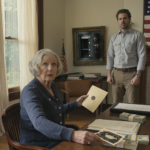
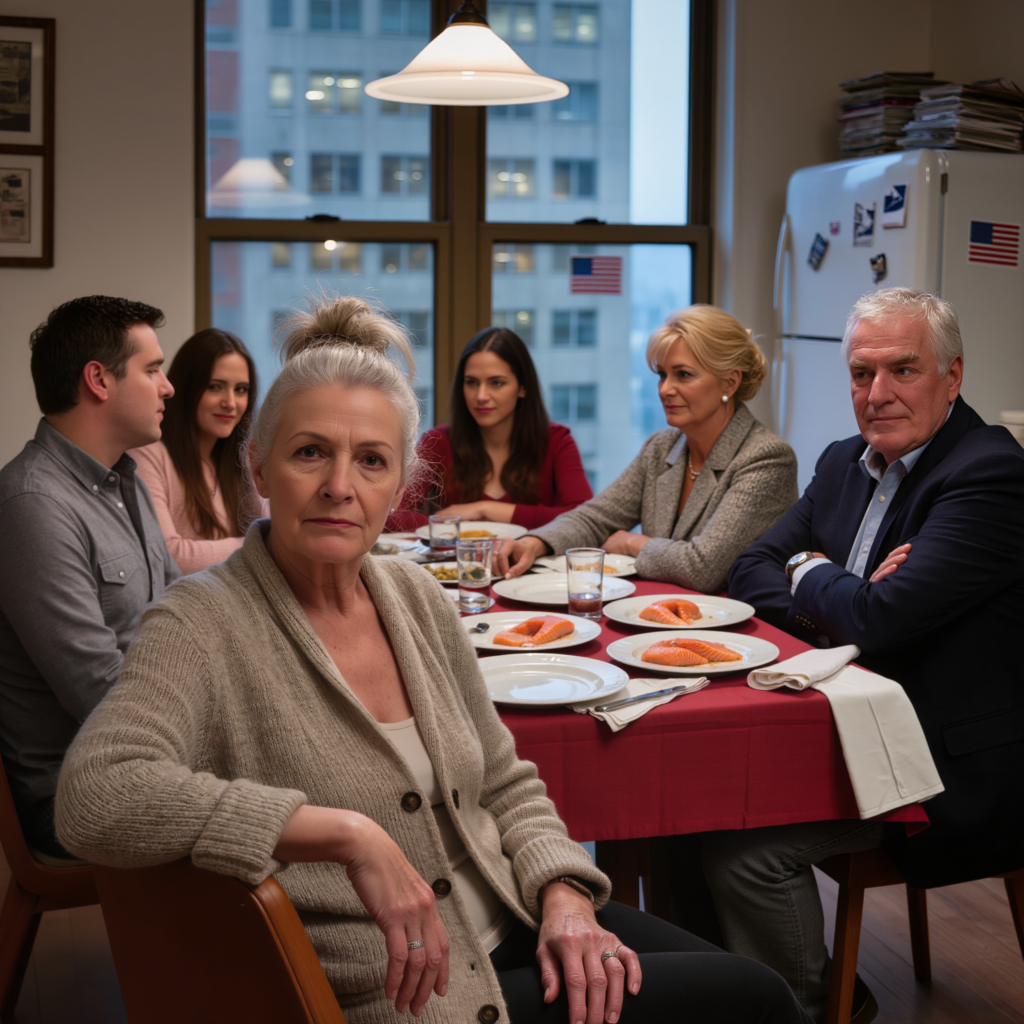
I never told my son about my monthly salary of $30,000. When he invited me to dinner at his fiancée’s place, I decided to pretend to be poor. The moment I crossed that threshold, I knew I’d made the right choice.
I’m glad you’re here with me. Please listen to my story all the way through, and let me know which city you’re listening from—so I can see how far this has traveled.
I never told my son about my monthly salary of $30,000. For thirty years, I built my consulting firm from nothing, working eighteen-hour days, sacrificing weekends, and watching my marriage crumble under the weight of ambition. But I succeeded. My financial planning company now had offices in three states, a reputation that opened doors, and a bank account that could have bought comfort for generations.
Yet I drove a seven-year-old Honda, lived in a modest two-bedroom house in the suburbs, and wore clothes from outlet malls.
Why?
Because I’d seen what money did to people. I’d watched wealthy clients’ children turn into vultures, circling before the parent was even cold. I’d seen marriages dissolve the moment a prenup was mentioned. Money revealed character—or it destroyed it entirely.
My son, Daniel, was thirty-two. A middle school teacher who loved his job despite its modest pay. I was proud of him. He’d never asked me for money, never expected a trust fund, worked hard, and stayed humble. Everything I’d hoped to raise.
Then he met Amber.
Last Tuesday, he called with that particular excitement that makes a mother’s heart feel both sore and uneasy.
“Mom, I want you to meet someone special.”
“Her name is Amber. I think she’s the one.”
The one. How many times had I heard clients say those words right before signing divorce papers?
“I’d love to meet her, sweetheart,” I told him.
“Actually, she’s invited us to dinner at her place this Friday. Her mother will be there, too. Amber’s really excited to meet you.”
Something in his tone made me pause. Not just excitement—nervousness, as if he was worried about something.
“Of course,” I said. “I’ll be there.”
Friday came, and I made my decision. Call it intuition. Call it paranoia from too many years of watching people’s true natures emerge around money. I would be poor for the evening. Not obviously destitute, but clearly struggling—a retired widow on a fixed income, barely making ends meet.
I chose my oldest cardigan, the one with a small hole near the hem that I kept meaning to repair. Sensible shoes from five years ago. No jewelry except my simple wedding band. I even drove my Honda—well, I always drove my Honda, but I made sure it looked appropriately worn.
Amber’s apartment building was in a newer development downtown. Not luxury, but certainly not cheap. I found myself analyzing the rent costs and the kind of person who lived here.
Stop it, Margaret, I told myself. Give her a chance.
When I crossed the threshold, Amber’s smile didn’t quite reach her eyes.
“Mrs. Peterson, so wonderful to finally meet you.”
She air-kissed near my cheeks, and I caught the scent of expensive perfume. Tom Ford, if I wasn’t mistaken—$350 a bottle.
“Daniel’s told me so much about you. Please, come in.”
The apartment was beautifully decorated. Too beautifully for a woman Daniel said worked as a yoga instructor. That sofa alone cost at least $4,000. I’d priced something similar last year for my office waiting room and decided against it.
“What a lovely home,” I said warmly.
“Oh, this?” Amber waved dismissively, but I saw her eyes gleam. “Just some pieces I’ve collected. I have an eye for quality.”
Daniel appeared from the kitchen and hugged me tightly.
“Mom, you made it.”
Behind him emerged another woman—mid-fifties, blonde hair swept into an elegant chignon, wearing what I recognized as a St. John knit suit. At least $2,000, probably more.
“Margaret,” Daniel said, “this is Amber’s mother, Patricia.”
Patricia’s handshake was limp. Her eyes scanned me from head to toe in one practiced sweep, and I saw the exact moment she completed her assessment: the worn cardigan, the sensible shoes, the complete absence of designer labels.
Her smile turned from polite to patronizing in a heartbeat.
“How nice,” she said, and somehow made those two words sound like an insult. “Daniel mentioned you were retired.”
“Yes,” I said quietly. “My husband passed away eight years ago. I get by on his pension and Social Security.”
Was that relief? I saw it flash across Amber’s face.
“Oh, that must be difficult,” Patricia said, her voice dripping with false sympathy. “Living on such a fixed income these days. Everything is so expensive.”
“I manage,” I replied.
Throughout dinner, I watched—and what I saw made my blood run cold.
The conversation felt like an interrogation disguised as small talk.
“So, Margaret,” Patricia said, cutting her salmon with precise movements, “what did you do before retirement?”
“I worked in financial consulting,” I answered truthfully, letting them imagine I’d been a secretary or some low-level employee.
“Oh.” Amber leaned forward, suddenly interested. “That’s wonderful. You must understand investments and retirement planning.”
“A little,” I said modestly.
“Perhaps you could look at Daniel’s finances,” she suggested, glancing at my son. “We’ve been talking about our future, and I think it’s important to know where we stand financially. Daniel’s so modest about his savings.”
Daniel shifted uncomfortably.
“Amber, that’s not really appropriate.”
“Nonsense,” Patricia interrupted. “If you two are serious, finances must be discussed. Transparency is crucial in marriage.”
She turned to me.
“Don’t you agree, Margaret?”
“I think people should marry for love, not money,” I said carefully.
“Of course,” Amber agreed quickly—too quickly. “But love doesn’t pay the bills, does it? I mean, Daniel’s teaching salary is… adequate, but with children someday, a house, a real future…”
My son’s face reddened.
“I do fine, Amber. We’ve discussed this.”
“I know, honey.” She squeezed his hand. “I’m just being practical. My mother always taught me to think ahead.”
She turned back to me.
“Does Daniel have any family inheritance to expect? Not to be indelicate, but these things matter.”
There it was—the question they’d been circling all evening.
“My husband and I lived simply,” I said. “There won’t be much when I’m gone.”
I watched disappointment flicker across both women’s faces before they masked it with sympathetic smiles.
“Of course,” Patricia said smoothly. “These are difficult times for everyone, especially for women your age, alone on a fixed income. It must be terrifying—worrying about medical bills, long-term care.”
Was that a threat? A reminder of my supposed vulnerability.
The evening continued in the same vein. Every conversation somehow turned to money, to Daniel’s prospects, to the challenges of living on a teacher’s salary. They never asked about my life, my interests, my health beyond its financial implications.
I was being assessed like a liability on a balance sheet.
When Daniel drove me home later, I stayed quiet, letting him fill the silence.
“So,” he finally asked, “what do you think?”
How did I answer truthfully without sounding like an interfering mother?
“She’s very confident,” I said carefully.
“She is.” He smiled, but I heard the uncertainty underneath.
“Mom, I need to ask you something. Do you have any savings? Amber’s been hinting that we might need help with a down payment on a house.”
My heart broke.
“Sweetheart, I barely make ends meet on my pension.”
“I know. I know.” He sounded relieved—actually relieved. “I told her I just wanted to make sure you were okay. That you weren’t hiding struggles from me to seem independent.”
We reached my house. In the darkness, I studied my son’s face.
“Daniel… are you happy?”
He was quiet for too long.
“I think so. Amber makes me feel… important. Successful. Like I could be more than just a teacher.”
“You are more than just a teacher,” I said. “You shape young minds every day.”
“Yeah.” He didn’t sound convinced. “But sometimes I wonder if that’s enough for Amber.”
After he left, I sat in my modest living room and made calculations. Not financial ones—I’d stopped counting money years ago—but human calculations, risk assessments.
What was at stake here? My son’s happiness, his financial security, possibly his entire future.
I thought about my clients over the years—the ones who’d come to me after disastrous marriages to gold diggers, the prenups I’d helped structure, the divorces I’d witnessed, the pattern recognition I’d developed, the red flags I’d learned to spot. Amber and Patricia had shown me every single one.
But Daniel was in love—or thought he was.
If I confronted him now, told him my concerns, he’d defend Amber. I’d become the interfering mother. The one who couldn’t let go. Who saw threats where there was only love.
He’d pull away from me to prove his independence.
No. I needed evidence—proof that would open his eyes without me having to say a word.
How far would they go if they thought I was vulnerable and poor? What would they reveal?
I picked up my phone and opened my encrypted banking app, looking at my substantial accounts. Then I closed it and opened a simple budgeting spreadsheet instead.
I had a plan.
It would require patience, careful documentation, and a performance worthy of an Oscar. But my son’s future was worth it.
On Monday morning, I called my attorney, Richard Chen, whom I’d known for fifteen years.
“Margaret, always a pleasure,” he answered. “What can I do for you?”
“I need you to draft two documents,” I said. “First, a will that leaves everything to a charitable foundation with only a small stipend to my son, Daniel. Second, I need you to prepare a detailed financial statement showing minimal assets—call it my official, public-record version.”
There was a pause. Richard knew my actual net worth.
“May I ask what’s happening?”
“My son is engaged,” I said. “I’m conducting due diligence on his fiancée.”
“Ah.” I heard the understanding in his voice. He’d handled enough divorce cases to know where this was going. “The gold-digger test.”
“Can you have both documents ready by Wednesday?”
“Consider it done. Though, Margaret—if you’re going to do this, do it thoroughly. Set up some situations where they think you need money. See how they react.”
Smart man. Already planning it.
Wednesday afternoon, Daniel called.
“Mom, Amber wants to take you shopping. A girls’ day out, she said. She feels bad about not spending enough time getting to know you.”
I smiled grimly.
“That sounds lovely.”
Saturday, I met Amber at an upscale shopping center. She was dressed impeccably—another expensive outfit that made me mentally calculate her actual income versus her apparent spending habits.
“Margaret,” she said, kissing my cheek. “I’m so excited for today. I thought we could shop a bit, have lunch, really bond.”
We started in a jewelry store. Amber tried on several pieces, admiring herself in the mirror with each one. The sales associate hovered nearby, clearly recognizing a potential big sale.
“Oh, this bracelet is gorgeous,” Amber sighed, holding up a diamond piece with a $12,000 price tag. “What do you think, Margaret?”
“It’s beautiful,” I said honestly.
She glanced at me sideways.
“You know, Daniel’s birthday is coming up. I’d love to get him something special, but yoga instructors don’t exactly make a fortune.”
She laughed.
“If only I had a fairy godmother to help.”
Was she actually hinting that I should buy my son’s own birthday gift—through her?
“It is expensive,” I said carefully.
“I’m sure Daniel would appreciate something more personal,” I offered. “Something from the heart.”
Her smile tightened.
“Of course. Though… doesn’t it bother you that your son will never be able to afford nice things on a teacher’s salary?”
“He seems happy.”
“Does he?” She set down the bracelet. “Margaret, can I be honest with you—mother to almost daughter?”
Here it comes.
“I love Daniel. I truly do. But love isn’t enough. I grew up poor. Really poor. I’ve worked hard to build a certain lifestyle and I won’t go backward. Daniel has potential, but he needs motivation—someone pushing him to be more.”
“More than a teacher who loves his job. More than someone who settled.”
She touched my arm.
“Don’t you want more for him? Don’t you want him to have security?”
“I want him to be happy,” I said.
“Happiness doesn’t pay for retirement homes, Margaret.” Her voice turned cold. “You should know that, being elderly and on a fixed income.”
“What happens when you can’t take care of yourself? Daniel will have to support you. Can he afford that on a teacher’s salary while supporting a wife and children?”
There it was—the threat wrapped in concern.
“I wouldn’t want to burden him,” I said quietly.
“Then maybe you should think about that,” she said, smiling sweetly. “Maybe you should encourage him to pursue better opportunities. My mother knows people in finance, in real estate. Daniel could make real money.”
She paused, eyes sharpening.
“Unless there’s a family inheritance he hasn’t told me about—something that would give us security.”
I met her eyes.
“There’s nothing, Amber. I’m sorry.”
For a moment, her face transformed. I saw naked frustration—anger—before the mask slipped back into place.
“Well,” she said briskly, “then we’ll just have to work with what we have, won’t we? Let’s get lunch.”
Over salad, she was on her phone constantly, texting someone. Finally, she looked up.
“Margaret, my mother wants to meet with us. She has some ideas about Daniel’s future she’d like to discuss. Could you come to her house tomorrow?”
Warning bells clanged in my mind.
“Of course,” I said.
That evening, I sat in my home office and documented everything—every word, every expression, every threat disguised as concern. I uploaded the notes to my secure cloud storage and texted Richard.
It’s worse than I thought. They’re moving fast.
His response came immediately.
Document everything. And Margaret, be careful. Desperate people do desperate things.
I stared at a photo of Daniel from his college graduation—young, idealistic, trusting. I couldn’t let them destroy him.
Tomorrow, I would walk into Patricia’s house, let them make their pitch, and I would record every word.
Patricia’s house was not an apartment. It was a sprawling colonial in one of the most expensive neighborhoods in the city. I calculated the property value as I pulled into the circular driveway—at least two million, probably more.
A yoga instructor’s mother, right?
Patricia answered the door in designer loungewear that cost more than most people’s monthly rent.
“Margaret. Come in. Come in.”
The interior confirmed my suspicions. Original artwork on the walls. Furniture that whispered old money.
This woman had wealth. Real wealth.
So why did her daughter need to trap my son?
Amber emerged from the kitchen with coffee.
“Margaret, we’re so glad you could come.”
Patricia settled across from me, posture perfect.
“Mother and I have been talking,” Amber said, “and we think we found a solution to everyone’s problems.”
I sat on an uncomfortably expensive chair.
“Oh?”
Patricia’s smile sharpened.
“Margaret, let’s be frank. You’re an elderly woman living on a fixed income. Daniel is a teacher barely making ends meet. Amber deserves better, but she loves your son. We want to help.”
“Help how?” I asked.
“My late husband left me comfortable,” Patricia said smoothly. “I’m willing to invest in Daniel’s future—send him back to school for his MBA. Set him up in a proper career.”
But there’s always a but.
“But we need assurances,” Amber continued. “We need to know that you won’t become a financial burden, that you’ll take care of yourself and not drain Daniel’s resources.”
I let the silence stretch.
“What kind of assurances?”
Patricia leaned forward.
“Sign over your house to Daniel now. Move into a nice assisted living facility. We’ve already researched some affordable options. That way, when you inevitably need more care, Medicaid will cover it. Your house will already be protected in Daniel’s name.”
My blood turned to ice.
They wanted me to make myself destitute—to qualify for government assistance—so they could control my son’s inheritance.
“I see,” I said carefully.
“Think about it,” Amber pressed. “You’d be helping Daniel. Giving him security. Isn’t that what mothers do?”
I set down my coffee cup.
“I need time to think.”
Patricia’s expression hardened.
“There isn’t much time, Margaret. Daniel and Amber are planning to announce their engagement next month. We need to know where everyone stands before then.”
Was that a threat?
“It’s reality,” Patricia said, rising. “You seem like a practical woman. Surely you see the logic here. You sign over the house. We invest in Daniel’s future. Everyone wins.”
“And if I don’t?”
Amber’s voice turned sharp.
“Then maybe Daniel needs to understand how selfish his mother is being. How you’re holding him back from opportunities because you’re clinging to a house you can barely afford.”
I stood, gathering my purse.
“I think I should go.”
“Think carefully, Margaret,” Patricia called as I walked to the door. “We’re trying to help. But with or without your cooperation, Daniel’s future is going to change. The question is whether you’ll be part of that future… or an obstacle we have to remove.”
I drove home with shaking hands.
They weren’t just gold diggers. They were con artists—experienced, organized, and clearly they’d done this before.
That night, I made calls. First to Richard, explaining everything. Then to a private investigator I’d worked with on client cases—a former FBI agent named Sarah Mitchell.
“Sarah, I need a background check,” I said. “Deep dive. Two subjects.”
“Give me names.”
I provided everything I knew about Amber and Patricia.
“Sarah, I think they’re running a con. I need to know if they’ve done this before.”
“I’ll have preliminary results in forty-eight hours,” she said.
Next, I called my son.
“Daniel, I need to tell you something.”
“Mom, is everything okay?”
“Amber and her mother just asked me to sign my house over to you and move into assisted living.”
Silence.
Then:
“They what?”
“They said it was to protect assets. To help your future.”
“Mom, I didn’t know anything about this. I swear.” He sounded horrified. “That’s insane. I would never ask you to do that.”
“I know, sweetheart,” I said. “But I think you need to know who you’re planning to marry.”
“Let me talk to Amber,” he said. “There must be some misunderstanding.”
After we hung up, I sat in the darkness and documented everything—again.
Then my phone buzzed.
A text from an unknown number:
Stop interfering or you’ll regret it. Daniel doesn’t need you poisoning him against his future.
Then another:
We know where you live. We know your routine. Accidents happen to elderly women all the time.
My hands trembled, but I forwarded both messages to Sarah and Richard, then called the police non-emergency line to file a report. The officer was sympathetic but clear.
Unless they make a direct threat or attempt something physical, there’s not much we can do. Keep documenting everything.
For three days, I took a break. I stayed home, ordered groceries online, and let Sarah work. I needed time to think, to strategize.
They’d shown their hand too early—pushed too hard.
That meant they were desperate.
And desperate people were dangerous.
On the third day, Sarah called.
“Margaret, you need to hear this. Sit down.”
Her voice was grim.
“Amber Colton—and yes, Colton is an alias—has been engaged four times in the last six years to different men in different cities. All of them were professionals with aging parents. All of those parents mysteriously signed over assets right before accidents… or sudden moves to care facilities.”
My blood ran cold.
“Go on,” I whispered.
“Two of those parents are now dead. One from a fall in her new assisted living facility, another from what was ruled an accidental overdose of medication. Both deaths occurred within months of transferring their homes and assets.”
“The remaining two parents are in locked memory-care facilities, diagnosed with sudden-onset dementia. Convenient—since they can’t testify about what really happened.”
“And Patricia—Patricia’s real name is Patricia Hris. She’s Amber’s partner, not her mother. She’s been using a string of aliases; in two prior cases, she posed as ‘Patricia Hendricks,’ the wealthy matriarch. They’ve been running this con for at least eight years that I can trace.”
“They target middle-class professionals with widowed parents. Patricia plays the wealthy matriarch, creates trust. Amber plays the perfect girlfriend. They isolate the parent, get control of assets, then—”
Sarah paused.
“Then the parent becomes a problem that needs to be eliminated.”
I couldn’t breathe.
“They were going to kill me,” I said.
“Yes,” Sarah replied. “And make it look natural. Margaret, you need to go to the police with this now.”
“Will they believe me?”
“I’m sending everything to you now—financial records, death certificates, the pattern of fraud across four states. But Margaret… until they’re arrested, you’re not safe. Do you have somewhere else to stay?”
Before I could answer, my doorbell rang.
“Sarah,” I whispered, “someone’s here.”
“Don’t answer it.”
I looked through the peephole.
Daniel stood on my porch alone, his face pale.
“It’s my son,” I said.
“I have to let him in.”
I opened the door, and Daniel practically fell inside.
“Mom… you were right. You were right about everything.”
I pulled him into the living room.
“What happened?”
“I confronted Amber about the house thing. She denied it at first—said, ‘You misunderstood.’ But I pushed.”
He swallowed hard.
“And Mom, she just… changed. Her whole face changed.”
“She started talking about how I was choosing you over our future. How I’d always be a broke teacher if I couldn’t cut ties with the past.”
Tears ran down his face.
“She said if I really loved her, I’d convince you to sign over the house. That it was a test of my commitment.”
“Oh, sweetheart…”
“But that’s not even the worst part.” He pulled out his phone. “She left her laptop open at my place. I saw emails, Mom. Plans.”
“They were going to get you declared incompetent after the house transfer. Patricia has a doctor friend who would have signed off on it.”
“Then they were going to move you to some facility and—”
He couldn’t finish.
“I know,” I said quietly. “I hired a private investigator. Daniel, this isn’t the first time they’ve done this.”
His face went white as I showed him Sarah’s report—the string of victims, the deaths, the pattern.
“I almost helped them kill you,” he whispered. “I almost married someone who was planning to murder my mother.”
We sat together in silence.
Then Daniel straightened.
“We’re going to the police right now.”
“Wait,” I said, already reaching for my phone. I called Richard. “I need you to meet us at the police station and bring everything.”
At the station, Detective Maria Santos listened to our story. She looked at Sarah’s report, the financial records, the text messages.
“This is interstate fraud at minimum,” she said. “Possibly murder. But building a case will take time. We need warrants, coordination with other jurisdictions.”
“How much time?” I asked.
“Days, maybe weeks.”
“We don’t have weeks,” Daniel said. “What if they run?”
Detective Santos looked at me thoughtfully.
“Unless we catch them in the act,” she said. “Make them think everything is going according to plan. Get them to incriminate themselves.”
“You want me to be bait,” I said.
“I want you to be safe,” she corrected. “But if you’re willing to wear a wire and meet with them one more time—let them think you’re agreeing—we might get enough for immediate arrests.”
Daniel grabbed my hand.
“Mom, no. It’s too dangerous.”
I looked at my son, then at the detective, then at the report detailing families destroyed by these women.
“I’ll do it,” I said. “But I want police close by, and I want this to end completely.”
Detective Santos nodded.
“Give me twenty-four hours to set it up. In the meantime, you’re both staying in protective custody.”
That night, in a hotel room paid for by the police department, Daniel and I talked for hours—about his relationship, about red flags he’d ignored, about the guilt he felt.
“You were in love,” I told him. “Or you thought you were. That’s not a crime.”
“I almost got you killed.”
“But you didn’t.” I held his face between my hands. “You saw the truth in time. That takes courage.”
The next morning, Richard arrived with more news.
“I’ve been making calls,” he said. “One of the previous victims’ families is willing to testify, and the medical examiner who ruled on one of the ‘accidental’ deaths has agreed to review the case. He says there were inconsistencies he was pressured to ignore.”
The net was tightening.
Now we just had to spring the trap.
Detective Santos set the meeting for Thursday afternoon at Patricia’s house. I wore a wire so small I could barely feel it.
Daniel wanted to come, but the detective refused.
“She needs to go alone,” Santos explained. “If they sense a trap, they’ll bolt. We’ll have officers in an unmarked van two houses down, and I’ll be monitoring the feed in real time.”
“At the first sign of a physical threat, we come in.”
“What constitutes a sign?” Daniel asked.
“Trust me,” Santos said. “I’ll know.”
I drove to Patricia’s house with practiced calm. Inside, I was terrified. These women had killed before. They were experts at making deaths look natural.
But I thought of those other families—those other victims who had no one to speak for them.
Someone had to stop this.
Patricia answered the door with a smile that didn’t reach her eyes.
“Margaret, we’re so pleased you reconsidered.”
Inside, Amber sat on the sofa, looking nervous.
Good.
They should be nervous.
“I’ve been thinking about your proposal,” I said carefully. “About the house.”
Patricia leaned forward eagerly.
“I have questions,” I added. “How exactly would this work?”
Patricia’s face relaxed into her well-practiced sympathetic expression.
“It’s quite simple. You sign a quitclaim deed transferring the house to Daniel. We have a wonderful assisted living facility selected—very affordable. Once you’re settled there, we’ll help Daniel with his MBA program. Everyone benefits.”
“Except I lose my home,” I said.
“You’re giving it to your son,” Amber corrected. “That’s what loving mothers do. They sacrifice.”
I let the silence stretch, watching them.
“My financial advisor said I should get everything in writing,” I said. “That you should put your promises about Daniel’s education in a legal contract.”
Patricia’s expression flickered.
“That’s not how family works, Margaret. This is about trust.”
“Then you won’t mind putting it in writing.”
“We mind very much,” Patricia snapped, her mask slipping. “Legal contracts imply distrust. Are you calling us liars?”
“I’m being practical,” I said. “You taught me that.”
Amber stood, face flushing.
“This is ridiculous. You’re going to live maybe another ten years if you’re lucky. Stop being selfish and think about Daniel’s future.”
“His future with you?”
“Yes.” Amber’s voice rose. “I love him, but I won’t live in poverty because his mother is too stubborn to accept help.”
“Help?” I stood too, facing her. “Or a con?”
Tell me, Amber—or is it Amber Colton today? How many other men have you loved? How many other mothers have you helped?
The room went dead silent.
Patricia recovered first.
“I don’t know what you’re implying.”
“I’m not implying anything,” I said. “I’m stating facts. Four engagements in six years. Two dead parents. Two in locked facilities. A pattern of fraud across multiple states.”
I pulled out my phone.
“I have documentation—police reports, financial records.”
Amber lunged at me, but Patricia grabbed her arm.
“Wait.”
The older woman’s face transformed into something cold and calculating.
“You can’t prove anything. Those were all tragic accidents.”
“Were they?” I asked. “Let’s ask the medical examiner who’s reopening the investigations. Or the families filing wrongful death suits.”
Patricia took a step toward me, her voice dropping to a menacing whisper.
“You have no idea what you’re playing with, you stupid old woman. We’ve done this a dozen times. We know how to make problems disappear.”
“Is that a threat?” I asked.
“It’s a promise.” She smiled, and it was the most terrifying thing I’d ever seen. “You think you’re clever—hiring investigators, going to the police—but accidents happen. You’re elderly. Alone. Frail.”
“You could fall down your stairs tonight. Have a stroke. Mix up your medications. Who would question it?”
“I would.”
Detective Santos’s voice came from the doorway.
She entered with two uniformed officers behind her.
“Amber Colton. Patricia Hris. You’re under arrest for conspiracy to commit fraud,” Santos said, “and I’m adding terroristic threats to that list.”
Amber screamed and tried to run for the back door, but an officer caught her. Patricia stood frozen, her face a mask of rage.
“You bitch,” she hissed at me. “You’ll regret this. We have lawyers. We have money. We’ll be out in hours.”
“Actually,” Detective Santos said, snapping cuffs around Patricia’s wrists, “there are warrants for your arrest in three other states. Murder investigations are being reopened. You’re not going anywhere.”
As they were led away, Amber twisted back toward me, her face contorted with hatred.
“Daniel loved me. You destroyed his happiness. You’re just a jealous old hag who can’t stand to see him move on.”
The officers pushed her toward the door.
I stood in Patricia’s expensive living room, shaking.
Detective Santos touched my shoulder gently.
“You did good, Margaret. Really good.”
“That confession about making problems disappear? That’s enough to hold them while we build the bigger case.”
Outside, Daniel waited by my car. He ran to me and hugged me so tightly I could barely breathe.
“Is it over?” he asked.
“It’s over,” I whispered.
But I was wrong.
It was only beginning.
The arrests were just the beginning. The real battle happened over the next three months—in courtrooms and police interrogation rooms. Sarah’s investigation had opened a Pandora’s box. Once other jurisdictions heard about Amber and Patricia’s arrests, cases poured in: families who’d lost parents, children who suspected foul play but couldn’t prove it, financial irregularities dismissed as elderly confusion.
The pattern was damning.
I attended every hearing I could—not out of vindictiveness, but because I needed to see it through. Those other families deserved a witness, someone who understood what they’d lost.
The preliminary hearing was in early February. I sat in the gallery with Daniel beside me, watching Amber and Patricia led in wearing orange jumpsuits.
How different they looked now. No designer clothes. No perfect hair. No masks of sympathy and charm.
The prosecutor, a sharp woman named Denise Rothman, laid out the case methodically.
“The defendants operated a sophisticated criminal enterprise targeting vulnerable families for over eight years,” she said. “They would identify middle-aged professionals with widowed parents, typically mothers. Ms. Colton would begin a romantic relationship while Ms. Hris posed as her wealthy mother under various aliases. Once trust was established, they would isolate the parent, convince them to transfer assets, then ensure the parent either died or became incapacitated before they could reclaim their property.”
She projected a chart on the screen.
Nine families. Nine mothers. Two dead from falls. Two from medication errors. Three in locked dementia facilities despite having no previous cognitive issues. One from an accidental house fire.
And one—me—who survived.
“In the case of Margaret Peterson,” Rothman continued, “we have something previous investigations lacked: premeditation in the defendant’s own words.”
She played the audio from my wire. Patricia’s voice filled the courtroom.
“We know how to make problems disappear. You could fall down your stairs tonight, have a stroke, mix up your medications. Who would question it?”
Amber’s attorney stood.
“Your Honor, that’s clearly taken out of context. My client was upset, speaking emotionally—”
“Your client,” Rothman cut in, “was describing a methodology that matches the deaths of two previous victims.”
She named them: Marian Hayes, sixty-eight, who fell down the stairs in her assisted living facility three weeks after signing over her home. The medical examiner found bruising inconsistent with a simple fall.
Ruth Brennan, seventy-one, who died from an overdose of blood-pressure medication. Her daughter insisted her mother was meticulous about her pills—yet somehow she took ten times her normal dose.
The judge looked at Amber and Patricia.
“Is there a reason these women shouldn’t be held without bail pending trial?”
Amber’s attorney tried again.
“Your Honor, my client has no prior convictions, has ties to the community—”
“Your client has used fourteen different aliases in six states,” the judge interrupted. “Bail denied.”
Patricia’s attorney didn’t even try. He knew it was hopeless.
As they were led away, Patricia turned and stared at me with cold hatred.
But I stared back, refusing to look away.
I thought of Marian Hayes’s daughter, of Ruth Brennan’s son, of all the families who never got justice.
Not anymore.
The trial itself was scheduled for April. In the intervening months, more evidence emerged—financial records showing suspicious transfers, testimony from the doctor who’d helped declare victims incompetent. He’d been arrested too, cutting a deal to testify against the women. Records of forged signatures. Email chains discussing targets and timelines.
Most damning were the journals police found in Patricia’s home safe: detailed records of each con, including notes like MH2 suspicious, accelerate timeline, and RB asking questions, arrange accident.
They documented their own crimes like a business ledger.
When the trial finally began, the defense’s strategy was predictable: paint the women as merely opportunistic, not violent. Claim the deaths were genuinely accidental, that any financial benefit was coincidental.
But Rothman was relentless. She brought forth the families one by one to testify about their mothers—about how healthy they’d been before meeting Amber, how quickly things deteriorated, the pressure to transfer assets, the sudden accidents.
Then she called me to the stand.
I walked up calmly, placed my hand on the Bible, and swore to tell the truth.
Rothman’s questions were straightforward.
I described everything: the dinner where they assessed my finances, the shopping trip where Amber revealed her motivations, the meeting where they demanded my house, the threats, the final confrontation where Patricia said they could make me disappear.
“Mrs. Peterson,” Rothman asked, “what do you think would have happened if you’d signed over your house?”
I looked directly at Amber and Patricia. Both women stared at the table, refusing to meet my eyes.
“I think I would have had an accident within six months,” I said clearly. “A fall. Wrong medications. Something that looked natural, but wasn’t—just like the other mothers.”
“Objection,” Amber’s attorney shot up. “Speculation.”
“Sustained,” the judge said. “But the jury will note the pattern evidence already introduced.”
The defense tried to cross-examine me, to trip me up, to paint me as a paranoid old woman.
But I’d spent thirty years in financial consulting. I knew how to present evidence calmly, how to stick to facts, how to let the truth speak for itself.
After my testimony, I watched from the gallery as their defense crumbled. The weight of evidence was overwhelming, the pattern undeniable.
On April 28, the jury returned after only four hours of deliberation.
Guilty on all counts.
The sentencing hearing was in June. I sat in the same courtroom, but this time with representatives from all the other families. We’d become a community of sorts—bound by shared trauma and the strange relief of justice finally served.
Judge Morrison reviewed the pre-sentencing report in silence. When she finally looked up at Amber and Patricia, her expression was steel.
“In my twenty-three years on the bench,” she began, “I have seen many criminals, but rarely have I encountered such calculated, cold-blooded predation. You targeted the most vulnerable members of our society—elderly widows whose only crime was loving their children. You exploited that love, weaponized it, and used it to steal not just their property, but in some cases their very lives.”
Amber cried theatrical tears that fooled no one. Patricia sat ramrod straight, defiant to the end.
“The jury found you guilty of conspiracy to commit fraud, elder abuse, conspiracy to commit murder, and multiple counts of theft and forgery,” the judge continued. “The evidence suggests you successfully murdered at least two women, possibly more. While we can only prove conspiracy in Mrs. Peterson’s case, the pattern is clear.”
She turned to Patricia first.
“Patricia Hris, you masterminded this operation. You selected the victims, maintained the financial records, coordinated the cons. You are, in essence, a serial killer whose weapon was trust. I sentence you to forty-five years in federal prison without the possibility of parole.”
Patricia’s face went white. At sixty-two, that was essentially a life sentence.
The judge turned to Amber.
“Amber Colton, you were the face of this operation. You seduced vulnerable men, gained their trust, isolated their families, and participated in planning deaths. You showed no remorse, no conscience. I sentence you to thirty-five years in federal prison without the possibility of parole.”
Amber screamed.
“No! This is wrong. I loved Daniel! That old hag is lying!”
The bailiffs moved in as she continued to scream, dragging her from the courtroom.
Patricia walked out with dignity, but her face was the face of someone whose entire world had collapsed.
And I felt… nothing. Not satisfaction. Not revenge.
Just quiet certainty that it was over.
After the sentencing, Rothman approached our group.
“There’s more,” she said. “The investigation opened cases in two additional states. We’re working with prosecutors there to file additional charges. They won’t be eligible for release in any scenario.”
Ruth Brennan’s son shook my hand.
“Thank you. If you hadn’t caught them, my mother’s death would still be listed as an accident.”
Marian Hayes’s daughter hugged me.
“You gave us closure,” she whispered. “You gave us justice.”
One by one, the families thanked me.
But I kept thinking about the ones who weren’t there—the mothers who died before anyone understood what was happening, the families told it was just bad luck, just age, just unfortunate timing.
Outside the courthouse, news cameras waited. I’d refused interviews before, but Rothman convinced me to make a brief statement.
“Elder abuse is an epidemic,” I said, looking directly into the camera. “And it often comes from the people we least suspect—not strangers, but those who claim to love our children. These women stole years, homes, and lives.”
“If you’re an elderly parent meeting your child’s new partner and something feels wrong, trust your instincts. If someone is pressuring you to sign documents, transfer assets, or move away from your support system—get help. Call the police. Call an attorney. Don’t become another statistic.”
Daniel stood beside me, his hand on my shoulder.
After the cameras left, we sat on a bench in the courthouse square.
“I keep thinking,” he said quietly, “about how I defended her. How I told you that you were being paranoid. How close I came to losing you.”
“But you didn’t,” I said. “You saw the truth in time.”
“Did I?” His voice broke. “Or did you have to nearly get killed to open my eyes?”
I turned to face him.
“Daniel, you were fooled by experts. They’d perfected their system over years and destroyed multiple families. The fact that you questioned it at all—that you confronted Amber instead of blindly going along—shows your character. You could have ignored your doubts. You didn’t.”
He was quiet for a long moment.
“I’m taking a leave from school,” he said finally. “I need time to process this. Maybe therapy.”
“That’s wise,” I said.
He looked at me seriously.
“And Mom… I need to know. The money thing. Why did you hide your financial situation from me?”
Really.
I’d known this question was coming.
“Because I wanted you to value work for its own sake,” I said. “To find meaning in teaching, not just a paycheck. To choose partners who loved you, not your inheritance.”
“And because…” I paused. “Because I saw too many families destroyed by money. I wanted you to build your own life, make your own choices without the weight of expectations—or the target of wealth on your back.”
“But you were testing Amber,” he said.
“Yes,” I admitted. “And she failed spectacularly.”
He smiled—the first real smile I’d seen in months.
“She certainly did.”
We sat in silence, watching people pass by—normal people with normal problems, unaware that justice had just been served a few floors above us.
“What now?” Daniel asked.
“Now,” I said, “we rebuild. You heal. I go back to work. We move forward together. Always together.”
Behind us, the courthouse doors opened and the other families emerged, supporting each other, sharing contact information, promising to stay in touch.
A community born from tragedy, strengthened by survival.
Patricia and Amber would spend decades behind bars. Their names would be associated with betrayal and murder.
Their freedom was gone.
And I could finally sleep peacefully again.
Six months after the sentencing, life had found a new rhythm. I returned to work at my consulting firm, though with reduced hours. My story had made national news—and, surprisingly, business boomed. Clients wanted to work with someone who demonstrated such fierce protection of family assets.
Several law firms hired me to consult on elder abuse cases, helping other families identify and prevent financial predation.
I started a foundation in honor of Marian Hayes and Ruth Brennan, the two mothers who didn’t survive. The foundation provided free legal services to elderly people facing pressure to sign over assets and funded investigations into suspicious elder deaths.
Within months, we’d helped twelve families avoid cons similar to what Amber and Patricia had run.
Daniel returned to teaching after his leave, but with a new perspective. He started a financial literacy program at his school, teaching teenagers how to recognize manipulation and protect vulnerable family members. He told his students about his experience—not the details, but the lessons about trusting instincts and questioning relationships that seemed too good to be true.
“I want them to be smarter than I was,” he told me one evening over dinner at my house. “I want them to see red flags before they’re in too deep.”
We grew closer through the trauma. He called every day. We had dinner twice a week. He dated again slowly, carefully—and he introduced me early, valuing my opinion.
“Is she secretly plotting to kill you and steal my house?” he joked once.
But underneath the humor was real caution—wisdom earned through pain.
One afternoon in November, Richard called with news.
“Margaret, thought you’d want to know. The appeals were denied. Patricia and Amber’s convictions stand. They’re being transferred to maximum-security federal prison.”
“How are they doing?” I asked.
“Poorly,” he said, and I could hear the satisfaction in his voice. “Patricia’s in solitary after attacking another inmate. Apparently she tried to run another con inside, and the victim didn’t take kindly to it. She got two more years added to her sentence for assault.”
“And Amber?”
“Amber’s in general population, but completely ostracized. Word got around about what she did—targeting elderly mothers. Even criminals have standards. She requested protective custody but was denied. Last I heard, she spends twenty-three hours a day in her cell, afraid to go to the cafeteria.”
I should have felt triumphant.
Instead, I just felt tired.
“They did this to themselves,” I said.
“That they did,” Richard replied. “Oh—and the civil suits are proceeding. The families are suing for wrongful death and fraud. Patricia’s assets have been frozen. Turns out she had quite a bit stashed away from previous cons. It’s all being seized for restitution.”
After we hung up, I thought about Patricia in her cell—the wealthy lifestyle she’d built through cruelty now reduced to a six-by-eight prison cell. About Amber, young enough that she’d be elderly herself before seeing freedom—if she survived that long.
Their lives were over.
They’d destroyed themselves through greed and cruelty.
Meanwhile, I received a letter from one of the families we’d helped through the foundation, a woman named Carla. Her elderly father had been targeted by a similar couple. Because of our alert system, she’d recognized the pattern and stopped it before any assets were transferred.
You saved my father’s life and his legacy, she wrote. Because of you, he’s still in his home, still independent, still himself. I can never thank you enough.
Letters like that arrived regularly. Each one reminded me that good could come from trauma, that survival could be transformed into protection for others.
Daniel met someone new in January—a fellow teacher named Rachel, who taught art at his school. She was kind, genuine, and when I met her for the first time, her eyes held real warmth, not calculation.
“It’s so wonderful to meet you, Mrs. Peterson,” she said, shaking my hand. “Daniel talks about you constantly—about how you’re his hero.”
“I’m not a hero,” I protested.
“You are to him,” Rachel said simply. “And honestly, from what I’ve heard, you’re a hero to a lot of people.”
I invited them both to dinner at my house—my real house, which I would never leave now. It represented more than property. It represented autonomy. Independence. The right to make my own choices.
During dinner, Rachel asked about my work. Not my finances. Not my assets.
My actual work.
“I help families protect themselves,” I explained. “I try to make sure what happened to us doesn’t happen to others.”
“That must be so fulfilling,” she said. “Using your experience to help people.”
Daniel watched her with such open affection, such genuine happiness, that I could see it was real.
She wasn’t performing.
She wasn’t playing a role.
She was just Rachel—an art teacher who loved my son for who he was, not what he might inherit.
After they left, I stood in my living room and felt something I hadn’t felt in a year.
Peace.
My home was still mine. My son was safe. My work had purpose.
And somewhere in a federal prison, Patricia and Amber were learning that cruelty had consequences.
Looking back now, I understand the lesson this experience taught me. Trust your instincts, but verify everything. Love doesn’t demand that you surrender your security. Real love respects boundaries, values independence, and would never ask you to make yourself vulnerable.
I learned that protecting family sometimes means being willing to look like the villain. That wisdom earned through decades of life isn’t paranoia—it’s pattern recognition.
I learned that evil often wears a beautiful face and speaks words of love while planning destruction.
But I also learned that truth prevails, that justice exists, and that courage can protect not just yourself, but countless others.
So I ask you—what would you have done in my place? Would you have trusted your instincts or dismissed them as an old woman’s fears? Would you have had the courage to pretend, to investigate, to set a trap?
If this story resonated with you—if you know someone who needs to hear it—please share it. Leave a comment about your own experiences, or the instincts you’ve had to trust. Subscribe so you never miss stories that might protect you or someone you love.
And remember: defending yourself isn’t cruel.
It’s necessary.
Thank you for listening to my story. Stay safe, trust your gut, and never let anyone convince you that protecting yourself is selfish.
It might just save your life.
News
My son looked me dead in the eye and said he’d sell the Connecticut house my late husband and I built, just to buy his wife a shiny new Mercedes—then gave me 24 hours to pack—because “she matters more.” I smiled, nodded, and started folding sweaters, while the truth sat in a folder he’d never thought to ask about.
My son said, “I decided to sell your house to buy a new car for my wife. She’s more important…

In a Chicago courtroom filled with reporters and family friends, my parents tried to bankrupt me in public—just to make sure the whole city believed I was broke. They wanted humiliation, headlines, and the end of my name. But when the judge asked one single question, their lawyer went pale—and my father’s empire began to crumble before everyone’s eyes…
I sat in a bankruptcy courtroom packed with strangers—not because I was out of money, but because my parents…
After my husband’s death, I decided to open his old safe. Inside was $500,000 in cash and some documents. But when I saw the third item, a cold wave of terror swept over me… and for the first time in fifty years of marriage, I realized how little I’d truly known the man I’d shared my life with.
After my husband’s death, I decided to open his old safe. Inside was $500,000 in cash and a stack…

On the morning I boarded a packed CTA bus for my divorce hearing at the Cook County courthouse, I thought I was just a discarded wife trying to arrive with my head high—until a frail old man stumbled at the door, I caught him, and the quiet “thank you” he gave me became the first domino in a chain that would make my powerful attorney-husband lose his breath.
What if the path to a divorce hearing turned into the moment that would change your destiny forever? Today, I…
For seven months, every single night at exactly 2:47 a.m., my husband would rise from our creaking bed, cross the dark room, and stand on my side just watching me breathe—until the night I pretended to sleep and finally heard what he was whispering, and the truth behind that 2:47 ritual shattered everything I thought I knew about my life.
For seven months, every single night at 2:47 in the morning, my husband would stand right next to my…
My son and his wife left me for a seven-day cruise with my “mute” 8-year-old grandson, but the second the lock clicked, he looked up and whispered, “Grandma, don’t drink the tea Mama made for you”—and that was the moment I realized this week wasn’t babysitting… it was a test I might not survive.
My son and his wife flew off on a cruise, leaving me alone for a week with my 8-year-old grandson,…
End of content
No more pages to load