It was the most important medical appointment I’d had since Robert died four years ago. I was laying out my questions for the cardiologist, organizing the symptoms I’d been tracking for weeks—the chest tightness, the irregular heartbeat, the episodes of dizziness that had been getting progressively worse.
“Helen, I need you to watch Emma and Jake today. Emergency at work.”
Madison’s voice carried that particular tone she used when she expected immediate compliance, as if my sixty years of life experience had somehow prepared me to be her on-call babysitter rather than her children’s grandmother.
“Madison, I can’t today. I have a doctor’s appointment at four that I’ve been waiting three weeks for.”
“What kind of doctor’s appointment?”
“Cardiology. I’ve been having some concerning symptoms and—”
“Helen, this is a real emergency. My supervisor called an urgent meeting about the quarterly reports and I have to be there or I could lose my job.”
Her voice was rising, taking on the edge of desperation that she used when she wanted to make her problem sound more serious than mine.
“Can’t you just reschedule your appointment?”
I looked at the calendar on my kitchen wall where I’d circled today’s date in red ink weeks ago. Doctor Martinez had squeezed me into his schedule as a favor after I’d described the chest pain episodes that had been waking me up at night.
“Madison, this isn’t a routine checkup. These symptoms could be serious and I’ve already waited three weeks for this appointment. I’m sure you can find someone else to help with the children.”
“Someone else? Helen, I am asking someone else—their grandmother. Don’t you think your own grandchildren should be more important than some doctor’s appointment?”
The accusation hit me like a physical blow. In the four years since Robert’s death, I’d been rebuilding my life with careful attention to balance and boundaries. I’d learned that saying yes to every request for help, every family crisis, every demand on my time led to resentment and exhaustion that served no one well.
“Madison, my health needs to be a priority too. I’m not being selfish by taking care of myself.”
“Yes, you are being selfish. You’re putting your own convenience ahead of your family’s needs. What kind of grandmother does that?”
I felt my chest tighten. Whether from anger or the cardiac symptoms I was trying to get diagnosed, I couldn’t tell.
“The kind of grandmother who wants to stay healthy enough to be around for her grandchildren for years to come.”
“Whatever, Helen. I hope your precious doctor’s appointment is worth abandoning your family when we need you.”
The line went dead, leaving me standing in my kitchen with the phone in my hand and a familiar knot of guilt in my stomach. Madison had a talent for making her poor planning into my moral failure, her lack of preparation into evidence of my inadequacy as a grandmother. But I’d learned through grief counseling after Robert’s death, and careful attention to my own emotional health, that other people’s emergencies didn’t automatically become my responsibilities, especially when those emergencies seemed to arise with suspicious frequency whenever Madison wanted something.
I checked my watch. 3:15 p.m. I needed to leave for my appointment in thirty minutes, and I still needed to gather the medical records Dr. Martinez had requested and find parking downtown. I pushed Madison’s accusatory words out of my mind and focused on the task at hand.
My phone buzzed with a text message from David, my son.
“Mom, can you help Madison with the kids today? She’s really stressed about this work situation.”
I typed back quickly.
“Can’t today. Important medical appointment. Maybe Sarah can help.”
Sarah was Madison’s sister, a stay-at-home mom with a flexible schedule who lived twenty minutes away.
“Sarah’s not available. Come on, Mom. Family first.”
Family first. The phrase that Madison and David used whenever they wanted me to drop everything and solve problems they should have anticipated or managed themselves. I’d been hearing it a lot since Robert died, as if my widowhood had somehow transformed me into the family’s backup plan for every inconvenience.
I put the phone on silent and finished gathering my medical documents. At 3:45, I walked out to my car, locked the house, and drove toward downtown for the appointment that could determine whether my recent symptoms were stress-related or something more serious that required immediate treatment.
The cardiology office was busy, filled with people of various ages who’d prioritized their health despite whatever other demands they faced in their daily lives. Doctor Martinez was thorough, asking detailed questions about my symptoms, my family history, Robert’s death from a heart attack two years into his retirement.
“Mrs. Marshall, given your symptoms and family history, I want to schedule you for a stress test and echocardiogram next week. These episodes you’re describing could be related to anxiety from your grief process, but they could also indicate cardiac issues that need immediate attention.”
“How immediate?”
“If these symptoms worsen or become more frequent, I want you to go directly to the emergency room. Don’t wait for the scheduled tests.”
He handed me information packets and referral forms.
“Mrs. Marshall, you did the right thing coming in today. These symptoms aren’t something to postpone or ignore.”
I drove home feeling vindicated in my decision to prioritize the appointment, but also anxious about what the test results might reveal. Robert had ignored chest pain for months, dismissing it as indigestion from stress at work. By the time he finally saw a doctor, the damage to his heart was irreversible.
At 6:30 p.m., my phone rang. Madison’s number appeared on the screen, and I answered, expecting an apology, or at least an inquiry about my medical results.
“Helen, where the hell are my children?”
The words hit me like ice water.
“What do you mean, where are your children? They’re with you.”
“No, they’re not with me. I sent them to your house in an Uber two hours ago and you’re not answering your door.”
I felt the world tilt sideways.
“Madison, what are you talking about? I told you I couldn’t watch them today. I was at my doctor’s appointment.”
“I sent them anyway. The Uber driver was supposed to drop them at 412 Maple Street at 4:30. They should have been there when you got home.”
Four-twelve Maple Street was my address, but I’d been at the cardiologist’s office at 4:30, then stopped for groceries before coming home. More importantly, Madison had sent my grandchildren in an Uber to my house without my knowledge or consent, assuming I’d abandoned my medical appointment to accommodate her manipulation.
“Madison, I live at 412 Maple Street. If an Uber dropped them here, they would have been sitting on my front porch when I got home an hour ago.”
“Well, they’re not. I’m here now, and there’s no sign of them.”
Panic began to rise in my throat.
“Are you sure you gave the driver the right address?”
“Of course I gave the right address. I wrote it on a piece of paper. 412 Maple Street.”
“What’s the driver’s name? Do you have the Uber receipt?”
“I deleted the app right after I booked it. I don’t know the driver’s name or the license plate or anything.”
The magnitude of what had happened began to settle over me like a cold fog. Madison had put two young children in a car with a stranger, given handwritten directions, and then deleted the evidence of the transaction. Emma and Jake, eight and six years old, were somewhere in the city with no way for anyone to track where they’d been taken.
“Madison, we need to call the police immediately.”
“The police? Helen, this is your fault. If you had just watched them like you were supposed to, none of this would have happened.”
Even in crisis, even with her children missing, Madison’s instinct was to blame me for consequences of her own reckless choices. But I didn’t have time to argue about fault or responsibility.
“Madison, hang up and call 911 right now. Report the children missing and give them whatever information you have about the Uber. I’m calling them from my phone, too.”
As I dialed emergency services, I looked out my front window at the empty street, trying to imagine what could have gone wrong with Madison’s plan to force my cooperation through child abandonment. Some mistakes, I was beginning to understand, had consequences that extended far beyond the people who made them. And some emergencies were real, even when they were created by the same people who’d cried wolf too many times before.
The police arrived at my house within twenty minutes, two officers who approached the situation with the grim efficiency of people who’d dealt with missing children cases before. Officer Rodriguez, a woman in her forties with kind eyes and a no-nonsense demeanor, took detailed notes while Officer Patterson canvassed my neighborhood, asking if anyone had seen two young children dropped off by an Uber driver.
“Mrs. Marshall, walk me through the timeline again,” Officer Rodriguez said, settling into my living room with her notepad. “Your daughter-in-law called, requesting child care. At what time?”
“2:47 p.m. I remember because I was preparing for my cardiologist appointment at four and I checked the time when the phone rang.”
“And you declined to watch the children because of this medical appointment?”
“Yes. I explained that I’d been waiting three weeks for this appointment due to concerning cardiac symptoms.”
I felt the need to justify my decision even though the rational part of my mind knew I’d done nothing wrong.
“Madison became angry and accused me of being selfish for prioritizing my health.”
Officer Rodriguez made notes without judgment.
“What time did Madison inform you that she’d sent the children in an Uber?”
“6:30 p.m. She called, demanding to know where they were, assuming they’d been dropped at my house and that I was refusing to answer the door.”
“So, the children were unaccounted for for approximately two hours before anyone realized there was a problem.”
The math made my stomach clench. Emma and Jake had been lost, scared, and potentially in danger for two hours while Madison went about whatever she was really doing, and I drove home from my appointment, oblivious to the crisis unfolding.
Officer Patterson returned from canvassing the neighborhood, shaking his head.
“No one saw children being dropped off here today, but Mrs. Chen at 414 Maple Street said she noticed an Uber driver looking confused around 4:30, checking house numbers and driving slowly through the area.”
“Did she see children in the car?”
“She wasn’t sure. She was cooking dinner and only glanced out the window when she heard a car idling in front of her house for several minutes.”
Officer Rodriguez closed her notepad and looked at me with an expression that suggested she’d seen too many cases like this.
“Mrs. Marshall, we’ve put out an alert for Emma and Jake Marshall, ages eight and six. We’re contacting Uber to get ride details from this afternoon, though without the exact booking information or driver details, it may take some time.”
“What can I do to help?”
“Stay here in case the children find their way to your address. Keep your phone available. And Mrs. Marshall,” she paused, choosing her words carefully, “we’ll need to investigate the circumstances that led to this situation. Child endangerment laws apply when children are put in potentially dangerous situations due to parental negligence.”
The implication was clear. Madison could face criminal charges for her decision to send Emma and Jake in an Uber without proper arrangements or supervision.
After the officers left, I sat in my living room, staring at my phone, waiting for news and trying to process the magnitude of what had happened. My medical appointment—the one Madison had wanted me to skip to watch her children—had revealed potentially serious cardiac issues that required immediate follow-up testing, but her anger at my refusal to cancel had led her to make a decision that put Emma and Jake in danger.
At 8:15 p.m., my phone rang. David’s name appeared on the screen.
“Mom, Madison told me about the kids being missing. What the hell happened?”
“Your wife sent Emma and Jake in an Uber to my house without my knowledge or consent after I’d explicitly told her I couldn’t watch them today due to a medical appointment.”
“But Mom, why didn’t you just—”
“David, stop. Stop right there.”
I felt something crystallize in my chest, a clarity that cut through the guilt and confusion Madison’s accusations had created.
“Your children are missing because your wife made a reckless, irresponsible decision after I clearly communicated my unavailability. Don’t you dare try to make this my fault.”
There was silence on the other end of the line. In the four years since Robert’s death, I’d been careful to maintain family harmony, often at the expense of my own boundaries and needs. But tonight, with Emma and Jake somewhere unknown and potentially unsafe, I couldn’t stomach another conversation where Madison’s poor choices became evidence of my inadequacy as a grandmother.
“The police are investigating this as child endangerment. David, your wife could face criminal charges.”
“Criminal charges? Mom, that seems extreme.”
“What seems extreme is putting two young children in a car with a stranger and deleting the evidence of the transaction. What seems extreme is not checking on their welfare for two hours after abandoning them with someone who’d explicitly said they were unavailable.”
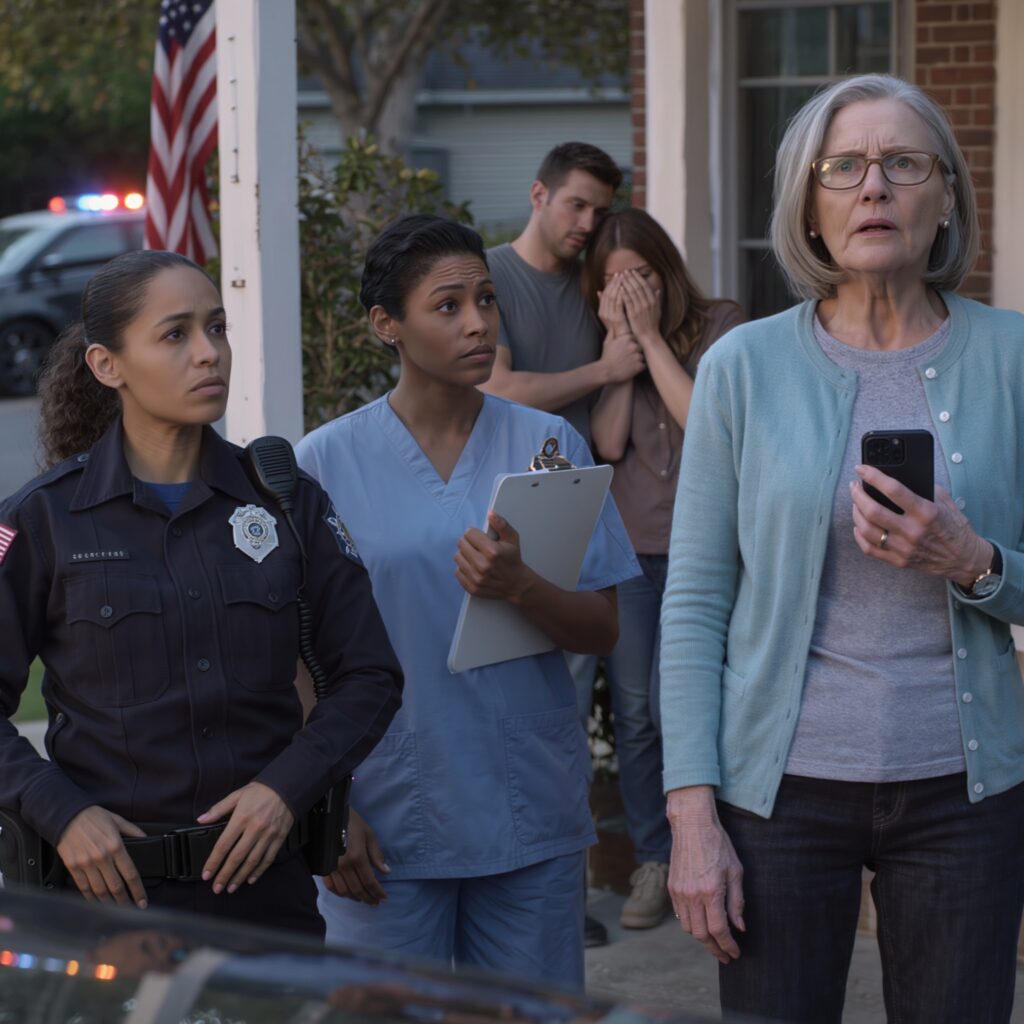
My doorbell rang, interrupting our conversation. Through the peephole, I could see Officer Rodriguez standing on my front porch with a woman I didn’t recognize.
“David, I have to go. The police are here.”
I opened the door to find Officer Rodriguez accompanied by a social worker carrying a clipboard and wearing the tired expression of someone who’d been dealing with family crises all day.
“Mrs. Marshall, this is Jennifer Santos from Child Protective Services. We’ve located Emma and Jake.”
Relief flooded through me so powerfully that I had to steady myself against the doorframe.
“Are they okay? Where were they?”
“They’re physically unharmed,” Ms. Santos said, “but they’re frightened and confused. The Uber driver apparently misread the handwritten address and dropped them at 412 Maple Avenue instead of 412 Maple Street. That address is a vacant house in a transitional neighborhood.”
A vacant house.
“The children were found by neighbors who called police when they saw two young kids sitting on the steps of an empty house as it was getting dark. Emma and Jake were cold, scared, and asking for their grandmother.”
Officer Rodriguez consulted her notes.
“The good news is they’re safe. The concerning news is that they were unsupervised in an unsafe area for over three hours while their mother was…” She paused, checking her information. “According to Uber records and social media posts, Madison Marshall was at a friend’s birthday party at a club downtown when she booked the ride for the children.”
“A club?” My voice was barely above a whisper.
Ms. Santos nodded grimly.
“We have Instagram photos of Mrs. Marshall at the party posted between 5:00 p.m. and 7:00 p.m. while her children were missing and she was telling police it was a work emergency.”
The lie hit me like a physical blow. Madison hadn’t sent Emma and Jake to my house because of a work crisis. She’d sent them because she wanted to attend a party and assumed she could manipulate me into providing free child care by creating a crisis that would make refusing seem heartless.
“Where are the children now?”
“They’re at the precinct with a victim advocate, being interviewed by trained personnel. Mrs. Marshall, given the circumstances of this case, we need to discuss temporary custody arrangements while we investigate.”
“Temporary custody?”
“Child endangerment cases require careful evaluation of parental fitness. Until we complete our investigation, Emma and Jake need a safe, stable environment with a responsible caregiver.”
Officer Rodriguez looked at me with something that might have been sympathy.
“Mrs. Marshall, would you be willing to provide temporary care for your grandchildren? You’re their closest relative, and they’ve been asking for their grandmother since we found them.”
I thought about my cardiac symptoms, about the stress tests scheduled for next week, about the quiet retirement life I’d been carefully constructing since Robert’s death. Then I thought about Emma and Jake, eight and six years old, sitting scared and confused in a police station because the adults responsible for their welfare had prioritized a party over their safety.
“Yes,” I said without hesitation. “Yes, I’ll take care of them.”
Some emergencies, I was learning, were worth disrupting your life for. And some grandmothers discovered that the word no sometimes led to situations where yes became the only moral choice available.
The sight of Emma and Jake at the police station broke my heart in ways I hadn’t expected. They sat in child-sized chairs in a room painted cheerful yellow, clutching juice boxes and looking smaller and more fragile than I’d ever seen them. Emma’s dark hair was tangled and she still wore her school clothes from that morning—a lifetime ago, when the biggest worry had been Madison’s inconvenient child care request.
“Grandma Helen!”
Jake launched himself into my arms the moment he saw me, his six-year-old body trembling with relief and exhaustion. Emma followed more cautiously, her eight-year-old eyes holding questions I wasn’t sure I could answer.
“Are we in trouble?” Emma asked, her voice barely above a whisper. “The police lady said Mommy made a mistake, but we didn’t do anything wrong.”
I knelt down to their eye level, my own eyes filling with tears at the injustice of children blaming themselves for adult failures.
“You’re not in trouble, sweetheart. Not at all. You and Jake didn’t do anything wrong.”
“Where’s Mommy?” Jake asked, his small hand clutching my sweater. “Why didn’t she come get us?”
The victim advocate, a gentle woman named Carol who specialized in working with children, caught my eye and shook her head slightly. Madison hadn’t been allowed to see Emma and Jake yet due to the ongoing investigation. Child Protective Services needed to ensure the children’s safety before determining visitation arrangements.
“Mommy has to talk to some people first,” I said carefully. “But you’re going to stay with me tonight, okay? We’ll have dinner and watch a movie and everything will be better tomorrow.”
Ms. Santos approached with paperwork and the kind of serious expression that made my stomach tighten.
“Mrs. Marshall, we need to go over the temporary custody arrangements. You’ll be responsible for Emma and Jake’s care while we complete our investigation into the endangerment allegations.”
“How long will that take?”
“Typically two to four weeks. For cases like this, we’ll need to interview all parties, review the evidence, and assess the home environment before determining permanent custody arrangements.”
I signed document after document, officially taking responsibility for two children whose mother had prioritized a party over their welfare. The irony wasn’t lost on me. I’d said no to watching them for a few hours so I could attend a crucial medical appointment, and now I was committed to caring for them indefinitely while their mother faced potential criminal charges.
The drive home was quiet except for Jake’s occasional sniffles and Emma’s whispered reassurances to her little brother. I’d stopped at a drive-thru for dinner, knowing that my refrigerator contained single-person portions and my pantry lacked kid-friendly options.
“Grandma Helen,” Emma said as we pulled into my driveway. “Why did the Uber man take us to the wrong house?”
I thought about how to explain adult incompetence to children who deserved better.
“Sometimes when addresses are written by hand, they can be hard to read. The driver thought he was taking you to my house, but he got confused.”
“Mommy wrote it wrong. The driver couldn’t read it clearly enough to find the right place. But we told him we were going to Grandma’s house. Why didn’t he ask us for directions?”
Eight-year-old logic, cutting straight to the heart of every adult failure in the situation.
“I don’t know, sweetheart. Grown-ups don’t always make the best choices, even when they’re trying to help.”
Inside my house, I realized how completely unprepared I was for overnight guests, let alone long-term child care. My spare bedrooms contained exercise equipment and craft supplies, not children’s furniture. My kitchen cabinets held coffee and whole-grain cereals, not the snacks and easy meals that kids needed.
“Can we call Daddy?” Jake asked while picking at his chicken nuggets.
“Of course we can call Daddy.”
I dialed David’s number and put the phone on speaker so both children could talk to their father. His voice was strained when he answered.
“Emma, Jake, are you okay? Daddy’s been so worried about you.”
“We’re okay,” Emma said with the composure of a child who’d learned to comfort adults. “We’re at Grandma Helen’s house. She made us dinner.”
“Where’s Mommy?” Jake asked, the question that had been hovering over our entire evening.
There was a long pause before David answered.
“Mommy has to stay somewhere else tonight while some people figure things out. But you’re safe with Grandma Helen. And I’ll see you tomorrow, okay?”
After the call ended, I helped the children settle into makeshift sleeping arrangements—Emma in my spare room with extra pillows to make the daybed more comfortable, Jake on my living room couch with blankets and his favorite stuffed animal that I’d retrieved from their house.
“Grandma Helen,” Emma said as I tucked her in. “Are Mommy and Daddy getting divorced?”
The question caught me off guard.
“Why would you ask that, sweetheart?”
“Because Mommy’s been staying out more, and Daddy gets mad when she does, and now she’s in trouble with the police.”
Emma’s matter-of-fact tone suggested she’d been thinking about family stability for longer than any eight-year-old should have to.
“I don’t know what will happen with Mommy and Daddy,” I said honestly. “But I know that whatever happens, you and Jake will be loved and taken care of—by me, by Daddy, by people who love you and want you to be safe.”
After both children were finally asleep, I sat in my kitchen with a cup of tea and called my friend Patricia, who’d raised three children and might have practical advice about sudden grandmother custody.
“Helen, my god, are you sure you’re ready for this? Full-time child care is exhausting under the best circumstances, and this situation sounds incredibly complicated.”
“I’m terrified,” I admitted. “But Patricia, these children were abandoned because their mother wanted to go to a party. Emma is asking if her parents are getting divorced. Jake keeps asking why Mommy didn’t come get them. How could I not take care of them?”
“What about your health issues? Your cardiac symptoms?”
I thought about my appointment with Dr. Martinez, about the stress test scheduled for next week, about the chest pain that seemed less important now than Emma’s frightened questions and Jake’s need for reassurance.
“I’ll figure it out. The children need stability right now, and I’m the only family member who’s available and responsible enough to provide it.”
“What about David?”
“David enabled Madison’s behavior for years. He’s going to have to prove he can prioritize his children’s welfare over his wife’s convenience before anyone trusts him with full custody.”
After hanging up, I walked through my quiet house, checking on two sleeping children who’d been failed by the adults responsible for protecting them. Emma was clutching a throw pillow like a security blanket, and Jake had kicked off his covers despite the cool evening. I tucked Jake back under his blankets and stood looking down at his peaceful face, thinking about the conversation I’d need to have with Madison tomorrow, about the legal proceedings that would determine these children’s future, about the life changes I’d face as a suddenly active grandmother.
Some emergencies, I was learning, transformed your existence in ways you never planned or expected. But some transformations were worth accepting when the alternative was letting innocent children pay for their parents’ failures. Tomorrow, I would figure out how to balance my own health needs with full-time child care responsibilities. Tonight, I would simply be grateful that Emma and Jake were safe, warm, and sleeping peacefully in a house where their welfare was the top priority.
The next morning arrived with a series of revelations that made Madison’s betrayal even more devastating than I’d initially understood. Emma and Jake woke up early, confused about their surroundings until memory kicked in and Emma’s face crumpled with the weight of yesterday’s trauma.
“I want to go home,” she whispered, climbing into my lap as I sat with my morning coffee. “I want everything to be normal again.”
“I know, sweetheart. I want that, too.”
Jake joined us in the kitchen, still wearing yesterday’s clothes and carrying his stuffed elephant.
“Grandma Helen, why can’t we go to our house?”
Before I could answer, my doorbell rang. Through the window, I could see Ms. Santos from Child Protective Services, accompanied by a police officer I didn’t recognize. My stomach clenched as I realized this visit probably brought news I wasn’t prepared to hear.
“Emma, Jake, could you go wash your hands and faces? We’ll make pancakes after I talk to these people.”
I opened the door to find Ms. Santos holding a thick folder and wearing the expression of someone who’d spent the night reviewing evidence that had only gotten worse with scrutiny.
“Mrs. Marshall, we need to discuss some developments in the case. May we come in?”
I led them to my living room, positioning myself where I could still see the children in the kitchen.
“What kind of developments?”
Ms. Santos opened her folder and spread out papers that looked like social media screenshots and official documents.
“We’ve been investigating Madison Marshall’s activities yesterday, and the situation is more serious than initially reported.”
“More serious how?”
Officer Collins, the new policeman, consulted his notes.
“Mrs. Marshall wasn’t just at a friend’s birthday party. She was at a club downtown with a group that included several people with drug-related arrests. Social media posts show her drinking heavily and engaging in behavior that suggests substance use.”
I felt the blood drain from my face.
“Substance use?”
“Instagram stories posted to her account between 4:00 p.m. and 7:00 p.m. show her at the party clearly intoxicated. There are videos of her dancing on tables, taking shots, and in one case appearing to consume what looks like cocaine in a bathroom mirror selfie.”
Ms. Santos handed me printed screenshots that made my stomach turn. Madison, Emma and Jake’s mother, had been snorting drugs in a club bathroom while her children sat scared and alone outside an abandoned house.
“But that’s not all,” Ms. Santos continued. “We interviewed Madison last night, and her story changed multiple times. Initially, she claimed it was a work emergency. When confronted with evidence that she was at a party, she said it was a networking event for her job. When shown the social media posts, she admitted it was recreational, but claimed she’d arranged for you to watch the children.”
“She knew I’d said no. She knew I had a medical appointment.”
“According to her statement, she believed you were just being difficult and that once the children arrived, you’d have no choice but to care for them.”
Officer Collins looked up from his notes.
“Mrs. Marshall, she also admitted this isn’t the first time she’s used this strategy.”
“What do you mean?”
“She’s apparently sent Emma and Jake to relatives’ houses without permission on multiple occasions, assuming that family members would feel obligated to provide child care rather than turn away children who’d already been dropped off.”
I thought about the times over the past year when Madison had called at the last minute with various emergencies, the guilt trips when I’d had to decline due to my own commitments, the way she’d made me feel selfish for maintaining boundaries around my time and energy.
“How many times?”
Ms. Santos consulted another document.
“Emma mentioned during her interview that Mommy sometimes sends them to Uncle Brad’s house in Uber rides when she has important meetings. Uncle Brad is Madison’s brother, who works night shifts and has told Madison repeatedly not to send children to his apartment unannounced.”
“So the children have been dropped off at people’s homes before without arrangements, multiple times.”
“Emma has been keeping track because she worries about getting in trouble with relatives who don’t expect them.”
Ms. Santos’s voice was gentle but firm.
“Mrs. Marshall, this pattern of behavior constitutes ongoing child endangerment and neglect.”
I looked toward the kitchen where Emma and Jake were attempting to make their own breakfast—Emma reading cereal box instructions to Jake while trying to act like the responsible adult their mother had failed to be.
“What happens now?”
“Madison Marshall has been charged with child endangerment, reckless endangerment, and child abandonment. Given the evidence of substance use and the pattern of negligent behavior, we’re recommending that temporary custody remain with you while we complete a full investigation.”
Officer Collins added, “We’ll also be investigating your son David’s knowledge of and complicity in this pattern. Did he know about his wife’s habit of abandoning the children with unwilling relatives?”
“I don’t know. David tends to believe Madison’s explanations without asking many questions.”
“We’ll be interviewing him today.”
Ms. Santos looked at me steadily.
“Mrs. Marshall, are you prepared to continue caring for Emma and Jake for an extended period? This investigation could take several weeks, and depending on the outcome, you might be looking at longer-term custody arrangements.”
I thought about my cardiac symptoms, about the stress tests scheduled for next week, about the quiet retirement I’d been carefully constructing. Then I looked at Emma, who was pouring milk for Jake while humming quietly to herself, taking care of her little brother because the adults in her life had proven unreliable.
“Yes, I’ll take care of them for as long as necessary.”
After the officials left, I sat down with Emma and Jake to explain what would happen next. Emma listened with the serious attention of a child who’d learned that adult promises weren’t always reliable, while Jake focused on his cereal and occasionally asked questions about whether they were in trouble.
“You’ll stay here with me while some people figure out how to make sure you’re safe,” I told them. “Your Daddy will visit, but your Mommy has to work with some helpers to learn better ways to take care of you.”
“Is Mommy sick?” Emma asked.
“In a way, yes. She made some choices that weren’t safe for you and Jake. And now she needs help learning how to make better choices.”
“Like when Tommy’s mom had to go away for drinking too much.”
I realized Emma was referring to a classmate whose mother had been in rehab—eight years old, and she already had frameworks for understanding parental addiction and family breakdown.
“Something like that, sweetheart.”
My phone rang. David’s number. I answered while the children finished breakfast.
“Mom, I just finished talking to the police. Madison’s been arrested. They’re saying she was using drugs at this party while the kids were missing.”
“I know. Child Protective Services was here this morning.”
“Mom, I had no idea. I knew Madison went out with friends sometimes, but I thought it was just dinner and drinks. I didn’t know about the drugs or about her sending the kids places without permission.”
“David, how could you not know? Emma told the investigators that Madison has been dropping them off at relatives’ houses in Uber rides multiple times.”
There was a long pause.
“I work long hours, Mom. Madison handles most of the child care logistics. When she said she’d arranged babysitting, I believed her.”
“Even when family members complained about unexpected children showing up at their doors?”
“What do you mean?”
“Your Uncle Brad. Madison’s been sending Emma and Jake to his apartment without warning. David, a man who works night shifts and explicitly told her not to do it.”
I could hear David processing this information, probably realizing how many warning signs he’d ignored in favor of trusting his wife’s explanations.
“Mom, what do I need to do to get my kids back?”
“You need to prove that you can protect them from their mother’s negligence. And David, you need to figure out how you missed years of behavior that put your children at risk.”
Some conversations, I was learning, required uncomfortable truths that couldn’t be softened by family loyalty, and some parents had to earn back the right to be trusted with their children’s welfare.
Two weeks into our new arrangement, I was beginning to understand that temporary custody meant rebuilding my entire life around the needs of two traumatized children. Emma had started wetting the bed, something she hadn’t done since she was four, and Jake refused to let me out of his sight, following me from room to room like a frightened shadow.
The call from Dr. Martinez’s office came on a Tuesday morning while I was helping Jake with math homework and Emma was attempting to braid her own hair with the intensity of someone trying to control at least one aspect of her disrupted world.
“Mrs. Marshall, you missed your follow-up appointment yesterday for the stress test. Dr. Martinez is concerned about your cardiac symptoms and wants to reschedule immediately.”
I looked at my kitchen calendar where Emma’s school events, Jake’s dentist appointment, and my own medical needs competed for space in cramped handwriting that told the story of a life suddenly stretched beyond its limits.
“I’m sorry. I’ve been dealing with a family crisis. My grandchildren are living with me temporarily and—”
“Mrs. Marshall, Dr. Martinez emphasized that your symptoms require urgent evaluation. Delaying cardiac testing could be dangerous. Can we schedule something for next week?”
“We had to give your slot to another patient. The next available appointment is three weeks out.”
Three weeks. I thought about the chest tightness I’d been ignoring while focusing on bedtime stories and homework help, about the dizzy spells I’d attributed to stress rather than potential heart problems, about Robert’s sudden death and my promise to myself to prioritize my health.
“Fine. Schedule it for three weeks from now.”
After I hung up, Emma looked at me with the perceptive attention she’d developed since the night her world fell apart.
“Grandma Helen, are you sick?”
“I’m fine, sweetheart. Just some routine doctor stuff.”
“Mommy used to say she was fine when she wasn’t really fine.”
Eight years old, and Emma had learned to read adult deception with the accuracy of someone whose survival had depended on interpreting her mother’s moods and motivations.
“I have to see a heart doctor, but it’s probably nothing serious, just something doctors check when people get older.”
“Like Grandpa Robert’s heart?”
The question hit me like a physical blow. Emma had been only four when Robert died, but she remembered the hospital visits, the scary medical equipment, the way her grandfather had gone from healthy to gone in a matter of weeks.
“Grandma Helen, you can’t die,” Jake said matter-of-factly, looking up from his math worksheet. “We need you to take care of us.”
The weight of their dependence settled on my shoulders like a heavy coat. These children had already lost their stable home, their mother’s presence, and their father’s reliability. The thought of them facing another adult abandonment, even through illness, made my chest tighten with anxiety that had nothing to do with cardiac symptoms.
My phone rang again. Ms. Santos from Child Protective Services.
“Mrs. Marshall, we need to schedule a home visit to assess the children’s adjustment and your caregiving situation. Also, there’s been a development with Madison’s case.”
“What kind of development?”
“She’s been arrested again. Drug possession this time. She was stopped for erratic driving and police found cocaine in her purse.”
I felt the last of my illusions about Madison’s capacity for responsible parenthood crumble.
“When did this happen?”
“Last night. Mrs. Marshall, this significantly changes the custody situation. We’re now looking at potential termination of parental rights rather than family reunification.”
“What does that mean for Emma and Jake?”
“It means their temporary placement with you may become permanent. Are you prepared for that possibility?”
I looked at Emma, who was listening to my half of the conversation with the careful attention of someone who’d learned that adult phone calls often determine children’s fates. Jake had abandoned his math homework and moved closer to me, sensing tension he couldn’t understand but instinctively fearing.
“Yes,” I said without hesitation. “I’m prepared for that.”
After ending the call, I realized I needed to have the conversation I’d been avoiding since this crisis began. I sat down with Emma and Jake in the living room, choosing words carefully for a discussion that would shape their understanding of their future.
“That was Ms. Santos from Child Protective Services. She wanted me to know that your Mommy has been arrested again.”
“For what?” Emma asked.
“For having drugs that aren’t medicine. Drugs that make people make bad choices and can hurt their bodies.”
“Is Mommy going to jail?”
“Probably yes. For a while.”
Jake climbed into my lap, his small body seeking comfort against news he didn’t fully understand but recognized as bad.
“Does that mean we can’t live with Mommy anymore?”
“It means you’ll probably live with me for a long time. Maybe permanently.”
Emma was quiet for several minutes, processing this information with the careful analysis she applied to all the adult failures in her life.
“Grandma Helen, if we live with you permanently, will you still love us if we’re not perfect?”
The question revealed the damaged logic of children who’d learned to blame themselves for their mother’s negligence, who’d internalized the belief that love was conditional on good behavior rather than an automatic right of childhood.
“Emma, Jake, listen to me very carefully. I will love you no matter what. If you make mistakes, if you get bad grades, if you’re sad or angry or scared, I will still love you. My love for you isn’t something you have to earn or something you can lose.”
“Even if we’re expensive and you don’t have much money?”
I realized Emma was remembering arguments she’d overheard between Madison and David, fights about child care costs and the financial burden of raising children properly.
“Even then. We’ll figure out the money part together. But Emma, you and Jake are not burdens. You’re not problems to be solved. You’re people who deserve love and safety and stability.”
“What about Daddy?” Jake asked. “Can we still see Daddy?”
“Daddy will visit, and maybe someday you can visit him. But right now, Daddy has to prove that he can take better care of you before you can live with him again.”
That evening, after the children were asleep, I called my sister Margaret in Arizona to discuss the reality of raising two young children in my sixties while dealing with potential cardiac issues.
“Helen, are you sure you can handle this? Full-time parenting is exhausting at any age, but at sixty with health problems…”
“Margaret, these children have been abandoned and traumatized. Emma is eight years old and she’s asking me if I’ll still love her if she’s not perfect. Jake follows me to the bathroom because he’s afraid I’ll disappear like his mother did. How can I not take care of them?”
“What if your heart condition is serious? What if you need surgery or extended treatment?”
“Then I’ll deal with that when it happens. But Margaret, the alternative is putting them in foster care with strangers while their father proves he’s capable of responsible parenting and their mother serves a prison sentence for drug possession.”
“Have you thought about the financial implications—raising two children on your retirement income?”
I had thought about it. The life insurance from Robert’s death would cover emergencies, but my retirement savings would be stretched thin by the additional expenses of child care. I’d need to apply for financial assistance, possibly return to work part-time, certainly give up the comfortable retirement I’d planned.
“I’ll figure it out. Margaret, when I was lying in that hospital bed after Robert died, I promised myself I’d find ways to matter, to contribute, to build meaning from grief. Maybe this is how.”
“By sacrificing your health and financial security?”
“By choosing family over convenience. By proving that some grandmothers step up when parents fall down.”
After we hung up, I walked through my house looking at the evidence of two children who’d transformed my quiet widowhood into active, chaotic, meaningful daily life. Jake’s stuffed animals scattered across the living room. Emma’s books stacked on the coffee table. Drawings on my refrigerator depicting our family in bright crayon colors that included me as a central figure.
Some sacrifices, I was beginning to understand, weren’t really sacrifices at all. They were opportunities to discover that love was elastic, that family could be reconstructed from crisis, and that saying yes to unexpected responsibilities could lead to purposes you’d never imagined.
My cardiac symptoms would have to wait. My grandchildren couldn’t.
David’s first visit since the custody arrangements were formalized arrived on a Saturday morning that had started with Emma refusing to eat breakfast and Jake announcing that he didn’t want to go to school anymore because the other kids asked too many questions about why he lived with his grandmother now. I’d spent two hours trying to coax Emma into eating something while simultaneously explaining to Jake why education was important even when life was complicated.
David knocked on my door carrying flowers and wearing the expression of a man who’d finally understood the magnitude of his failures as a father.
“Mom, thank you for taking care of them. I know this isn’t what you planned for your retirement.”
I let him in, noting how different he looked after three weeks of facing the consequences of his willful blindness to Madison’s behavior. He’d lost weight, and there were dark circles under his eyes that spoke of sleepless nights spent confronting truths he’d avoided for years.
“Daddy!”
Jake launched himself into David’s arms with the desperate enthusiasm of a six-year-old who’d learned not to take parental presence for granted. Emma approached more cautiously, watching her father’s face for signs of the disappointment or frustration she’d learned to expect from adults.
“How are my kids?” David asked, settling onto the couch with Jake still clinging to him while Emma maintained careful distance.
“They’re adjusting,” I said, choosing words carefully in front of children who’d become hyper-vigilant about adult conversations. “It’s been an emotional transition for everyone.”
“Emma, sweetheart, come here. I missed you so much.”
Emma approached slowly, accepting David’s hug but keeping her expression guarded.
“Daddy, why didn’t you know Mommy was using drugs?”
The question hung in the air like smoke, revealing how much Emma had processed about her family’s dissolution and how many adult explanations had failed to satisfy her need for understanding.
David’s face crumpled with something that looked like genuine remorse.
“I should have known, Emma. I should have paid more attention and asked better questions. That’s my fault, not yours or Jake’s.”
“Are you going to take us back home?”
“Not yet, sweetheart. I have to prove to the people who decide these things that I can take better care of you first. And Emma, even when that happens, you might still spend a lot of time here with Grandma Helen.”
“Why?”
David looked at me, and I could see him struggling with how much truth to share with children who’d already absorbed more adult complexity than any kid should have to process.
“Because Grandma Helen has been taking better care of you than Daddy and Mommy did. Because you’re safe and happy here in ways that you weren’t at home.”
It was the first time David had acknowledged the dysfunction that had characterized Emma and Jake’s daily life before the custody crisis, and I felt something shift in my assessment of his capacity for growth and change.
After David left, promising to return next weekend and call every Tuesday evening, Emma approached me with the serious expression she wore when processing difficult information.
“Grandma Helen, do you think Daddy will really get better at taking care of us?”
“I think he wants to get better. Whether he actually will depends on whether he’s willing to do the hard work of changing how he makes decisions about family.”
“What kind of hard work?”
“Learning to put you and Jake first, even when that’s inconvenient. Learning to ask hard questions about people’s behavior instead of believing easy explanations. Learning to protect you from adults who make choices that hurt children.”
Emma nodded with the gravity of someone who’d learned to evaluate adult reliability through experience rather than promises.
“Grandma Helen, can I ask you something?”
“Of course, sweetheart.”
“If Daddy gets better and we go back to living with him, will you still be our grandmother? Will we still see you all the time?”
The question revealed Emma’s deepest fear—that stability was temporary, that love was conditional, that the safety she’d found with me would disappear if family circumstances changed.
“Emma, I will always be your grandmother, no matter where you live or who takes care of you day-to-day. You and Jake are part of my heart now, and that doesn’t change based on living arrangements.”
“Promise?”
“I promise.”
That afternoon, while Jake napped and Emma worked on a school project about family trees that had become complicated by recent events, my phone rang with a call I’d been dreading—Dr. Martinez’s office, following up on my missed cardiac appointments.
“Mrs. Marshall, Dr. Martinez is very concerned about your continued delays in cardiac testing. Given your family history and symptoms, postponing evaluation could be life-threatening.”
“I understand the urgency, but I’m currently caring for my grandchildren full-time due to a family crisis. It’s difficult to schedule medical appointments when I can’t leave them with anyone else.”
“Mrs. Marshall, what would happen to your grandchildren’s care if you had a cardiac event? Wouldn’t it be better to address potential problems now rather than wait for an emergency?”
The logic was unassailable and terrifying. If my symptoms indicated serious heart disease, delaying treatment could result in the kind of sudden cardiac death that had taken Robert, leaving Emma and Jake to face another abandonment by an adult they’d come to depend on.
“Can we schedule the stress test for a time when I can bring the children with me? They’re eight and six, and they can sit quietly in a waiting room if necessary.”
“Mrs. Marshall, cardiac stress testing isn’t really appropriate for children to witness. The exercise protocols and monitoring equipment can be frightening for young observers.”
“Then what do you suggest? I can’t leave them with anyone else and I can’t continue ignoring symptoms that could indicate serious problems.”
There was a pause while the scheduler consulted with Dr. Martinez.
“Dr. Martinez says he can arrange for a child life specialist to supervise Emma and Jake in a separate area during your testing. Can you come in Thursday morning at 9:00 a.m.?”
“Yes. Thank you.”
After hanging up, I realized I needed to prepare Emma and Jake for another adult medical crisis, another situation where their stability might be threatened by circumstances beyond their control.
“Emma, Jake, I need to tell you about something. Remember how I mentioned that I need to see a heart doctor?”
Both children looked up with the immediate alertness they’d developed in response to adult announcements about changes or problems.
“I have an appointment Thursday morning for some tests to make sure my heart is working properly. You’ll come with me, but you’ll stay in a special room with someone who takes care of children while I do the tests.”
“Like when Grandpa Robert had to go to the heart hospital?” Emma asked.
“Similar tests, but mine are just to check things out and make sure everything is okay.”
“What if everything isn’t okay?” Jake asked with the direct concern of someone who’d learned that adult health problems could result in permanent disappearances.
“If there’s a problem, the doctors will fix it so I can take care of you for a long, long time.”
“Promise?” Emma asked.
I thought about promises I couldn’t guarantee, about cardiac events that struck without warning, about children who’d already experienced too much loss to bear additional abandonment.
“I promise I’ll do everything the doctors tell me to do to stay healthy and strong enough to take care of you.”
It wasn’t the unconditional promise Emma was seeking, but it was the honest commitment I could make while facing the reality that some health problems couldn’t be solved by good intentions or determination. Some tests, I was learning, had stakes that extended far beyond the person being examined, and some grandmothers faced the terrifying possibility that their own mortality could determine their grandchildren’s entire future.
Thursday morning arrived with the kind of gray, drizzling rain that made everything feel ominous. Emma had barely touched her breakfast, and Jake announced that his stomach hurt, a development I recognized as anxiety manifesting in physical symptoms.
“Grandma Helen,” Emma said while I packed snacks and entertainment for the waiting room. “What if the heart doctors find something really bad?”
“Then we’ll deal with whatever they find, and we’ll deal with it together.”
“But what if you have to go to the hospital like Grandpa Robert did?”
I knelt down to Emma’s eye level, taking her hands in mine.
“Emma, I know you’re scared because you remember what happened to Grandpa, but these are different tests. And even if the doctors find problems, there are lots of ways to fix heart problems now that help people stay healthy.”
“Did Grandpa Robert have the same tests?”
“Grandpa Robert waited too long to see doctors, which is why I’m going now—to catch any problems early, when they’re easier to fix.”
The cardiac clinic was located in a medical building that smelled like disinfectant and contained the kind of fluorescent lighting that made everyone look pale and worried. Emma and Jake stayed close to me as we checked in, their eyes wide as they took in the medical equipment and the other patients who looked tired and older than I felt.
“Mrs. Marshall, I’m Jennifer, the child life specialist. Emma and Jake, would you like to come see the special room we have for kids whose grown-ups are having medical tests?”
Jennifer was young and cheerful in the way that people who work with children learn to be, and she led us to a bright room filled with books, games, and a television playing age-appropriate movies.
“You can watch movies or play games or read books while your grandmother has her tests,” Jennifer explained. “And if you get worried or need anything, just let me know and we can check on her.”
“How long will the tests take?” Emma asked.
“About two hours. That’s time for a whole movie and maybe some coloring or reading afterward.”
I hugged both children goodbye, noting how Jake’s grip lingered and how Emma’s eyes were bright with unshed tears.
“I’ll be back in two hours,” I promised. “Jennifer will take good care of you.”
The stress test itself was exactly as grueling as I’d expected—walking on a treadmill while connected to monitoring equipment that tracked my heart’s response to increasing levels of exercise. Dr. Martinez watched the readouts with the focused attention of someone looking for specific patterns that could indicate serious problems.
“Mrs. Marshall, I can see some irregularities in your rhythm during peak stress. We’re going to need to do an echocardiogram to get a better picture of your heart structure and function.”
“Is it serious?”
“It’s concerning enough that I want more information before making treatment recommendations. The good news is that you’re here now getting evaluated rather than waiting for symptoms to worsen.”
The echocardiogram involved lying still while a technician moved an ultrasound wand across my chest, creating images of my heart in real time. I watched the monitor, trying to interpret the black-and-white patterns that would determine whether I could continue caring for Emma and Jake without medical intervention.
“Mrs. Marshall, Dr. Martinez would like to speak with you about the results.”
Dr. Martinez’s office was filled with the kind of medical diplomas and cardiology textbooks that should have been reassuring but instead reminded me of all the things that could go wrong with human hearts.
“Mrs. Marshall, the tests show mitral valve regurgitation. Essentially, one of your heart valves isn’t closing properly, which is causing the irregular rhythms and some of the symptoms you’ve been experiencing.”
“Is that treatable?”
“Very treatable, but it will require monitoring and likely medication to manage. The good news is that we caught this early, and with proper management, you should be able to maintain normal activities, including caring for your grandchildren.”
Relief flooded through me so powerfully that I felt dizzy.
“So I don’t need surgery?”
“Not at this stage. We’ll start with medication to help your heart rhythm and reduce the workload on the affected valve. You’ll need regular follow-up appointments to monitor the condition, but Mrs. Marshall, this is very manageable. And you can continue caring for Emma and Jake, yes—but with some modifications. You’ll need to avoid extreme physical stress, get adequate rest, take your medications consistently, and keep all follow-up appointments. Do you have support from other family members if you need help with child care during medical visits?”
I thought about David, who was still proving his reliability, and Madison, who was facing trial on drug possession charges.
“Some support, but I’m their primary caregiver right now.”
“Mrs. Marshall, caring for two young children while managing a cardiac condition will require careful attention to your own health needs. You can’t provide good care for them if you’re not taking care of yourself.”
When I returned to the children’s room, Emma and Jake looked up from a puzzle they’d been working on with Jennifer, their faces immediately scanning mine for signs of bad news.
“How did it go, Grandma Helen?” Emma asked.
“The doctors found a small problem with my heart, but it’s the kind of problem they can fix with medicine. I’m going to be fine.”
“Do you have to go to the hospital?”
“No hospital. Just medicine and regular checkups with the heart doctor.”
Jake abandoned the puzzle and wrapped his arms around my waist.
“I was scared you were going to die like Grandpa Robert.”
“I’m not going to die, sweetheart. The doctors caught this early and they know how to fix it.”
On the drive home, Emma was unusually quiet, staring out the window at the rain that had finally stopped, leaving everything looking washed clean and somehow more hopeful.
“Grandma Helen,” she said finally. “If you have to take heart medicine, does that mean you’re old?”
“I am old, Emma. Not too old to take care of you and Jake, but old enough that I need to pay attention to my health more carefully.”
“Will you get older while we’re living with you?”
“Yes, I’ll get older, but hopefully I’ll get older slowly and gracefully while watching you and Jake grow up and become amazing people.”
“What if we’re still living with you when you’re really, really old?”
“Then you’ll take care of me the way I’m taking care of you now. That’s what families do. They take care of each other when someone needs help.”
That evening, after Emma and Jake were asleep, I sat in my kitchen with my new heart medication and a packet of information about mitral valve regurgitation, thinking about the future I was planning with two children who’d been entrusted to my care by circumstances rather than choice. The medication would help manage my condition, but it also served as a daily reminder that my time with Emma and Jake might be limited by factors beyond our control. I needed to use whatever years I had to help them become strong, confident, emotionally healthy adults who could face their own challenges with resilience rather than fear.
Some health scares, I was learning, served as wake-up calls about priorities that had been clear all along. And some families were built on the understanding that love meant taking care of each other through whatever medical, emotional, or practical challenges life presented.
Tomorrow, I would start my heart medication and continue the work of raising two children whose trust in adult reliability was slowly being rebuilt through daily proof that some promises could be kept, some love was unconditional, and some grandmothers were strong enough to choose family over convenience, even when the cost was higher than anyone had anticipated.
Six months after becoming Emma and Jake’s primary caregiver, I received the call I’d been both dreading and expecting. Ms. Santos from Child Protective Services asked to schedule a home visit to discuss permanent placement options and the future of the Marshall children’s custody arrangements. The language was bureaucratic, but the meaning was clear. It was time to decide whether Emma and Jake would remain with me permanently or return to David’s care now that he’d completed parenting classes, family therapy, and had proven six months of stable employment and responsible behavior.
“Mrs. Marshall, we need to assess both potential placements to determine what’s in the children’s best interests. David has made significant progress, but the children have also thrived in your care.”
I looked around my living room, which had been transformed from a quiet widow’s retreat into an active family space filled with homework supplies, art projects, and the comfortable chaos of children who felt secure enough to spread their belongings throughout the house.
“When do you need to make this decision?” I asked.
“Within the next month. We’ll be interviewing Emma and Jake about their preferences, evaluating both living situations, and making a recommendation to the family court judge.”
After ending the call, I realized I needed to prepare Emma and Jake for conversations about their future that would require them to make choices no children should have to face—choosing between a father who was trying to rebuild his reliability and a grandmother who’d provided stability during their most vulnerable period.
“Emma, Jake, could you sit with me for a few minutes? I need to talk to you about something important.”
They approached with the careful attention they’d learned to give adult announcements, settling on either side of me on the couch that had become our designated space for serious conversations.
“Ms. Santos called today. She wants to talk to you about whether you want to keep living here with me or go back to living with Daddy.”
Emma’s reaction was immediate and intense.
“Do we have to choose?”
“The people who decide these things need to understand what you want and what would make you feel safest and happiest.”
“What happens if we choose different things?” Jake asked. “What if I want to live with you and Emma wants to live with Daddy?”
I hadn’t considered this possibility—that the children might have different preferences about their future placement, creating an impossible choice between keeping them together and honoring their individual needs.
“I don’t know, sweetheart. Let’s hope you both feel the same way about what you want.”
“Grandma Helen,” Emma said, her voice careful in the way she’d learned to use when asking questions that might have painful answers. “If we choose to live with Daddy, will you still love us?”
“Emma, my love for you and Jake doesn’t depend on where you live. Whether you’re here with me every day or visiting on weekends or living across the country, I will always love you exactly the same amount.”
“But will we still see you all the time?”
“We’ll see each other as much as possible, and we’ll talk on the phone, and you’ll always know that this house is your home too, no matter what.”
“What do you think we should choose?” Jake asked.
The question put me in an impossible position. I wanted Emma and Jake to stay with me. I’d grown to love the daily rhythms of their lives—the bedtime stories, the homework help, the way they’d transformed my quiet widowhood into active, meaningful engagement with the future. But I also wanted them to have a relationship with their father. And David had worked hard to become more reliable and emotionally present.
“I think you should choose what feels safest and happiest for you. Both Daddy and I love you and want to take good care of you.”
“But Grandma Helen, you already proved you can take good care of us. Daddy has to prove he can do it.”
Emma’s observation was astute and heartbreaking. These children had learned to evaluate adult reliability based on demonstrated behavior rather than promises, and six months of stability with me carried more weight than David’s recent improvements after years of negligent oversight.
Three days later, David came for his regular weekend visit. But this time, he brought a photo album and what appeared to be architectural plans that he spread across my dining room table.
“Kids, I want to show you something. Remember our old house where you used to live?”
Emma and Jake nodded, though I could see them tensing at the mention of their previous home, which held memories of Madison’s erratic behavior and David’s absence during work hours.
“Well, I’ve been working with some people to make it better. Look at these pictures.”
The photo album showed extensive renovations to David’s house—a new playroom, updated bedrooms for each child, a fenced backyard with play equipment, and what appeared to be a home office designed to allow David to work from home more frequently.
“I’ve changed my job so I can work from home three days a week,” David explained. “And Mrs. Patterson from next door is going to help with after-school care on the days when I have to go to the office.”
“What about Mommy?” Jake asked. “Would Mommy live there too?”
“No, buddy. Mommy and Daddy are getting divorced. She’s going to live somewhere else and get help with her problems. But you could visit her when the doctors say she’s ready.”
Emma studied the renovation photos with the analytical attention she applied to homework problems.
“Daddy, why did you change everything? Why didn’t you make it better before when we lived there?”
David’s face crumpled slightly.
“Emma, I didn’t realize how much better things could be. I thought what we had before was good enough, but Grandma Helen showed me what really good care looks like.”
“So you learned from watching Grandma Helen?”
“Yes, sweetheart. I learned that children need consistency and attention and parents who put their needs first.”
I felt something complicated twist in my chest—pride that my caregiving had served as a model for David’s growth, but also sadness that it had taken Emma and Jake’s traumatic abandonment for him to understand what responsible parenting required.
“Grandma Helen,” Emma said after David had left. “What do you think about Daddy’s new house?”
“I think it shows that he’s been working very hard to become a better father.”
“Do you think we should give him another chance?”
“What do you think? You’re the one who would have to live with the consequences of that choice.”
Emma was quiet for a long time, processing the complexity of family loyalty, earned trust, and the difference between wanting something to work and believing it actually would.
“I think maybe we could try it,” she said finally. “But Grandma Helen, if it doesn’t work, can we come back here?”
“Emma, this will always be your home. No matter what happens, no matter where you live, you and Jake will always belong here with me.”
“Promise?”
“Promise.”
That night, as I tucked Emma and Jake into beds they’d slept in for six months, I realized that successful foster care sometimes meant preparing children to leave you, even when every instinct screamed against letting them go. Some love, I was learning, was measured not by holding on, but by trusting enough to let go—when letting go served the children’s best interests. But I was also learning that some families could stretch across multiple households, that some grandmothers could remain primary support systems even when they weren’t primary caregivers, and that some promises were worth making even when you couldn’t control all the circumstances that might threaten your ability to keep them.
Tomorrow, I would support Emma and Jake’s decision to try living with their father again. Tonight, I would treasure what might be our last evening as a three-person household that had healed together from trauma none of us had chosen, but all of us had survived.
The transition meeting took place on a crisp October morning in Ms. Santos’s office, with Emma and Jake sitting between David and me while various professionals discussed custody arrangements with the clinical efficiency of people who’d managed hundreds of similar family reconstructions.
“Emma and Jake have expressed a desire to try living with their father again,” Ms. Santos announced, consulting her notes while I felt my heart clench with pride and loss in equal measure. “However, they’ve also requested that Helen remain actively involved in their care.”
“What does that mean practically speaking?” David asked.
Family court judge Patricia Williams, who’d been overseeing our case, looked up from her own documentation.
“It means we’re recommending joint custody, with David as primary residential parent and Helen as secondary caregiver with specified visitation rights and shared decision-making authority.”
“Shared decision-making about what?” David asked.
“Medical care, education, therapy—major decisions that affect the children’s welfare. Mrs. Marshall has demonstrated excellent judgment in these areas over the past six months.”
I watched Emma and Jake during this discussion, noting how they listened to adults deciding their future with the resigned attention of children who’d learned that their preferences mattered but weren’t always decisive.
“What we want to know,” Emma said suddenly, addressing Judge Williams with eight-year-old directness, “is what happens if Daddy doesn’t do a good job taking care of us. Do we have to stay there anyway?”
The question silenced the room. Here was a child who’d been failed by parental negligence asking for protection against future failures with the practical wisdom of someone who’d learned not to trust adult promises without enforcement mechanisms.
“Emma,” Judge Williams said gently, “if your father doesn’t provide proper care, you can contact Mrs. Marshall, your teachers, or any trusted adult, and we’ll investigate immediately. You won’t have to stay in any situation that isn’t safe.”
“What if Daddy says we’re being dramatic or exaggerating?”
I felt a chill at Emma’s question, recognizing that she was drawing on memory of her mother’s gaslighting, Madison’s habit of dismissing the children’s legitimate concerns as attention-seeking behavior.
“Emma, that’s exactly why Mrs. Marshall will continue to be involved,” Ms. Santos explained. “She’ll see you regularly, and if she observes problems, she has legal authority to request intervention.”
“How regularly?” Jake asked.
“Every Wednesday evening and every other weekend,” David said, “plus holidays and any other time you want to see Grandma Helen.”
“And if there’s an emergency,” Judge Williams added, “then you call Grandma Helen immediately and she can come get you or send help.”
The formal custody agreement was signed three weeks later, but the real transition happened gradually over the following month. Emma and Jake spent increasing amounts of time at David’s renovated house, testing whether his promises of improved parenting would hold up under the stress of daily child care responsibilities.
The first crisis came on a Tuesday evening in November when David called me from the emergency room.
“Mom, I’m here with Jake. He fell off his bike and we think his arm might be broken. Can you come? He’s asking for you.”
I found Jake in a pediatric examination room trying to be brave while tears leaked down his face and David paced nervously nearby. The sight of Jake’s obviously broken arm and David’s barely controlled panic reminded me how much the children still needed both of us—David for daily parenting, me for the kind of calm crisis management that came from experience.
“Grandma Helen.”
Jake reached for me with his uninjured arm and I gathered him carefully against my chest while David explained what had happened.
“He was riding with the neighbor kids after school and he hit a pothole and went over the handlebars. Mom, I should have been watching more closely. I should have checked the bike tires. I should have—”
“David, stop. Accidents happen. Children get hurt. You brought him to the hospital immediately, and that’s what matters.”
The orthopedic surgeon confirmed a simple fracture that would heal completely with proper casting and care. But as I watched David interact with the medical staff—asking detailed questions, taking notes about care instructions, advocating for Jake’s pain management—I realized how much he’d changed in the months since gaining custody.
“Mrs. Marshall,” the surgeon said, noting David’s comprehensive medical history forms, “your son has done excellent preparation for today. Having complete records and emergency contacts made our job much easier.”
After Jake was casted and discharged, David insisted on taking us both out for ice cream despite the late hour.
“Jake, I want you to know that even though you got hurt on my watch, I’m going to take better care of you going forward. Better bike maintenance, better safety equipment, more supervision during outdoor play.”
“Daddy, it wasn’t your fault. Sometimes accidents just happen.”
Six-year-old wisdom absolving his father of guilt while David learned to take responsibility without drowning in self-recrimination.
“Grandma Helen,” Emma said as we shared sundaes in a nearly empty ice cream parlor. “Do you think Daddy is doing a good job taking care of us?”
“What do you think?”
“I think he’s trying really hard. And when Jake got hurt, he knew exactly what to do and he didn’t panic too much.”
“What about you, Jake? How do you feel about living with Daddy?”
“I like it. His house is bigger and I have my own room, but Grandma Helen, I still want to see you all the time.”
“You will see me all the time. Every Wednesday, every other weekend, and whenever you need me.”
“Even when we’re grown up?” Emma asked.
“Even when you’re grown up and have children of your own.”
Three months into the new custody arrangement, I received a call that tested everyone’s commitment to our reconstructed family structure. Madison was being released from prison after serving eight months for drug possession, and she wanted to see Emma and Jake.
“Mrs. Marshall,” Ms. Santos explained, “Madison has completed drug treatment and parenting classes while incarcerated. The court is considering supervised visitation, but we need to assess the children’s readiness and your comfort level as their secondary caregiver.”
“What do Emma and Jake want?”
“They’re conflicted. They miss their mother, but they’re also afraid of her. They want to see her, but only if you’re present during visits.”
“And David?”
“David is willing to allow supervised visitation if you agree to facilitate it.”
I thought about Madison—the woman who’d put her children in an Uber without proper arrangements so she could attend a party where she’d used cocaine in club bathrooms, the fear in Emma’s eyes when discussing her mother’s unpredictability, Jake’s anxiety every time adults made promises they might not keep.
“I’ll facilitate visits if Madison demonstrates genuine commitment to recovery and if the children continue to want contact. But Ms. Santos, if I observe any behavior that threatens Emma and Jake’s emotional stability, I’ll terminate the visits immediately.”
“That’s exactly why we want you involved, Mrs. Marshall. You’ve proven that you prioritize the children’s welfare over family politics or adult convenience.”
Some families, I was learning, could be rebuilt from crisis if enough people were willing to put children’s needs ahead of their own comfort, pride, or convenience. Some custody arrangements worked because they acknowledged that multiple adults could love children in different ways while maintaining clear boundaries about responsibility and authority. And some grandmothers discovered that their most important role wasn’t primary caregiver, but guardian of their grandchildren’s emotional safety as the family slowly healed from years of negligence and trauma.
The work was harder than full-time custody had been. But the results—watching David grow into genuine competence as a father, seeing Emma and Jake rebuild trust in adult reliability, knowing that they had multiple sources of love and support—were worth every complicated conversation, every shared decision, every moment when I chose to trust rather than control.
Tomorrow, I would facilitate Madison’s first supervised visit with the children she’d abandoned. Tonight, I would be grateful for a family that had been reconstructed from crisis into something stronger and more honest than what had existed before, the night when saying no to unreasonable demands had ultimately saved everyone involved.
Two years after the night Madison put Emma and Jake in an Uber and changed all our lives forever, I stood in my kitchen preparing for Emma’s tenth birthday party—a celebration that would include David, the children’s new stepmother, Sarah, whom David had married eight months earlier, and even Madison, whose supervised visits had gradually evolved into regular weekend custody as she’d maintained her sobriety and demonstrated genuine growth as a parent.
The transformation hadn’t been easy or quick. Madison’s first visit with Emma and Jake had been stilted and painful, with both children maintaining careful emotional distance from the mother who’d abandoned them. But over eighteen months of consistent, supervised contact, Madison had proven her commitment to recovery and rebuilt trust through actions rather than promises.
“Grandma Helen,” Emma said, arranging birthday decorations with the artistic precision she’d inherited from her mother. “Do you think it’s weird that we have such a big family now?”
I looked around my house, which would soon be filled with David and Sarah, Madison and her new boyfriend, Robert—a man she’d met in addiction recovery, who understood the work required to maintain sobriety—Emma and Jake, and myself. A family configuration that would have seemed impossible during the crisis that had brought us together.
“I think it’s wonderful that we figured out how to love each other in new ways after everything fell apart,” I said. “Especially because it was really hard.”
“Especially because it was really hard?”
“Easy love doesn’t teach you much about what people are really made of.”
Jake, now eight and filled with the confidence that came from two years of consistent care from multiple adults, was helping David set up tables in the backyard. The sight of my son following his child’s instructions about party logistics with patient attention demonstrated how much he’d changed from the man who’d once enabled Madison’s negligence through willful blindness.
“Mom,” David said, joining us in the kitchen. “Sarah wanted to know if she should bring anything else for the party.”
Sarah had entered our complicated family structure with remarkable grace, understanding that David came with children who already had extensive support systems and emotional loyalties that predated her relationship with him. She’d worked to earn Emma and Jake’s affection rather than demanding it and had become genuinely fond of me as the grandmother who’d protected the children when their parents had failed them.
“Tell Sarah she’s already bringing enough. The cake she ordered will be perfect.”
My phone buzzed with a text from Madison.
Running 10 minutes late. Emma’s gift is a little larger than expected. Hope that’s okay.
Over the past year, Madison had been careful to respect boundaries about gifts and occasions, understanding that her role in Emma and Jake’s lives was important, but not primary. She was their mother, but I was their stabilizing force, and David was their daily caregiver. The arrangement worked because everyone understood their position and respected the others’ contributions.
“Is Mommy bringing something big?” Jake asked, having read Madison’s text over my shoulder.
“Apparently. But Jake, remember what we talked about? The best gifts aren’t necessarily the biggest or most expensive ones.”
“I know, but I still like surprises.”
At 2 p.m., my backyard was filled with ten children from Emma’s class, plus all the adults who’d learned to function as an extended family despite our complicated history. Madison arrived carrying an easel and art supplies that made Emma’s face light up with genuine joy.
“Mommy, this is amazing. It’s exactly what I wanted!”
Watching Madison interact with her children attentively, soberly, with the kind of present-moment awareness that addiction had stolen from her for years, I felt something I’d never expected—genuine happiness for her recovery rather than just relief about the children’s safety.
“Madison, this was thoughtful,” I said. “Emma’s been talking about wanting to paint for months.”
“I remember loving art when I was her age. I thought maybe we could take some art classes together during my weekends with them.”
The suggestion was tentative, recognizing that Madison’s time with Emma and Jake still operated within boundaries designed to protect everyone’s emotional stability.
“That sounds like something she’d really enjoy.”
As the party wound down and various family members helped with cleanup, I found myself standing with David and Madison while Emma and Jake played with neighborhood children who’d stayed late.
“Helen,” Madison said, her voice carrying the careful tone she used when addressing difficult topics. “I want to thank you again for everything you did for them—for stepping up when I failed completely.”
“You don’t need to keep thanking me, Madison. Taking care of Emma and Jake wasn’t a sacrifice. It was a privilege.”
“But you gave up your retirement. Your health was affected by the stress. You turned your whole life upside down because of my terrible choices.”
I thought about the woman I’d been two years ago—comfortable, controlled, carefully structured around my own needs and schedule. Then I looked at Emma, who was teaching younger children how to use her new art supplies with the patient kindness that characterized her approach to most situations.
“Madison, those terrible choices led to some of the best things that ever happened to me. Emma and Jake changed my life in ways that made it better, not worse.”
“Even the heart problems?” she asked softly.
“The heart problems were probably developing anyway. Having the children with me forced me to get medical attention I might have postponed indefinitely if I’d been living alone.”
David joined our conversation, carrying the tired satisfaction of someone who’d successfully hosted a children’s party without any major crisis.
“Mom, I still can’t believe how much you did for us—taking custody of the kids, helping me learn how to be a better father, facilitating Madison’s recovery relationship with them.”
“David, you became an excellent father once you started paying attention. Madison became a responsible mother once she got sober. I just provided stability while you both figured out how to take care of your children properly.”
As the last guests departed and Emma and Jake settled into quiet play with their birthday gifts, I realized that our story had reached something like a conclusion—not the neat ending where everyone lived happily ever after, but the more complex resolution where damaged people had learned to function better and children had gained multiple sources of love and support.
“Grandma Helen,” Emma said as I tucked her into bed at David’s house, where I still spent Wednesday nights and alternate weekends. “When you said no to watching us that day when Mommy called, did you know it would save our family?”
“I didn’t know anything would save our family, sweetheart. I just knew that I needed to take care of my health so I could be available when you really needed me.”
“And we really needed you.”
“You did. But Emma, you and Jake also saved me. You gave me a purpose I didn’t know I was missing and a kind of love I’d never experienced.”
“The grandmother kind of love?” she asked.
“The choosing-to-stay-when-everything-falls-apart kind of love.”
As I drove home to my own house, I passed the intersection where an Uber driver had made a wrong turn two years ago and changed the trajectory of five people’s lives. The mistake that had seemed like the worst possible outcome had ultimately led to the best possible outcome—children who felt truly secure for the first time in their lives, adults who’d learned to prioritize family welfare over convenience or avoidance, and a grandmother who’d discovered that saying no to inappropriate demands had positioned her to say yes to the responsibilities that actually mattered.
Some families, I’d learned, were strengthened by crisis rather than broken by it. Some love required difficult choices, uncomfortable boundaries, and the courage to prioritize children’s needs over adults’ feelings. And some grandmothers discovered that protecting their own well-being wasn’t selfish. It was the foundation that made everything else possible, including the ability to catch grandchildren when their parents’ poor choices sent them falling toward people who were strong enough to break their fall and wise enough to teach them how to build better lives from whatever pieces remained.
The end.
News
My son looked me dead in the eye and said he’d sell the Connecticut house my late husband and I built, just to buy his wife a shiny new Mercedes—then gave me 24 hours to pack—because “she matters more.” I smiled, nodded, and started folding sweaters, while the truth sat in a folder he’d never thought to ask about.
My son said, “I decided to sell your house to buy a new car for my wife. She’s more important…
In a Chicago courtroom filled with reporters and family friends, my parents tried to bankrupt me in public—just to make sure the whole city believed I was broke. They wanted humiliation, headlines, and the end of my name. But when the judge asked one single question, their lawyer went pale—and my father’s empire began to crumble before everyone’s eyes…
I sat in a bankruptcy courtroom packed with strangers—not because I was out of money, but because my parents…
After my husband’s death, I decided to open his old safe. Inside was $500,000 in cash and some documents. But when I saw the third item, a cold wave of terror swept over me… and for the first time in fifty years of marriage, I realized how little I’d truly known the man I’d shared my life with.
After my husband’s death, I decided to open his old safe. Inside was $500,000 in cash and a stack…
On the morning I boarded a packed CTA bus for my divorce hearing at the Cook County courthouse, I thought I was just a discarded wife trying to arrive with my head high—until a frail old man stumbled at the door, I caught him, and the quiet “thank you” he gave me became the first domino in a chain that would make my powerful attorney-husband lose his breath.
What if the path to a divorce hearing turned into the moment that would change your destiny forever? Today, I…
For seven months, every single night at exactly 2:47 a.m., my husband would rise from our creaking bed, cross the dark room, and stand on my side just watching me breathe—until the night I pretended to sleep and finally heard what he was whispering, and the truth behind that 2:47 ritual shattered everything I thought I knew about my life.
For seven months, every single night at 2:47 in the morning, my husband would stand right next to my…
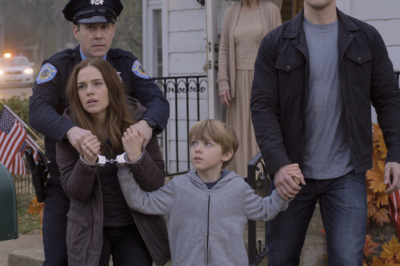
My son and his wife left me for a seven-day cruise with my “mute” 8-year-old grandson, but the second the lock clicked, he looked up and whispered, “Grandma, don’t drink the tea Mama made for you”—and that was the moment I realized this week wasn’t babysitting… it was a test I might not survive.
My son and his wife flew off on a cruise, leaving me alone for a week with my 8-year-old grandson,…
End of content
No more pages to load