I’m glad to have you here. Follow my story until the end, and comment the city you’re watching from.
My name is Loretta Dean, and this is how I reclaimed my dignity after my own daughter said my room stinks. So I packed my things and sold the mansion.
I wasn’t trying to listen. I was just walking past the kitchen on the way to refill my tea.
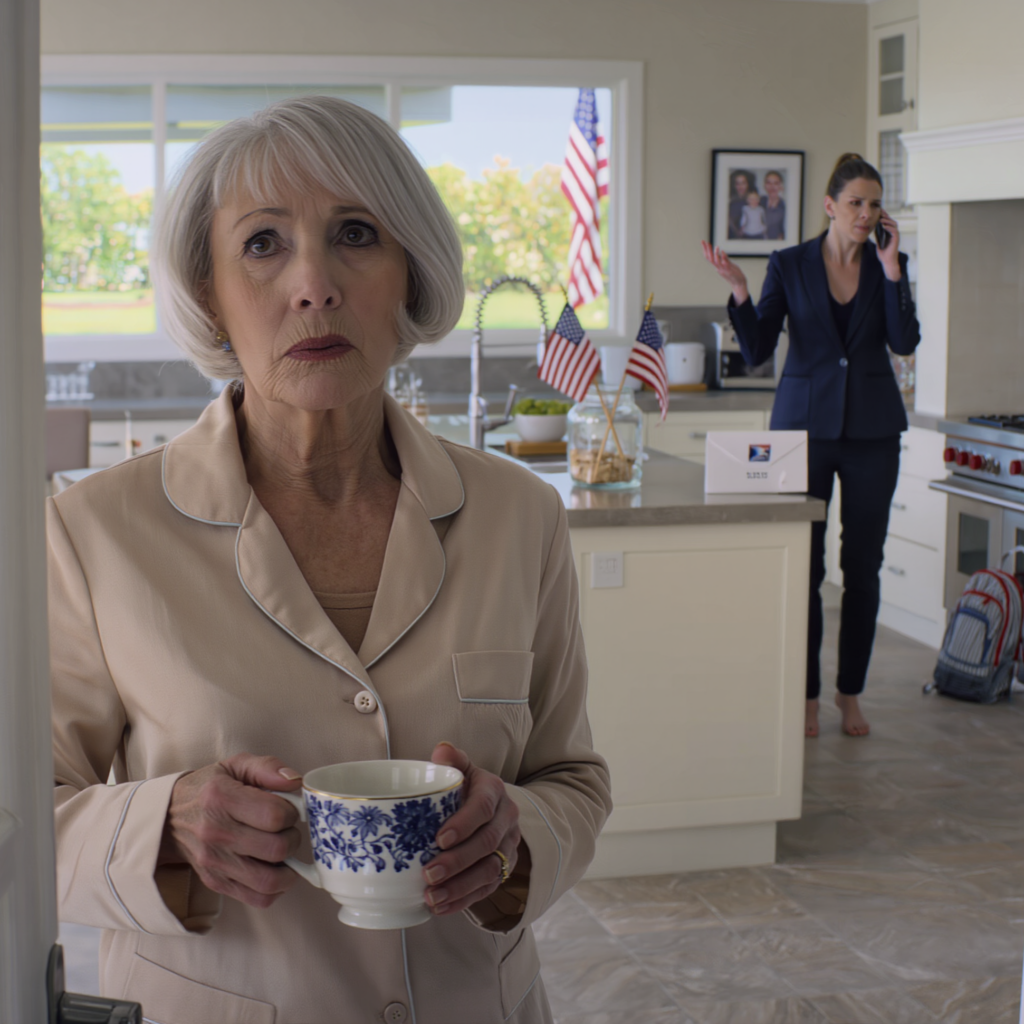
Paige was on the phone, pacing barefoot across the tile, one hand slicing the air like she always did when she was complaining. She doesn’t even notice it.
“It’s like her room stinks. It’s like nursing home air. Heavy, like old fabric, and I don’t know… something medical.”
She laughed, a short, clipped sound I didn’t recognize.
I stopped midstep. The chipped mug in my hand wobbled. I steadied it with my other palm, careful not to spill.
I was standing just outside the doorway—not hidden, not sneaking—just there. Paige didn’t look over, didn’t lower her voice.
“It’s seeping into the hallway,” she continued. “I’ve sprayed the whole bottom floor, but it’s like it clings to everything.”
My heart didn’t race. It slowed.
I backed up, quiet. The soles of my slippers made no sound on the hardwood. As I returned to the room they let me stay in—the one they called the guest room—I closed the door softly behind me. Not to hide, just to protect something that had been peeled open too fast.
The tea in my mug had cooled. I set it down on the dresser, the same dresser where I kept my folded nightgowns and my vitamins. A framed picture of Paige when she was seven sat beside them, grinning with no front teeth.
I looked at her little face. The face that once begged me to sing one more lullaby. The one who cried when I left for my night shift at Memorial Hospital. The one who ran to me in the mornings with paint-stained fingers and whispered secrets.
Now she walked past me without touching my arm. She thanked me for folding laundry like I was a polite neighbor.
Not her mother.
Three months ago, I turned seventy-seven. Two weeks later, I had the stroke. Nothing dramatic—just enough to make walking unsteady and mornings uncertain.
Paige had called immediately.
“You shouldn’t be alone, Mom. You’ll stay with us, just until things settle.”
I remember a time when I never needed anyone’s permission to exist.
For forty-two years, I worked night shifts as a nurse at Memorial, bringing babies into the world, holding the hands of those leaving it. People trusted me with their lives, their last words, their first breaths.
Now I needed permission to adjust the thermostat.
I picked up the mug again. The crack along the rim had widened slightly. I ran my thumb over it, feeling the rough edge—another damaged thing trying to remain useful.
Then I sat down in the armchair beside the window. Outside, the roses I planted last spring were starting to fade, dried at the edges, brittle from too much sun.
Still there. Still trying.
Just like me.
I still kept the pink linen dress in a garment bag, tucked behind winter coats I no longer wore. I bought it five years ago, a retirement gift to myself: a soft collar, delicate pleats, mother-of-pearl buttons down the front.
I’d imagined wearing it to Sunday brunches with friends, maybe in some quiet café with real tablecloths and sunlight slanting through tall windows.
I never wore it. Not once.
The brunches never happened. The friends either passed on or moved away. And I—well, I moved into Paige’s guest room with a suitcase and a promise that it was only for a little while.
I sold my condo—quiet street, south-facing windows, the kind of place I imagined aging into. The money helped with the down payment on this house: Paige’s name on the mortgage, my savings in the closing.
At first, it felt like a shared home.
I baked muffins. I watched Tyler and Zoe when Paige had meetings. I paid the water bill without being asked.
Then my boxes were moved to the garage. My chair was removed from the living room. My name stopped appearing on the Wi‑Fi password Post-it.
I became the silent hum in the background. The folded towels. The hot tea. The extra hand during school pickup when schedules got tight.
“Mom, can you get the kids today? Mason has that big client meeting and I’ve got the budget review.”
Paige never waited for my answer. She was already typing on her phone, halfway out the door in her tailored suit, her hair pulled back so tight it looked painful.
Mason worked in finance—something about investments and portfolios. He talked about it at dinner sometimes, eyes focused on his plate, voice carrying over my head to Paige at the other end of the table.
He wasn’t unkind. Just absent.
Even when he was sitting right there.
This morning, I found him in the kitchen making coffee, the machine gurgling and hissing.
“Good morning,” I said, reaching for my pills in the cabinet.
He nodded, eyes on his phone.
“Morning. Beautiful day out there.”
A text dinged. He walked out, coffee in hand.
Conversation over.
They didn’t mean harm. I told myself they were just busy, stretched thin. Parenting was hard. Marriage was hard.
I’d been there once, too, with James—before the cancer took him twenty years ago.
But even excuses can’t warm cold stairs. Or stop the way people look at you like you’re taking up too much oxygen.
Tyler was fifteen now, all gangly limbs and shy smiles. He used to crawl into my lap for stories, his small hand patting my cheek when I did the different voices.
Now he mumbled, “Hey, Grandma,” without looking up from his phone. Headphones stayed perpetually draped around his neck like a modern-day talisman.
Zoe was twelve, in that delicate space between childhood and whatever came next. Last year, she still asked me to braid her hair before school.
Now she closed her bedroom door when I walked past.
Last week, I heard her telling a friend on the phone, “I can’t have anyone over. My grandma’s staying with us. It’s complicated.”
It wasn’t complicated when I paid for her summer camp or stayed up all night making her science fair volcano.
But children aren’t to blame. They learn what they see.
And what they see is their mother stepping around me like I’m a piece of furniture she’s considering donating.
I used to keep the tomatoes by the kitchen window. Just a few pots—Romas and a bit of basil—in a blue ceramic bowl I’d brought from the old place.
It made mornings easier, something to tend before the house stirred, before the rush of carpool. Emails and appointments swept through like a siren.
But one afternoon, a day before Paige’s book club was coming over, she passed by while I was watering.
“Mom,” she said—not unkindly, but not kindly either. “Do you mind moving these?”
She motioned toward the plants with the back of her hand.
“They don’t really go with the aesthetic, you know.”
I nodded. I moved them, carried each one carefully behind the shed where no one but the raccoons would see them.
The soil was different there. Less sun. I had to fight mildew and squirrels, and the tomatoes didn’t sweeten the way they used to.
Still, I tended them daily—watered, pruned, talked to them when no one was listening.
Sometimes Zoe would follow me out back, but mostly the kids stayed busy. They stopped hugging me around the same time I stopped being in their pictures.
Now it was mostly small nods. A distracted, “Hi, Grandma.”
Once, I reached to fix Tyler’s collar and he flinched—not out of fear, but reflex—like I was someone he wasn’t used to being touched by.
I still baked muffins, banana bread, sugar cookies with lemon zest—things I know they once loved.
I placed them on the counter, warm just as the kids came down for school, but they grabbed protein bars now. Cold things wrapped in plastic.
This morning, I set out a plate of blueberry scones still warm from the oven.
Paige walked in, coffee mug in hand, scrolling through emails on her phone.
“Mom, you’re up early.”
“I made scones.”
She glanced at them, then back at her phone.
“We’re trying to cut carbs.”
I wrapped the scones in foil and put them in the freezer next to last week’s banana bread and the month’s worth of meals I’d prepared when they went to visit Mason’s parents in Chicago without telling me until the night before they left.
Paige lit a candle outside my door, one of those designer ones in a glass jar with a minimalist label. The scent was labeled clean linen, but it smelled like bleach and apology.
“Don’t take it personally,” she said when I asked. “Sometimes the hallway just feels stuffy.”
I nodded again.
I seemed to nod a lot in this house.
But I did take it personally. I took it personally when they closed the pantry door while I was reaching for oatmeal. When they rewashed the dishes I’d already cleaned.
When I offered help and got the smile that said no, but wouldn’t say the word.
The tomatoes were dying, I thought.
But I’d plant them again next spring.
Maybe somewhere new.
I used to sing—did you know that? In the church choir every Sunday, and sometimes just for myself, folding laundry or washing dishes.
James said I had a voice like warm honey: smooth and sweet.
I believed him because love makes us believe beautiful lies.
Now I hummed quietly under my breath when I was alone. Even then, I sometimes caught myself midnote and stopped, like I was taking up too much space with just the vibration in my throat.
Yesterday, they were discussing my doctor’s appointment at dinner. Not with me. About me.
“The neurologist said her recovery is plateauing,” Paige said to Mason, fork hovering over her salmon. “We should probably look into more regular care.”
“I’m sitting right here,” I said, but my voice came out thinner than I intended.
Paige blinked like she’d forgotten.
“Of course, Mom. We’re just concerned.”
“I can manage my own appointments.”
“You forgot the last one. Remember? I had to reschedule.”
I hadn’t forgotten. The appointment was at two, but Tyler had a half day at school and no one had told me until that morning.
I chose my grandson over a routine checkup. Somehow, that became another mark in the column of my decline.
Later that evening, I overheard Paige on the phone again, probably with her friend Diane.
“It’s getting worse. She lost her glasses three times last week. I found them in the refrigerator once.”
I wanted to explain. I’d put them down to help Zoe with a school project, and my hands were full of glue and glitter. The refrigerator was the closest clean surface.
But explanations sound like excuses when you’re already deemed incompetent.
Then came the candle again—the expensive one with the clean linen scent.
Paige placed it on the small table outside my room, lit it with a long match, and gave me a tight smile.
“Just freshening things up a bit.”
I felt the heat rise to my face. Not from anger. From shame.
Did I smell?
Had I become that person? The one whose bodily presence offends?
I started showering twice a day after that. Using the lavender soap Paige had given me last Christmas, still in its gift box until then.
I scrubbed until my skin was pink and raw. I washed my nightgowns every day, hung them in the bathroom to dry instead of using the dryer, afraid the scent would somehow contaminate the family’s clothes.
One night, unable to sleep, I went to the kitchen for tea.
Tyler was there, illuminated by the open refrigerator, making a sandwich.
“Hey, Grandma,” he said, startled. “You want one?”
“No, thank you, dear. Just tea.”
He nodded, concentrating on spreading peanut butter in perfectly even strokes.
“Mom’s been weird lately,” he said suddenly. “All stressed about the house and stuff.”
“Oh?”
“Yeah. She keeps saying we need to present well because of Dad’s promotion—whatever that means.”
He rolled his eyes, a gesture so reminiscent of Paige at his age that my heart squeezed.
“I think your mom just wants everything to be nice.”
“Yeah, but…” He hesitated, then closed the refrigerator. “Never mind.”
“What is it, Tyler?”
He sighed, shoulders slumping.
“I heard her talking to Dad about putting you in a home. Like a care place or something. She said it would be better for everyone.”
The kettle began to whistle, a thin high sound like a distant scream.
I turned it off with a hand that didn’t feel like my own.
“I see,” I said.
Because what else could I say?
“I told her it was messed up,” Tyler said fiercely, suddenly looking older than his fifteen years. “You’re family.”
I hugged him then—this tall boy who still had traces of the child I used to read to. He hugged me back, brief but real, then grabbed his sandwich and disappeared upstairs.
I didn’t make the tea. I went back to my room and sat in the dark, thinking about all the places I’d been, all the homes I’d made, all the people I’d cared for, and how easily we become inconvenient when we’re no longer useful in the ways others want us to be.
On my seventy-seventh birthday, no one remembered until dinner.
Paige gasped suddenly over dessert—store-bought cheesecake, not my favorite—and said, “Oh my God, Mom. It’s your birthday. I completely forgot.”
Mason looked up from his phone, blinked, then offered a belated, “Happy birthday, Loretta.”
Tyler mumbled something similar.
Zoe at least jumped up to hug me, her thin arms around my neck, the scent of strawberry shampoo in my nostrils.
“I’m sorry, Grandma. I would have made you a card.”
“It’s all right, sweetheart. It’s just a day.”
Later, alone in my room, I opened the closet and pulled out the pink linen dress, still pristine in its garment bag, still waiting for a life I hadn’t given it.
I laid it on the bed and touched the fabric, feeling its cool smoothness under my fingertips. I thought about James then—how he used to insist we dance in the kitchen after dinner, spinning me around while the radio played old Motown songs.
How he’d kiss my hand like we were in some old movie, making me laugh.
“My Loretta,” he’d say, “the most beautiful woman in the world.”
I used to roll my eyes, but I believed him. Or at least I believed he believed it, which is its own kind of truth.
Now I was just an old woman in a borrowed room touching a dress she’d never wear.
On impulse, I slipped it from the hanger and held it against myself. Then, slowly, I put it on.
The fabric settled against my skin—cool at first, then warming.
It fit differently than it would have five years ago. My body had changed, shrinking in some places, expanding in others.
But it still looked lovely.
I’d chosen well.
I stood before the small mirror on the back of the door, studying my reflection: gray hair cut short for practicality, lines around my eyes and mouth—evidence of a life lived with expression—hands spotted with age, but still strong.
I looked like what I was: an old woman in a pretty dress.
But something shifted inside me.
Standing there, some small spark that had been fading flickered back to life.
I remembered who I was.
Not just Paige’s mother. Not just Tyler and Zoe’s grandmother. Not just an inconvenience in the guest room.
I was Loretta Dean.
I had delivered babies and comforted the dying. I had loved a good man fiercely. I had raised a daughter and built a home and saved enough to retire with dignity.
And somehow, I had let them take that dignity from me piece by piece until I barely recognized myself.
I sat down on the edge of the bed, still in the pink dress, and reached for the small notebook I kept in my nightstand.
I began to write—not a diary entry, but a list.
Things I still owned. Things I still controlled. Things no one could take from me unless I let them.
At the top of the list: my name. My memories. My choices.
When I finished, I put on my nightgown and hung the dress back up, but I didn’t return it to the far corner of the closet.
I left it where I could see it.
A reminder.
The next morning, I was drinking tea at the kitchen table when Paige rushed in, late for a meeting, hair still damp from the shower.
“Mom, can you pick up the dry cleaning today? And Zoe has a dentist appointment at four.”
I looked at her—really looked at her—for the first time in months.
She was beautiful. My daughter. Strong cheekbones and clear skin. Her father’s eyes.
But there was something hard in her face now. Something I didn’t recognize.
“No,” I said quietly.
She stopped, one earring half-fastened.
“What?”
“I have plans today.”
“Plans? What plans?”
I took a sip of tea.
“Just plans.”
“I’m sure you can reschedule the dentist.”
She stared at me, confusion warring with irritation.
“Mom, we talked about this. You said you’d help with the kids while I’m working on this project.”
“I’ll help when I can, but not today.”
Her phone buzzed. She glanced at it, then back at me, clearly torn between addressing this unexpected resistance and being late for her meeting.
“Fine,” she said finally. “We’ll talk about this later.”
After she left, I sat there for a long time, finishing my tea, feeling the small victory settle in my bones.
It wasn’t much—just a tiny reclamation of self—but it was a beginning.
That afternoon, I put on the pink dress and took myself to lunch at the small French bistro downtown.
I sat alone at a table by the window, ordered a glass of white wine in the correct measure, and watched the world go by.
The waiter called me madame and pulled out my chair. A woman at the next table complimented my dress.
For two hours, I was not an inconvenience or an obligation.
I was simply a woman enjoying her lunch.
When I returned home, Paige was in the kitchen, laptop open on the counter, glasses perched on her nose.
She looked up, startled, when I walked in.
“Where have you been? I’ve been calling you.”
“I went to lunch.”
“In that dress?”
“Yes.”
“Where? With who?”
“At Petit Choux. And with myself.”
She looked me up and down as if seeing me for the first time.
“Mom… are you okay?”
I smiled—a real smile that felt strange on my face after so long.
“I’m better than I’ve been in quite some time.”
That night, I added another item to my list: courage, because I would need it for what came next.
I wouldn’t continue to shrink myself to fit into spaces that were deliberately made too small for me. I wouldn’t apologize for existing.
I wouldn’t accept being treated like an obligation rather than a person.
I decided, sitting there in the quiet of my room, that if I wasn’t welcome in this house—truly welcome—then I would find a place where I was.
It wouldn’t be easy.
I was seventy-seven, with a body that sometimes betrayed me.
But I had survived worse.
Much worse.
I opened the drawer next to my bed that night and took out the envelope marked Title—Whit Property. I hadn’t looked at it in a year, but it was still in my name. Every page.
I ran my fingers over the embossed seal, feeling its raised edges.
This house—the one my daughter now called her own—was still legally mine.
My name on every document. My savings in every brick.
I had let Paige believe it was hers because it seemed simpler, because I wanted her to feel secure.
But perhaps that had been a mistake.
Perhaps in trying to give her everything, I had allowed her to believe I had nothing left to give—or to take away.
I put the title back in the drawer and closed it softly.
Not yet.
I needed more information first.
I needed to be sure.
The next morning, I dressed carefully in slacks and a cardigan. I did my makeup for the first time in months: just a touch of lipstick and mascara.
Then I went downstairs and called a taxi.
“Where are you going?” Paige asked, surprised to find me in the foyer with my purse.
“I have an appointment.”
“With who? Do you need me to drive you?”
“No, thank you. I’ve arranged transportation.”
The confusion on her face would have been comical if it wasn’t so sad.
The idea that I might have a life outside of this house—outside of her needs—was completely foreign to her.
The taxi arrived and I walked out without further explanation.
My first stop was my old lawyer’s office.
It was time to understand exactly what my options were, because one way or another, things were about to change.
Raymond Teague’s office hadn’t changed in thirty years. Same leather chairs, same oak desk, same diplomas on the wall, though the glass frames had collected a fine layer of dust in the corners.
The man himself had aged, his once-black hair now completely silver, but his eyes were just as sharp.
“Loretta Dean,” he said, rising from his chair when his secretary showed me in. “It’s been too long.”
I shook his hand.
“Hello, Raymond. Thank you for seeing me on such short notice.”
He gestured to the chair across from his desk.
“For you, always. You were there when my Martha passed. I don’t forget things like that.”
I’d been his wife’s night nurse during her final days with cancer. That was before Paige was even born.
Some bonds don’t need constant tending to remain strong.
“How can I help you today?” he asked once we were seated.
“I need to understand exactly where I stand legally. With the house.”
He nodded, unsurprised.
“I wondered when you’d come asking about that.”
He pulled open a drawer and extracted a thick file.
“I still have all the paperwork here. Your daughter never filed the deed transfer we discussed.”
“What does that mean exactly?”
“It means, Loretta, that you still own the house outright. Your name is on every page of the deed.”
He adjusted his glasses.
“That gives you full legal authority to sell or transfer it.”
Relief washed through me, followed immediately by guilt.
“I see.”
Raymond leaned forward.
“May I ask what prompted this visit? You seemed quite determined to put everything in Paige’s name when you moved in with her.”
I hesitated, not wanting to sound like a bitter old woman complaining about her daughter, but Raymond had known me for decades. He drafted my will, handled James’s estate, seen me through my highest and lowest moments.
“I’ve been less than welcome there.”
He waited, giving me space to continue.
“I sold my condo to help with the down payment. I thought we’d live together as family, but I’ve become…” I searched for the right words. “An inconvenience. Something to be managed rather than loved.”
I told him about the candle outside my door, about the conversations I’d overheard, about Tyler’s late-night revelation that they were considering a care place for me.
Raymond’s expression darkened.
“And your health—the stroke?”
“I’m steady on my feet now. My doctor says I’ve recovered remarkably well. I take my medication. I exercise daily.”
I straightened my shoulders.
“I’m perfectly capable of living independently.”
He nodded.
“I never doubted that. Loretta, there’s something else.”
I took a deep breath.
“I need to go into the office where my daughter keeps her papers. I just want to see if what I suspect is true.”
“And what’s that?”
“That she’s been planning my removal for some time now.”
Raymond removed his glasses, polishing them with a handkerchief.
“Legally, as the homeowner, you have the right to enter any room in your house. But Loretta…”
His eyes, magnified by his glasses, were kind but concerned.
“Are you sure you want to know?”
“I need to know,” I said firmly. “To make the right decision.”
He sighed, then reached for a legal pad.
“All right. Then let’s talk about your options.”
For the next hour, we discussed what I could do: sell the house, transfer it to a trust, evict my own daughter—though we both knew I would never do that.
By the time I left, I had a clearer picture of my rights and my choices.
“Be careful, Loretta,” Raymond said as his secretary called me a taxi. “And call me once you’ve decided what you want to do.”
That afternoon, I returned to a quiet house. Paige was at work. Mason was traveling for business. The kids were at school.
I made myself a cup of tea, then climbed the stairs to the small office Paige had claimed as her own.
I wasn’t sneaking.
It was my house, after all.
But my heart still pounded as I turned the handle.
The office was meticulously organized, just like Paige herself: files and labeled folders, color-coded notebooks, a sleek laptop closed on the desk.
I went into the office for stamps. That was all. Paige had mentioned she kept them in the middle drawer, just under the printer paper.
I didn’t think twice about opening it, but the folder caught my eye before I found the stamps.
It was burgundy, thick, labeled in Paige’s handwriting.
Estate Planning.
I knew better than to snoop, but something in me—maybe instinct, maybe just exhaustion—told me this wasn’t something I should pretend not to see.
I pulled it out, sat down at the edge of the desk.
The first page was a printout of my life insurance policy, highlighted, circled, notes in the margins.
Expires 2028.
Verify premium payment.
Confirm beneficiary designation.
The next pages were a series of brochures for assisted living communities, each one glossy and pastel-colored. I flipped through them: beautiful lobbies, smiling residents.
One had a sticky note.
Mid-tier care.
Decent reputation.
Ask about Medicaid conversion.
I kept flipping.
Then I saw my name on a printed version of my will, the one I’d updated after my stroke. The signature was mine, but the annotations weren’t.
Property value: 470K.
Remaining pension benefits.
And in Paige’s neat handwriting again, next to the line about my small savings account:
We’ll need access if medical decline accelerates.
There were printouts of my bank statements. A letter from my doctor that I’d never seen. A form about power of attorney, partially filled out in Paige’s handwriting, awaiting only my signature.
I sat there for a long time.
Not angry.
Just emptied out, like someone had reached inside and scooped out whatever warmth remained.
My own daughter was planning my future without me, calculating my worth, preparing to take control of my life without my knowledge or consent.
I took a breath, stood up, and went to my room.
I pulled a manila folder from the bottom of my filing box and labeled it in thick black pen:
When They Forget I’m Still Alive.
I copied everything—each brochure, the annotated will, the notes on my insurance.
I used Paige’s printer, listening for the sound of the garage door. Though I knew she wouldn’t be home for hours, I didn’t confront her.
There was no point.
If she thought planning where I’d be stored next was reasonable, she wouldn’t suddenly start asking where I wanted to be.
I slipped the folder under my bed, between a box of scarves and a tin of saved birthday cards.
Then I picked up the tea mug on my nightstand and walked to the kitchen.
I boiled the water, let the steam rise slow and quiet.
Then I sat by the window and watched the sun settle across the roof of the house I still legally owned.
I’d spent two years trying to belong here again. But maybe it wasn’t about fitting back in.
Maybe it was about learning how to leave—right this time.
Dr. Elaine Foster had been my colleague at Memorial for nearly thirty years. We started as young nurses together, worked our way up through the ranks.
She’d gone back for her doctorate in her fifties, specializing in geriatric care. I’d been so proud to call her Dr. Foster the first time, watching her blush and wave away my formality.
“It’s still just Elaine to you,” she’d insisted.
So when she showed up at Paige’s door—my door—on a Tuesday afternoon, I was stunned.
I hadn’t seen her in nearly a year. Her gray hair was cut in a stylish bob, her clothes simple but elegant.
She looked healthy, vibrant, every bit her seventy-two years and not a day more.
“Loretta Dean,” she said, wrapping me in a hug that smelled of jasmine and something medicinal. “You’re a hard woman to reach these days.”
I ushered her in, surprised and delighted.
“How did you find me?”
“Your old neighbor, Mrs. Patel.” She gave me this address when I stopped by your condo.
She glanced around the foyer, taking in the sleek, impersonal decor.
“Nice place.”
“It’s Paige’s,” I said automatically, then corrected myself. “Well, technically, it’s mine. It’s complicated.”
Elaine raised an eyebrow.
“Sounds like we need tea in the kitchen.”
I put the kettle on while Elaine settled at the counter, placing a paper bag in front of her.
“I brought you something,” she said, “from the garden.”
Inside were three perfectly ripe tomatoes, their skin taut and red, and a small pot of basil, its leaves glossy and fragrant.
“I remembered how you always grew them,” she said. “Thought maybe you still did.”
The sight of them—so perfect, so normal—brought an unexpected lump to my throat.
“I tried,” I said. “But they didn’t do well here.”
She nodded, not asking for elaboration.
That was Elaine’s gift: knowing when to press and when to wait.
We had a shorthand developed over decades of working night shifts together, making quick decisions in dim hospital rooms while the rest of the world slept.
I poured tea into two mugs, set out some cookies I’d baked that morning.
We talked about old colleagues, about her grandchildren, about the book club she’d started—normal things, safe things.
Then she set down her mug and fixed me with that look I knew so well, the one that said she was about to address what was really on her mind.
“Loretta, how are you really?”
And just like that, the careful walls I’d built crumbled. Not in a dramatic way. No tears or wailing.
Just a quiet collapse of pretense.
“I’m invisible,” I said simply. “I’m fading away in my own home.”
She reached across the counter and took my hand. Her skin was warm, her grip strong.
“Tell me.”
So I did—about the candle, about the folders, about the way I’d become furniture in a house I’d helped buy.
As I spoke, her expression shifted from concern to something harder, more resolute.
“You know,” she said when I finished, “I’ve been wanting to tell you about this place I found.”
“What place?”
“It’s called Horizon Gardens. It’s a co‑op for seniors, but not like those depressing assisted living facilities.”
She pulled out her phone, scrolled through photos.
“It’s more like a community of small homes. Everyone has their own space, but there are shared gardens, a rec room, activities. It’s for people who want independence, but also connection.”
She showed me charming cottages arranged around a central courtyard, gardens bursting with flowers, a community room where people gathered around tables playing cards or working on art projects.
“I joined their board last year,” she continued. “We help match people with units when they become available. It’s not charity. Everyone pays their way, but we keep it affordable.”
I looked at the photos, feeling a tug of longing.
“It looks lovely.”
“A unit just opened up last week. One bedroom. Private patio. South-facing windows.”
She gave me a meaningful look.
“Just like your old condo.”
I stared at her.
“Elaine… are you offering me a place?”
“I’m telling you there’s an option if you want it.” She put her phone away. “You don’t have to disappear, Loretta. You don’t have to shrink until there’s nothing left.”
Before I could respond, the front door opened. Paige’s voice called out.
“Mom, whose car is in the driveway?”
She appeared in the kitchen doorway, still in her work clothes, surprise on her face.
“Oh. Hello.”
Her tone was polite but cool.
I straightened.
“Paige, this is Dr. Elaine Foster—my friend from Memorial. Elaine, my daughter Paige.”
They exchanged pleasantries, but I could see Paige’s discomfort.
The intrusion of my past life—my separate identity—into her carefully controlled domain unsettled her.
“I should get going,” Elaine said, reading the room with her usual perceptiveness.
She gathered her purse, then pulled a card from her wallet and handed it to me.
“Think about what I said, Loretta. Call me anytime.”
After she left, Paige busied herself making coffee, movements quick and efficient.
“I didn’t know you had friends visiting today,” she said.
“It was a surprise,” I replied. “She just stopped by.”
Paige nodded, eyes on the coffee maker.
“What’s that?”
She gestured to the tomatoes and basil still sitting on the counter.
“Just a gift from Elaine’s garden.”
She frowned slightly.
“Where will you put them? The kitchen windowsill is full with my herbs.”
Her herbs—the ones I’d never seen her use, slowly dying from neglect.
I picked up the tomatoes and basil.
“Don’t worry. I’ll find a place for them later.”
I added Elaine’s card to my growing folder under the bed.
Another piece of my escape plan, taking shape one document at a time.
“A trust,” Raymond Teague said, tapping his pen against the legal pad.
It was my third visit to his office in two weeks. Each time, I’d told Paige I was going to physical therapy—an excuse she never questioned.
She was too relieved to have me out of the house to be suspicious.
“What exactly would that mean?” I asked.
“It means you’d transfer the house into a legal entity—the trust—which you control. You can set specific conditions about how and when the property can be used or transferred.”
He leaned forward.
“Most importantly, while you’re alive, you maintain full authority over the property. And after you’re gone… that’s up to you. You could leave it to Paige, to the grandchildren, to charity—whatever you decide.”
I considered this.
“Would Paige know about the trust?”
“Not unless you tell her. The transfer happens behind the scenes, legally speaking.”
I nodded slowly.
“And if I wanted to sell the house?”
“As the trustee, you’d have full authority to do so.”
He paused, studying me.
“Is that what you’re considering, Loretta?”
“I’m considering all my options.”
He made a note on his pad.
“There’s something else you should know. I took the liberty of having the property appraised.”
Given the current market, it’s worth considerably more than your daughter might realize.
He slid a paper across the desk.
I glanced down at the number and blinked.
“That’s much higher than I expected.”
“The housing market has been very favorable to sellers lately.”
He folded his hands.
“If you did decide to sell, you’d have more than enough to secure comfortable accommodations elsewhere and still have a significant amount left over.”
The possibilities began to unfold in my mind—freedom, security, a home that was truly mine again.
“There’s one more thing,” Raymond said, his tone shifting. “I’m concerned about these documents you found. Particularly the power of attorney form.”
“What about it?”
“If Paige were to obtain your signature on that document under false pretenses—or during a moment of confusion—she could effectively take control of your finances and medical decisions.”
A chill ran through me.
“She wouldn’t.”
“I’m not suggesting your daughter has malicious intent,” he said carefully. “But her actions show she’s making plans for your future without your input. That’s concerning, to say the least.”
I thought about the brochures, the notes on my life insurance, the calculations about my savings.
“What do you suggest?”
“First, we file a revocation of any existing powers of attorney, just to be safe. Then we create a new one—naming someone you trust implicitly, not Paige.”
My mind went immediately to Elaine.
She would understand the responsibility.
She would respect my wishes.
“I know just the person,” I said.
By the time I left Raymond’s office that day, I had a plan.
Not just vague ideas, but concrete steps. A path forward that would protect me—and, in a way, protect Paige too from becoming the kind of daughter who would warehouse her mother for convenience.
As the taxi drove me home, I looked out at the passing neighborhoods: neat houses, trimmed lawns, carefully tended gardens.
I’d spent my life caring for others—my patients, my husband, my daughter.
I’d poured myself out until there was barely anything left.
But I wasn’t empty yet.
There was still enough of me to save myself.
When I returned home, the house was quiet. I went to my room and called Elaine.
“I’d like to see that unit at Horizon Gardens,” I said when she answered. “If it’s still available.”
I could hear the smile in her voice.
“I’ll pick you up tomorrow at ten.”
Gracie Morrison used to talk about the co‑op all the time before her cancer came back, before the hospital stays, before she stopped calling altogether.
She said it wasn’t like those places where you waited to die. It was where people went to live how they wanted.
Where no one measured your worth by how many chores you could still do, or how quietly you stayed out of the way.
Now, sitting beside Elaine in her sensible sedan, I was about to see it for myself.
Horizon Gardens sat just off the edge of the parkway, hidden behind tall crape myrtles and a wooden fence painted pale yellow.
From the outside, it looked like a small, well‑maintained apartment complex. Nothing fancy, nothing institutional.
Just normal.
“It was originally built in the seventies as regular apartments,” Elaine explained as we pulled into the parking lot. “A group of retirees from the hospital bought it about fifteen years ago and converted it into a co‑op. Each resident owns a share and pays monthly maintenance fees. It’s self‑governed, nonprofit.”
We walked through a simple gate into a central courtyard.
Immediately, I felt something shift inside me.
The space was alive. Flowering plants in raised beds. A small fountain bubbling in the center. Benches placed in conversational groupings.
People—gray‑haired, wrinkled, moving at various speeds—engaged in life.
A woman watering plants. A man reading a newspaper on his patio. Two ladies playing chess at a stone table.
They looked up as we passed, offered genuine smiles and nods.
No one looked through me.
No one seemed annoyed by my presence.
The woman at the front desk greeted me like I was expected, even though I hadn’t called ahead.
Her name was Margot Washington.
She wore blue glasses and no makeup and didn’t look at me like I was a problem to solve.
“You’re welcome to walk through the common room,” she said. “There’s no rush.”
I saw a table of women in their seventies playing Scrabble. One man reading a paperback on the couch by the fireplace.
The scent in the air was lavender.
Real lavender, not a candle pretending.
Outside, tomato plants were strung with twine and rosemary grew in planters. A corner shelf held paintbrushes, seed packets, and three pairs of gardening gloves.
“The unit I mentioned is just down this path,” Elaine said, guiding me past a small pond where koi fish flashed orange and white beneath the surface.
Unit 8 was at the end of a brick walkway, a small cottage with a front porch just big enough for a chair and a small table.
Elaine unlocked the door and stepped aside so I could enter first.
The space was compact but thoughtfully designed: a living area with large windows facing south, a small kitchen with a breakfast bar, a bedroom with space for a queen‑sized bed and dresser.
A bathroom with grab bars already installed, but discreet—not like a hospital room.
It was empty of furniture but full of possibility.
I could already see where my reading chair would go. Where I’d place the small table where James and I used to eat breakfast.
Where the photo of Paige as a child would sit.
“The previous occupant was Dorie Evans,” Elaine said. “She moved to be closer to her son in Arizona. Lived here happily for twelve years.”
I walked to the back door, which opened onto a small private patio.
Beyond it was a shared garden space already planted with vegetables and flowers.
I could smell basil and mint on the breeze.
“What do you think?” Elaine asked after I’d explored every corner.
“It feels like somewhere I could breathe.”
She nodded, understanding.
“The monthly fee covers all utilities, maintenance, landscaping, and access to all common areas. There’s a shuttle to the grocery store three times a week. The hospital is ten minutes away, and there’s a clinic on site two days a week.”
“And the cost?”
She handed me a sheet of paper with figures. The buy‑in was substantial but fair. The monthly fee was less than I’d expected.
And with what Raymond had told me about the house’s value…
“It’s doable,” I said, almost to myself.
“More than doable,” Elaine said gently. “With your resources.”
Elaine touched my arm.
“The board reviews all applications, but I’ll be honest—yours would sail through. You’re exactly the kind of resident we want. Independent, engaged, with a lifetime of experience to share.”
I looked around the empty space once more, seeing not what was there, but what could be.
A place where I wouldn’t have to shrink. Where I wouldn’t have to apologize for existing.
Where candles would be for light or scent.
Not to mask my presence.
“I didn’t bring the application,” I said.
Margot appeared in the doorway, smiling, a folder in her hand.
“But I did,” she said. “Just in case.”
I took it, feeling the weight of possibility in my hands.
“There’s one unit that just became available,” she said quietly. “If you’re serious, I’ll hold it for twenty‑four hours.”
“Yes,” I said before I had time to doubt myself. “I’d like that very much.”
When I got home, I called Mr. Teague.
“I found a place,” I told him. “And I think I know what I want to do with the house.”
“I’ll start the paperwork,” he said. “This is the right decision, Loretta.”
That night, I dreamed of tomatoes ripening in the sun, their scent rich and earthy. Of windows I could open without permission.
Of a chair that was mine, in a space that welcomed rather than tolerated me.
I woke feeling lighter than I had in years.
I started in the closet—not packing yet, just sorting. Shoes I hadn’t worn in years. Sweaters that still smelled like the cedar chest from my condo.
My mother’s quilt. A tin of sewing notions I kept even though my fingers no longer worked the way they used to.
I labeled the first box Kitchen—Keep. The second Donate. The third Not For Them.
I wasn’t sure when I’d make the move, but I knew now I could.
And that was enough to keep going.
By the end of the week, I had seven boxes lined up under the bed—small things, things I could sort through quietly while the house was empty.
Family photographs. Books I treasured. The silver tea service James’s mother had given us as a wedding present.
I didn’t take everything.
Just what mattered.
My movements around the house changed.
I walked taller. I spoke more directly.
I stopped asking permission to adjust the thermostat or use the washing machine.
Paige noticed.
Of course she did.
Nothing escaped her attention except, perhaps, the humanity of those closest to her.
“You seem different lately,” she said one evening as I prepared a cup of tea in the kitchen.
“More… I don’t know. Present.”
“Do I?”
I stirred honey into my cup.
“I’m feeling more like myself, I suppose.”
She leaned against the counter, studying me.
“Is it the new medication? Dr. Harmon mentioned there might be an adjustment period.”
I hadn’t started any new medication. Dr. Harmon had suggested it at my last appointment, but I decided against it.
Interesting that Paige thought she knew better than I did what was happening with my own body.
“Maybe,” I said, not correcting her. “Or maybe I’m just finding my way back.”
She frowned slightly.
“Back to what?”
“To myself.”
The confusion on her face would have been comical if it wasn’t so telling.
The idea that I had a self separate from her needs, her convenience, her life—apparently foreign.
“Well, I’m glad you’re feeling better,” she said finally. “But, Mom… if you’re struggling with anything—memory, confusion, anything like that—you need to tell us. We can help.”
I took a sip of tea, letting the warmth spread through me.
“I’ll be sure to do that.”
Later that week, Paige came into my room while I was reading. She rarely entered my space—an irony, considering how freely she discussed removing me from it.
“Mom, I’ve been thinking,” she began, sitting on the edge of my bed. “Maybe it’s time we talked about the future.”
“What about it?”
“Well, you know… as we get older, sometimes we need more structure. More support.”
She smoothed an invisible wrinkle from the bedspread.
“Mason and I were looking at some really nice communities. Places where you’d have friends your own age, activities, medical care if you needed it.”
I marked my page in my book and set it aside.
“That sounds like you’ve given it a lot of thought.”
“We have. We just want what’s best for you.”
She reached for my hand, her fingers cool against my skin.
“It’s getting harder for you here, isn’t it? The stairs. The big house. And with my work schedule, I can’t always be here when you might need help.”
I looked at my daughter—really looked at her—the perfect makeup, the carefully styled hair, the expression of concerned benevolence that didn’t quite reach her eyes.
This was the face she probably showed to difficult clients, to subordinates who needed managing.
“That’s very considerate,” I said carefully. “But I’m quite capable of making my own decisions about my future.”
A flash of impatience crossed her features before she smoothed it away.
“Of course you are. I just think it would be good to explore options before… well, before we’re in a crisis situation.”
Translation: before I became too much of a burden to manage discreetly.
“I’ll give it some thought,” I said.
She squeezed my hand, then stood.
“There are some brochures in my office. I’ll bring them to you tomorrow. Some of these places have waiting lists, so the sooner we get you on them, the better.”
After she left, I sat still for a long time, my book forgotten in my lap.
So it had begun—the gentle push toward the exit. The kind, concerned displacement.
I wondered if she’d show me the same brochures I’d already found in her office, or if there was a separate set reserved for my limited understanding.
I added another box under my bed that night, this one labeled simply: Freedom.
The next morning, I went downstairs to find Mason sitting at the kitchen island, a rare sight on a weekday.
He looked up from his coffee, surprise registering on his face.
“Loretta. Good morning.”
“Good morning, Mason.”
“No work today. Later—conference call at noon.”
He hesitated, then added, “Paige mentioned she talked to you about the… um… living arrangements we were looking into.”
So that was why he was home.
The United Front.
The gentle intervention.
“She did?”
He shifted, uncomfortable.
“It’s not that we don’t want you here. It’s just…”
“You don’t have to explain,” I interrupted gently. “I understand perfectly.”
Relief flooded his features.
“You do? That’s… that’s great. Paige was worried you’d take it the wrong way.”
I smiled, a real smile that seemed to confuse him.
“There’s no wrong way to take it, Mason. Everything is very clear.”
I poured myself a cup of coffee and took it back upstairs, leaving him slightly puzzled in my wake.
Let him wonder.
Let them both wonder.
By that evening, I had seventeen boxes lined up under the bed. My application for Horizon Gardens was complete, nestled safely in my purse.
My appointment with Raymond Teague was set for Friday to finalize the trust and the sale.
I wasn’t running away.
I was walking deliberately—and with dignity—toward something better.
Something that honored who I was rather than measured me by my usefulness to others.
Paige brought the brochures that night, just as promised—glossy, colorful pages showing smiling seniors engaged in carefully choreographed activities. Dining rooms with white tablecloths. Nurses with practiced compassionate expressions.
“This one is only thirty minutes away,” she said, pointing to a sprawling complex that looked more like a hotel than a home. “And they have different levels of care, so as your needs change, you won’t have to move again.”
As my needs change.
Such a delicate way of saying: as you deteriorate.
“It looks very nice,” I said.
“So you’ll think about it. Maybe we could tour a few next week.”
I patted her hand.
“Let me review these first. It’s a big decision.”
She beamed, clearly interpreting my response as acquiescence.
“Of course. Take your time.”
That night, I couldn’t sleep.
I stood by the window, looking out at the garden I’d planted but no longer tended. At the neighborhood I’d helped choose but never quite belonged in. At the life I’d funded but wasn’t welcome to fully participate in.
Tomorrow, I decided, I would call Elaine.
It was time to set the wheels in motion.
I climbed back into bed and, for the first time in months, slept deeply and without dreams.
Paige’s face was a study in disbelief.
“You did what?”
We were sitting at the kitchen table, the morning light slanting across the polished surface.
I’d chosen this moment carefully: Mason at work, the children at school, just the two of us in the quiet house.
“I consulted a lawyer,” I repeated calmly, “about my legal options.”
Her coffee mug halted halfway to her lips.
“Legal options for what? For the house? For your finances? For your future?”
She set the mug down with deliberate control.
“I don’t understand. We’ve been discussing your future. I showed you those communities.”
“No, Paige. You’ve been planning my future. There’s a difference.”
I folded my hands on the table.
“You never asked what I wanted.”
A flush crept up her neck.
“That’s not fair. We’ve only been thinking about what’s best for you.”
“Best for me, or most convenient for you?”
Her eyes widened.
“Mom, where is this coming from? If you’re unhappy with something, we can talk about it. There’s no need to involve lawyers.”
“I found the folder.”
Paige stilled.
“What folder?”
“The one in your office. Estate Planning. With my life insurance policy, my bank statements, the brochures for assisted living—with your notes about Medicaid conversion.”
I held her gaze.
“And the power of attorney form you were planning to have me sign.”
The color drained from her face.
“You went through my private papers in my house.”
“The house I still own. The house I paid for.”
She pushed back from the table, standing abruptly.
“That’s not—”
“We agreed you helped with the down payment. But—”
“Check the deed, Paige.”
My voice stayed steady.
“My name is the only one on it. I never transferred ownership to you.”
Her voice rose, indignation replacing shock.
“You went to Dad’s old lawyer behind my back? After everything we’ve done for you—taking you in, caring for you after your stroke—”
“Taking me in?”
I finally stood, my own anger rising to meet hers.
“This is my house, Paige. I sold my condo to buy it. I moved in here because you said it made sense for us to live together as a family.”
“And then you systematically made me feel like an intruder in my own home.”
“That’s ridiculous. You’re being paranoid.”
“Am I? The candle outside my door to mask my ‘nursing home’ smell? Moving my plants because they didn’t fit your aesthetic? Planning to ship me off to assisted living while you calculate how to access my savings?”
My voice remained low, but intense.
“I heard you on the phone, Paige. I saw the notes in your handwriting. Don’t insult me by denying it now.”
She crossed her arms, defensive.
“Fine. Yes. I’ve been looking into options. Someone has to.”
“You had a stroke, Mom. You forget things. You need help.”
“I had a minor stroke over two years ago. I’ve recovered remarkably well, according to my doctor—whose assessment I found in your file, by the way.”
I met her gaze.
“I take my medication. I exercise. I’m perfectly capable of living independently.”
“So what? You’re going to sell the house out from under us and make us homeless to prove a point?”
The melodrama might have been funny if it wasn’t so revealing of how she saw the situation.
“No, Paige. I’m not like you. I don’t make plans for other people’s lives without their knowledge or consent.”
I softened my tone.
“I’m moving out. I found a place that suits me better. A community where I’ll have my own space, but also support if I need it.”
She blinked, thrown off balance by this unexpected direction.
“Moving where?”
“It’s called Horizon Gardens. It’s a co‑op for seniors. I’ve already been approved for a unit.”
“A retirement home. You’re choosing some institutional—”
“It’s not institutional. It’s a community of independent adults who respect each other.”
I sat back down, suddenly tired of standing.
“The house will be placed in a trust. You and Mason will have six months to decide if you want to buy it from the trust at fair market value, or if you prefer to find somewhere else to live.”
“You can’t be serious.”
Her voice had lost its edge, uncertainty creeping in.
“I’ve never been more serious about anything in my life.”
She sank back into her chair, staring at me like I was a stranger.
Perhaps I was.
The mother she knew—or thought she knew—would never have stood up for herself this way.
“When?” she asked finally.
“I move at the end of the month. The trust paperwork will be finalized next week.”
“Does Mason know about this?”
“I’m telling you first as a courtesy.”
She laughed, a short bitter sound.
“A courtesy. After blindsiding me with legal maneuvers and secret plans.”
The irony of her complaint wasn’t lost on either of us.
She had the grace to look slightly ashamed.
“What about the kids?” she asked, shifting tactics. “They love having you here. This will devastate them.”
“Will it? When was the last time either of them spent more than five minutes with me? When was the last time you encouraged them to?”
I shook my head.
“They’ll be welcome to visit me anytime. My door will always be open to them.”
We sat in silence for a long moment, the weight of years of unspoken resentments and misunderstandings between us.
“I never meant for you to feel unwelcome,” she said finally, her voice smaller.
“I know,” I replied. “And I did know.”
She hadn’t been deliberately cruel—just thoughtless, focused on convenience, viewing me as a problem to solve rather than a person to cherish.
But intention and impact are different things.
Later that evening, Mason came home early.
I heard them arguing in their bedroom—voices rising and falling, my name mentioned repeatedly.
Then he knocked on my door, his expression a mixture of disbelief and calculation.
“Loretta,” he began, an unusual formality in his tone. “Paige told me about your decision.”
I set aside my book.
“Yes.”
He sat down in the chair by the window, running a hand through his hair.
“Look, I understand you might be feeling overlooked. Maybe we haven’t been as attentive as we should be. We can fix that.”
“This isn’t about attention, Mason.”
“Then what is it about? Because from where I’m sitting, it looks like you’re punishing Paige for trying to plan for your care.”
“I’m not punishing anyone. I’m choosing what’s best for me.”
He leaned forward, switching to his negotiator voice—the one he probably used with difficult clients.
“Let’s be practical. At your age, living alone isn’t ideal. What if you fall? What if there’s another stroke? At least here, someone would find you.”
“At Horizon Gardens, I’ll have neighbors who actually check on each other. A community that notices if someone doesn’t show up for coffee.”
I met his gaze steadily.
“When was the last time either of you came into my room just to see how I was doing—not to ask me to watch the kids or pick up dry cleaning, but just to talk?”
He had the decency to look uncomfortable.
“We’ve been busy.”
“That’s not an excuse. It’s just reality.”
“I understand busy, Mason. I raised Paige alone while working night shifts. I helped care for James through cancer treatments while managing a household.”
I folded my hands in my lap.
“Busy isn’t new to me. But we make time for what we value.”
That landed harder than I intended.
He stood up, defensive again.
“So this is about feeling undervalued. Tell us what you need, then. Don’t blow up our lives with lawyers and trusts.”
“I’ve told you what I need. My own space where I’m respected. It’s too late for anything else.”
He paced the small room, agitated.
“Have you considered what this will do to the kids? To our stability? We can’t afford to buy this house at market value right now. The timing is terrible with my company’s restructuring.”
And there it was.
The real concern.
Not my well‑being.
Not family harmony.
Finances and convenience.
“The trust gives you six months,” I said. “And you’ll have options for financing. Raymond will explain everything.”
He stopped pacing to stare at me.
“You’re really going through with this?”
“Yes.”
After he left, I sat quietly in my room, listening to the sounds of the house: Paige and Mason’s muffled argument, the dishwasher humming downstairs, Tyler’s music bleeding through the wall—bass heavy and insistent.
I didn’t feel triumphant. Just resolved.
And a little sad that it had come to this.
The next morning, there was a new candle outside my door.
Not the clean linen scent this time, but lavender—an olive branch, perhaps, or just another reminder of a problem they thought needed masking.
Either way, I left it unlit.
Paige had a conference in Asheville. Mason had a client meeting in Charlotte. The kids had a soccer tournament nearby.
They left early Friday morning, all in a rush, bags tumbling down the stairs.
Paige shouted for someone to grab the sunscreen.
Then the door slammed and silence followed.
I waited fifteen minutes, boiled water, drank tea.
Then I opened the window and let the morning air touch my face.
The weekend away had been planned for months. I’d heard them discussing it over dinner, making arrangements, coordinating schedules.
Not once had they asked if I wanted to join.
Not once had they seemed to consider what I would do alone in the house for three days.
It was the perfect opportunity.
By ten, Margot and a man named Harold Jenkins from the co‑op had pulled into the driveway in an unmarked van.
Elaine arrived minutes later in her sedan.
“Are you sure about the timing?” Elaine asked as we stood in the foyer. “Wouldn’t it be better to tell them face to face?”
“I’ve already said everything that needs saying,” I replied. “The rest is just details.”
They didn’t ask questions. They didn’t comment on the house. They just helped me carry out seventeen boxes, two suitcases, and the tomato pots from behind the shed.
I didn’t take everything.
Just what mattered: my quilt, the photo of Paige at age seven, the pink linen dress, my Bible, a shoebox of letters from people who remembered me before I became wallpaper.
Harold was a retired contractor with thick forearms and a gentle way of handling fragile things.
Margot moved with the efficiency of someone used to managing logistics.
Elaine stayed close to me, attuned to my energy level, suggesting breaks when she sensed I needed them.
By noon, the van was loaded.
My entire life packed away in neat, labeled boxes.
“Do you want to leave a note?” Elaine asked as I did a final walkthrough of my room.
I nodded.
I’d prepared one the night before, but now, standing in the stripped-down space, I decided on something simpler.
I wiped down the kitchen counter, straightened the coffee mugs, closed the cabinet doors. I knew Paige hated being left a mess.
Then I placed a folded note in the center of the granite.
It read:
The house has been placed in a trust. You have six months to decide whether to purchase it or move. Raymond Teague has all the details. I’ve moved to a place where I’m welcome. Please don’t call until you’re ready to truly see me.
I didn’t leave a phone number or address. Raymond had those, and he would share them when—if—Paige was ready to approach me with respect rather than management strategies.
Then I walked to the front door.
I carried my purse in one hand, my mother’s cameo brooch pinned to my cardigan.
The sun was soft across the lawn, the same lawn I used to mow myself before arthritis changed my grip.
I didn’t turn back.
Not even once.
Margot opened the passenger door of her car for me.
I sat down, exhaled, and watched the house disappear in the side mirror as we pulled away.
No one shouted after me.
No one even knew I was gone.
But by the time they returned, the silence would be deafening—and I’d already be unpacking my china in a place where people said my name like it mattered.
My new home at Horizon Gardens was smaller than the room I’d left behind, but it expanded around me like a deep breath.
One bedroom, one bathroom, a kitchenette opening into a living area, and most precious—a small patio where the morning sun fell in golden rectangles.
Margot helped me arrange the furniture we’d brought from storage, my reading chair by the window.
James’s bookshelf against the wall. The small dining table where we’d eaten countless meals together.
Harold hung curtains and installed a bird feeder outside the kitchen window.
Elaine organized my kitchen, putting everything in logical places, occasionally asking where I’d prefer something to go.
They asked.
Such a simple thing.
It brought tears to my eyes.
By evening, the essential unpacking was done.
Margot and Harold left with promises to check on me the next day. Elaine stayed, ordering Chinese food from a place that delivered.
We ate it straight from the containers, sitting on cushions on the floor because I hadn’t yet unpacked the dining chairs.
“To new beginnings,” she said, raising her paper cup of green tea.
I tapped my cup against hers.
“To being seen.”
After she left, I sat alone in my new living room, listening to the unfamiliar sounds: a dog barking in the distance, the soft hum of the refrigerator, wind in the crape myrtles outside my window.
No footsteps overhead. No hushed arguments behind closed doors.
No sense of tiptoeing through someone else’s space.
Just me.
Breathing freely for the first time in years.
I slept deeply that night, wrapped in my mother’s quilt, dreaming of nothing and everything.
Morning brought a knock at my door.
Harold stood there, a potted plant in his weathered hands.
“Housewarming,” he said gruffly, holding it out. “Mint for tea.”
I invited him in, made coffee.
I learned he’d been at Horizon Gardens for eight years since his wife passed, that he ran the garden committee and could help me set up my patio planters when I was ready.
As he was leaving, he paused.
“Bingo. On Wednesdays. Not mandatory, but… good people.”
Later, exploring the grounds, I met Georgia Wilson tending roses near the common room, Beverly Chen practicing tai chi on the lawn, Marcus Elliott walking his small terrier, Pepper.
Each greeted me by name.
Each welcomed me without reservation.
“You’re Elaine’s friend from Memorial, right?” Georgia asked, pruning shears poised midair. “The night nurse?”
“Yes,” I said, surprised to be identified by my profession rather than my age or infirmity.
“Thank goodness. We need more medical people around here. Everyone thinks they’re an expert because they read WebMD.”
She snipped a dead bloom.
“You should come to the health committee meeting on Monday. We’re lobbying for a full‑time nurse practitioner on site.”
I found myself agreeing.
Found myself mattering in a way I hadn’t for too long.
Meanwhile, across town, a different scene was unfolding.
I imagined Paige returning home and finding my note. The shock. The disbelief. The realization that I had not only left, but reclaimed my power in a way she never anticipated.
Raymond called that evening.
“They’re back,” he said without preamble. “Your daughter is upset.”
“I expected she would be.”
“She’s threatening legal action. Claims you’re not of sound mind. That you’ve been manipulated.”
I sighed.
“Can she do anything?”
“Not successfully. We’ve documented your mental competence thoroughly. The neurologist’s report is clear. The trust is ironclad.”
He paused.
“But it could get messy. Emotional.”
“She’ll calm down eventually,” I said. “She always does. Paige processes anger before reason.”
“She wants your address. Your phone number.”
“Do you think she’s ready to really talk to me? To listen?”
He hesitated.
“No. Not yet.”
“Then don’t give them to her. Not until she’s ready to see me as a person. Not a problem.”
After we hung up, I sat on my new patio as evening settled around me.
I’d planted tomatoes in large containers positioned to catch the morning sun. Beside them, basil and rosemary stretched toward the fading light.
My phone rang repeatedly that night—Paige, Mason, even the children’s numbers flashing on the screen.
I let them all go to voicemail.
Not out of spite, but because I needed this boundary.
Needed them to understand that access to me was no longer automatic or on their terms.
The messages varied in tone: shock, anger, pleading, accusations.
“How could you do this to us?”
“This is completely irresponsible.”
“Please come home, Mom. We can work this out.”
“You’ve put us in an impossible position.”
By morning, they had shifted—more reasonable, less accusatory.
“We’re worried about you. Just let us know you’re okay.”
“The kids miss you.”
I listened to each one, hearing not just the words, but what lay beneath them: the realization that I had options, that I had power, that I had worth beyond what I could provide to them.
I was arranging my books by color on the shelves in my new living room when the first text came through from an unknown number.
Grandma, it’s Tyler. Mom doesn’t know I’m texting you. Where are you? Are you okay?
My heart squeezed.
I had missed him.
This gangly boy on the cusp of manhood.
I texted back.
I’m fine, sweetheart. I’ve moved to a place of my own. I’ll explain everything when things calm down.
Three dots appeared, disappeared, appeared again.
Mom is freaking out. Dad keeps making calls to lawyers.
I’m sorry for the upheaval. This isn’t about punishing anyone. It’s about me needing to be somewhere I’m respected.
A long pause.
Then:
Was it because of what I told you about them wanting to put you in a home?
No, Tyler. It was many things over a long time. None of it is your fault.
Can I see you?
I hesitated.
I didn’t want to put him in the middle of an adult conflict, but I also didn’t want to reject his genuine reaching out.
Yes, but let’s give it a week or two for things to settle. I promise I’ll contact you soon.
Okay.
I miss you.
Three simple words.
They brought tears to my eyes.
I miss you too, sweetheart.
That night, I attended a potluck in the common room. I brought a plate of lemon bars made in my new oven and sat at a table with Georgia, Beverly, and Marcus.
We talked about books and politics and the best way to keep squirrels out of tomato plants.
No one asked why I’d moved there.
No one treated me like I was fragile or declining.
I was just Loretta—the new resident, the former night nurse, the maker of excellent lemon bars.
I walked home under a sky spattered with stars, a lightness in my step that had nothing to do with physical health and everything to do with spirit.
For the first time in years, I wasn’t fading.
I was becoming more visible with each passing day.
The knock was firm—insistent—three sharp raps that carried determination.
I’d been expecting it for days. I’d rehearsed what I would say, how I would stand my ground without cruelty.
Still, my heart quickened as I moved to the door.
Paige stood on my small porch, arms crossed, face set in lines of controlled anger.
Behind her, Mason waited beside their car, a reluctant participant in this confrontation.
“May I come in?” she asked, formal and cold.
I stepped aside.
“Of course.”
She entered, taking in my new home with quick, assessing glances—looking, I suspected, for evidence of inadequacy.
Proof that I couldn’t possibly be better off here than in her spacious guest room.
Instead, she saw curtains blowing gently in the breeze, fresh flowers on the table, books arranged on shelves, my reading chair positioned perfectly to catch the afternoon light.
A home small but complete—thoughtfully arranged to please no one but myself.
“So this is where you disappeared to,” she said, still standing, unwilling to accept the comfort of a seat.
“This is where I moved to,” I corrected gently. “There was no disappearance. I left a note.”
“A note?”
She practically spat the word.
“After everything we’ve done for you, all we’ve sacrificed, you left a note and vanished. Do you have any idea what you’ve put us through?”
I gestured to the sofa.
“Please sit down. Paige, would you like some tea?”
“I don’t want tea. I want an explanation.”
I sat in my chair, folding my hands in my lap.
“I’ve already explained—in conversation before I left, and in my note. I needed to be somewhere I was welcomed, not merely accommodated.”
“That’s not fair. We welcomed you. We adjusted our entire lives to make space for you.”
“Did you?”
My voice stayed calm.
“Or did you simply allow me to exist in the periphery of your lives—useful when convenient, invisible when not?”
She paced the small room, too agitated to be still.
“So you’re punishing us, taking away our home because you felt underappreciated.”
“The house was always mine, Paige. I never transferred the deed to you, though that was my intention eventually.”
I held her gaze.
“But more importantly, I’m not punishing anyone. I’m choosing what’s best for me.”
“By threatening to make us homeless if we can’t buy the house in six months? How is that not punishment?”
“Six months is reasonable. And the trust includes provisions for a fair price—below market value—if you choose to buy. Raymond explained all of this.”
She stopped pacing to stare at me.
“Why didn’t you just talk to us? Tell us you were unhappy. We could have worked something out.”
The question was so lacking in self‑awareness that I almost laughed.
“Paige, I tried for two years. I tried. I adjusted to your rules, your schedules, your preferences. I made myself smaller and quieter and less demanding.”
I watched her face.
“I watched you plan my future without including me. I heard you complain about my presence in what was supposed to be my home, too.”
I let the words settle.
“The candle outside my door—the one to mask my nursing home smell. I heard you on the phone.”
She had the grace to flush.
“That was one comment taken out of context.”
“The folder in your office with brochures for assisted living, notes on my life insurance and bank accounts, the power of attorney form filled out in your handwriting—just waiting for my signature.”
I held her gaze steadily.
“Were those also out of context?”
She sank onto the sofa, deflated.
“You don’t understand. We were trying to be prepared. To have options if your health declined again.”
“Without discussing any of it with me. Without considering what I might want.”
She looked away.
“We were trying to protect you.”
“No, Paige. You were trying to manage me. There’s a difference.”
We sat in silence for a long moment, the weight of years between us.
“So that’s it?” she asked finally. “You’re just gone—living here in this tiny place away from your family?”
“I’m not gone. I’m right here. My door is open to you and the children anytime you want to visit, but on my terms—with mutual respect.”
I softened my tone.
“This isn’t about rejection, Paige. It’s about reclaiming my dignity.”
She looked around again, taking in the details she’d missed before: the photos of her and James on the mantle, the afghan her grandmother had crocheted draped over the sofa, the familiar teapot on the small stove.
“You seem… settled,” she admitted reluctantly.
“I am. For the first time in years, I feel like myself again.”
“And the house?”
“The terms are as Raymond explained. Six months to decide if you want to buy it through the trust. If not, it will be sold and you’ll need to find another place.”
I met her gaze directly.
“That was always going to happen eventually, Paige. You just thought you’d be making the decisions. Not me.”
The truth of that landed between us, undeniable.
“The kids miss you,” she said, changing tactics. “Especially Tyler. He’s been impossible since you left.”
“I miss them too. They’re welcome here anytime.”
I paused.
“And you, too, Paige. But only if you can see me as I am—someone with worth and wisdom, not just an aging parent to be managed.”
I leaned forward.
“I’m still your mother. I still love you. But I won’t be diminished anymore.”
She stood, gathering her purse, reassembling her composure.
“I should go. Mason is waiting.”
At the door, she paused.
“I just wanted to say…” She hesitated, searching for words. “I never meant for you to feel unwelcome. I’m sorry if that’s how it came across.”
It wasn’t quite the recognition I’d hoped for.
But it was a start.
“I know,” I said. “Intention and impact are different things.”
She nodded, a flicker of understanding crossing her features.
Then she was gone, the door closing softly behind her.
I watched from the window as she spoke briefly to Mason, his face registering surprise, then resignation.
They drove away without looking back.
I made myself a cup of tea, sat in my chair, listened to the silence—punctuated only by birdsong and distant laughter from the common garden.
The confrontation had gone better than I’d feared, worse than I’d hoped.
Not a resolution.
But perhaps the beginning of one.
My phone buzzed with a text from Tyler.
Is it okay if I come see you this weekend?
I smiled, typing back.
I’d love that. I’ll make chocolate chip cookies.
Some bridges remain, even when others must be rebuilt from their foundations.
The knock was soft—three gentle taps—like someone who wasn’t sure if they should be standing there at all.
I opened the door, and there he was.
Tyler, backpack slung over one shoulder, eyes down, sneakers scuffed, taller than I remembered.
“I told Mom I had chess club,” he said before I could speak. “I don’t… I just wanted to see if you were okay.”
Before I could answer, he stepped forward and wrapped his arms around me.
Not the polite hug teenagers give relatives at holidays.
Something real.
Tight.
Quick.
Wordless.
He looked around like the place belonged in a dream he hadn’t been allowed to have.
“It smells like cookies,” he said.
“It could,” I replied. “If we make some.”
He grinned.
We stood in the kitchen elbow to elbow. He cracked the eggs too hard, spilled flour on the floor, ate dough straight from the spoon.
I didn’t correct a thing.
“You were always there,” he said quietly while the cookies baked. “At every game, at all the school things. I never really noticed.”
“I’m sorry.”
“I don’t need you to be sorry,” I told him. “You’re noticing now.”
I poured two glasses of milk and slid the warm tray onto the table.
We sat and talked about nothing big: his art class, a joke from science, a girl named Jenna who drew wolves in her notebook.
He laughed with his whole face like he hadn’t in a while.
Two hours passed before he stood up again.
He grabbed a second cookie for the road and slipped it into his hoodie pocket.
At the door, he looked back.
“Can I come again next week?”
“Anytime,” I said. “But only if you want to.”
He nodded, a quiet kind of promise in his eyes, and walked down the path back toward wherever he had to lie next.
I closed the door.
My kitchen still smelled like vanilla and brown sugar.
And for the first time in years, I didn’t feel like a ghost in someone else’s life.
I felt like someone worth visiting.
The next afternoon, my phone rang.
Paige’s number.
I answered cautiously.
“Tyler told me he came to see you,” she said without preamble.
I tensed, preparing for accusations.
“Yes. We made cookies.”
A pause.
“He said your place is nice. Cozy.”
“It suits me.”
Another pause, longer.
“He wants to come again regularly.”
“He’s welcome anytime.”
She sighed, a sound carrying both resignation and something else.
“Maybe relief.”
“I won’t stop him. Just… let me know when he’s there, okay? So I don’t worry.”
“Of course.”
After we hung up, I sat on my patio watching butterflies dance among the lavender I’d planted.
A small victory.
But one that felt significant.
A crack in the wall of resentment and misunderstanding.
The following week, Tyler came again, and the week after that.
Sometimes we baked.
Sometimes we just talked.
Once, we walked to the small duck pond at the edge of the property and fed the birds with seeds provided by the garden committee.
On his fourth visit, he brought Zoe.
She stood awkwardly in my living room, taking everything in with suspicious eyes.
“It’s small,” she said finally.
“Yes,” I agreed. “But it’s just right for one person.”
Tyler elbowed her.
“Grandma has cookies,” he said with the air of someone sharing privileged information.
Her resistance lasted through exactly half a cookie before she began to thaw.
By the end of the visit, she was showing me pictures on her phone, telling me about a book she was reading, asking if I’d help her learn to knit.
“Next time,” I promised. “I’ll find my needles.”
As they were leaving, Zoe hesitated.
“Mom said you left because you were mad at her.”
I chose my words carefully.
“I left because I needed my own space. It wasn’t about being angry. It was about being happy.”
She considered this.
“Are you happy? I mean… really?”
I looked around my small, sunlit home. At the tomato plants flourishing on the patio.
At the half‑finished watercolor on the easel by the window, a new hobby encouraged by Beverly from the art committee.
“Yes,” I said. “I’m very happy.”
Zoe nodded, processing.
“Good. That’s good.”
Then, with the directness of youth:
“I miss you at breakfast. Mom’s pancakes aren’t as good as yours.”
A small admission.
But it warmed me.
“I miss you too,” I said. “But now when we see each other, it can be special—quality time, not just passing in the hallway.”
That night, I received a text from Paige.
The kids came home happy. Thank you for that.
A small olive branch.
I replied:
They’re wonderful people. You’ve raised them well.
Three dots appeared, disappeared, appeared again.
Finally:
they miss you. We all do. In our way.
I let that sink in.
This tentative admission.
My door is always open, I wrote back.
When you’re ready.
The dots appeared one more time.
Then vanished.
No reply came.
But that was all right.
Healing wouldn’t happen overnight.
Some bridges take time to rebuild, especially when you’re not sure what the other shore looks like anymore.
But for the first time, I believed it might be possible.
Not a return to what was.
That bridge was well and truly burned.
But perhaps something new.
Something based on mutual respect rather than obligation.
In the meantime, I had a life to live.
My life.
On my terms.
My lavender bloomed early this year. Maybe it was the new soil.
Maybe it was the quiet every morning.
I pulled open the sunroom curtains and sat in the armchair by the window with my tea and a pen.
Sometimes I journaled. Sometimes I sketched.
Sometimes I just sat.
The neighbors waved when they passed by.
Margot brought me a basil plant. Harold from two doors down lent me a mystery novel with all the plot twists underlined in pencil.
At lunch, I sat with people who asked questions and waited for the answers.
No one corrected my stories.
No one sighed when I took a little too long to finish a thought.
One afternoon, I joined a watercolor class in the rec room.
I hadn’t painted since high school, but my hands remembered more than I expected.
My first picture was a lavender stem in a chipped mug.
They pinned it on the wall on Thursday.
Six months passed quickly.
The seasons changed.
My tomatoes yielded a small harvest.
My lavender attracted bees and butterflies.
I made friends.
I joined committees.
I found my voice again.
Paige and Mason decided to buy the house.
Raymond helped arrange favorable terms through the trust.
Tyler and Zoe visited regularly—sometimes with friends, sometimes alone.
And then, one crisp autumn day, Paige came by herself.
She stood on my porch, a bakery box in her hands, uncertainty in her posture.
“I brought coffee cake,” she said. “From Mueller’s. Your favorite.”
I invited her in.
We sat at my small table, the cake between us like a peace offering.
“The house is ours now,” she said. “Officially. The closing was yesterday.”
“I’m glad,” I said, and meant it. “It’s a good home for your family.”
She traced a pattern on the tablecloth with her finger.
“I’ve been thinking a lot about how things were. About why you left.”
She looked up, meeting my eyes directly.
“I didn’t see you, Mom. I was so busy managing everything that I stopped seeing the person in front of me.”
The admission hung in the air between us, unexpected and precious.
“Thank you for saying that,” I said quietly.
“I’m not saying I understand everything, or that I handled it all right, but I’m trying to see it from your perspective.”
She took a breath.
“And I’m sorry for making you feel unwelcome in your own home. For planning your future without including you in the conversation.”
I reached across the table and took her hand.
“I’m sorry too—for not speaking up sooner. For letting resentment build instead of addressing problems directly.”
“So where do we go from here?” she asked.
“Forward,” I said simply. “Separately, but connected. On new terms.”
She nodded, a tentative smile forming.
“I’d like that.”
We ate coffee cake, drank tea, talked about the children, about her work, about my new watercolor hobby.
Not everything was resolved. Some hurts were too deep for one conversation to heal.
But it was a beginning.
As she was leaving, she paused at the door.
“Will you come for Thanksgiving? The kids would love it. And so would I.”
“I’d be honored,” I said.
She smiled, understanding the distinction.
“As a guest. Not a helper.”
“As our guest of honor.”
After she left, I sat on my patio, watching the sun slant across the lavender.
Six months ago, I left a house where I was tolerated.
Now I had a home where I was welcomed.
And bridges—carefully rebuilt—to the people I loved.
That evening, I opened my closet and took out the pink linen dress, still hanging in its garment bag.
I slipped it on, the fabric cool against my skin.
It fit differently now. My body had changed again—growing stronger from daily walks and gardening.
But it still looked lovely.
I’d chosen well.
I looked in the mirror, seeing not just an old woman in a pretty dress, but a person who had reclaimed her dignity.
Someone who demanded respect and created a life worth living.
Tomorrow, I’d wear it to the community center’s monthly dinner dance.
Harold had asked if I might save him a waltz.
Georgia had promised to introduce me to her brother, a retired doctor with a passion for jazz.
But tonight, I would sit on my patio with a glass of wine, listening to the evening sounds of my new neighborhood: distant laughter from the common room, soft conversations on nearby porches, the wind in the crape myrtles.
All around me, my lavender bloomed in the fading light—filling the air with sweetness, not masking anything.
Just being exactly what it was meant to be.
Just like me.
What would you do if you were in my place?
Have you ever been through something similar?
Comment below.
Thank you for watching.
News
My son looked me dead in the eye and said he’d sell the Connecticut house my late husband and I built, just to buy his wife a shiny new Mercedes—then gave me 24 hours to pack—because “she matters more.” I smiled, nodded, and started folding sweaters, while the truth sat in a folder he’d never thought to ask about.
My son said, “I decided to sell your house to buy a new car for my wife. She’s more important…

In a Chicago courtroom filled with reporters and family friends, my parents tried to bankrupt me in public—just to make sure the whole city believed I was broke. They wanted humiliation, headlines, and the end of my name. But when the judge asked one single question, their lawyer went pale—and my father’s empire began to crumble before everyone’s eyes…
I sat in a bankruptcy courtroom packed with strangers—not because I was out of money, but because my parents…
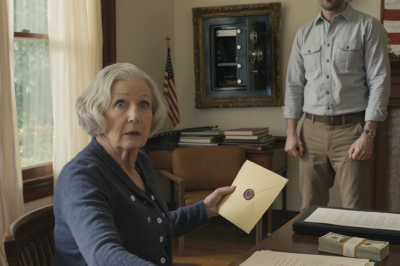
After my husband’s death, I decided to open his old safe. Inside was $500,000 in cash and some documents. But when I saw the third item, a cold wave of terror swept over me… and for the first time in fifty years of marriage, I realized how little I’d truly known the man I’d shared my life with.
After my husband’s death, I decided to open his old safe. Inside was $500,000 in cash and a stack…

On the morning I boarded a packed CTA bus for my divorce hearing at the Cook County courthouse, I thought I was just a discarded wife trying to arrive with my head high—until a frail old man stumbled at the door, I caught him, and the quiet “thank you” he gave me became the first domino in a chain that would make my powerful attorney-husband lose his breath.
What if the path to a divorce hearing turned into the moment that would change your destiny forever? Today, I…
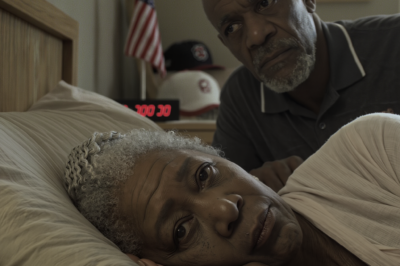
For seven months, every single night at exactly 2:47 a.m., my husband would rise from our creaking bed, cross the dark room, and stand on my side just watching me breathe—until the night I pretended to sleep and finally heard what he was whispering, and the truth behind that 2:47 ritual shattered everything I thought I knew about my life.
For seven months, every single night at 2:47 in the morning, my husband would stand right next to my…
My son and his wife left me for a seven-day cruise with my “mute” 8-year-old grandson, but the second the lock clicked, he looked up and whispered, “Grandma, don’t drink the tea Mama made for you”—and that was the moment I realized this week wasn’t babysitting… it was a test I might not survive.
My son and his wife flew off on a cruise, leaving me alone for a week with my 8-year-old grandson,…
End of content
No more pages to load