

My name is Eleanor. I am seventy years old. And until three days ago, my own son believed I was a helpless old woman he could manipulate however he wanted.
He had no idea how wrong he was.
When Ethan broke the index finger on my right hand because I refused to cosign a $200,000 loan for the “new house” for Jessica—my daughter-in-law—he thought he had broken me. He thought the pain and humiliation would make me give in.
But what he didn’t know is that, in that exact moment, while I was crying and pretending to be destroyed, I was already planning his downfall. And when we went to the bank the next day and he saw what appeared on the computer screen, he went completely still—because he discovered that his mother was not the poor old woman he thought he knew.
Allow me to tell you how we got here.
I am a woman who has perfected the art of going unnoticed. For years after my husband’s death five years ago, I carefully cultivated the image of the fragile widow everyone expected to see.
I dress in discreet clothing, always in shades of gray or brown, never anything flashy. I walk a little slower than necessary. I let my voice tremble slightly when I talk about important things, and I always carry my cane—even though I don’t really need it.
It’s all part of the perfect disguise.
My house is modest. My car is old. And when my neighbors see me, they whisper among themselves about poor Eleanor, who lives on a meager Social Security check.
I’ve heard their comments.
“What a shame.”
“So alone.”
“She must be struggling.”
“Her children should help her more.”
If they knew the truth, they would be speechless.
But this appearance of vulnerability is not accidental. It is a strategy I built meticulously, because I learned that when people underestimate you, they make mistakes—and the mistakes of others become my power.
I live in a small two-bedroom bungalow in a quiet neighborhood. I handle my own affairs with trembling hands that are actually steady as steel.
And when my children visit, I always behave like the devoted mother who lives for them. I cook for them. I give them money when they ask to borrow it—money I know they will never pay back.
I listen patiently to their problems while nodding my head like an understanding old woman. All the while, I observe, analyze, and file away every detail of their true intentions.
Ethan, my eldest son, is thirty-five and has always been ambitious—but in that dangerous way where ambition isn’t accompanied by hard work or real intelligence. He married Jessica three years ago, a twenty-eight-year-old woman who, from the first day, looked at me as if I were an obstacle on her path to a better life.
She is one of those people who smiles while stabbing you, who hugs you while calculating how much you are worth.
During these three years, I watched as they both developed a strange relationship with me. On one hand, they treated me with that feigned condescension reserved for the elderly.
On the other hand, they were always calculating, measuring, subtly asking about my financial situation.
Ethan and Jessica’s visits became more frequent in recent months, but not because they were concerned about my well-being. They would arrive with cheap cupcakes from the grocery store, feign interest in my health, and then inevitably the conversation would drift to money.
Ethan would ask me, “Mom, are you sure you’re okay… financially?”
And Jessica would add, stroking my hand with a tenderness that made me nauseous because I could see the falsehood behind her eyes, “You should think about the future—about what will happen when you can’t take care of yourself.”
I would nod weakly, sigh as if the weight of the world was on my shoulders, and murmur things like, “Oh, kids, I don’t know what I would do without you.”
During those months, I perfected my performance. I complained of imaginary aches. I mentioned bills that worried me, talked about how expensive life was.
I even left some bills unpaid on purpose for them to see when they came to visit. I wanted them to completely believe that I was a burden, a deteriorating old woman who depended on their kindness—and it worked perfectly.
Their gazes became greedier. Their questions became more direct. Their intentions became more obvious.
But what they didn’t know was that every word, every gesture, every insinuation was being recorded in my memory as evidence, saved for the perfect moment.
The decisive moment came exactly one week ago—a Tuesday afternoon I will never forget.
Ethan and Jessica arrived at my house with a smile that didn’t reach their eyes and a folder full of papers they carried under their arm as if it were treasure.
Jessica announced, in that syrupy voice she used when she wanted something important, “Mom, we have wonderful news.”
“We found the house of our dreams,” Ethan said, already moving through my living room like he belonged there.
They sat on my worn-out sofa—the one I have kept on purpose to reinforce my image of a woman with few resources—and they spread out photographs of a spectacular mansion in one of the most exclusive gated communities in the city.
Ethan passed the photos one by one, as if he were hypnotizing me.
“Look at this beauty, Mom,” he said. “Five bedrooms, three bathrooms, a huge yard, a pool, a two-car garage. It’s perfect for starting a big family.”
Jessica nodded vigorously and added details that sounded rehearsed.
“And it has a downstairs bedroom that would be perfect for you, Mom. You could come live with us. You’d be so much better taken care of.”
The way she said it made me understand immediately that this room would be more like my golden prison—the place where they would keep me controlled while they decided what to do with me and my money.
For twenty minutes, I listened to their perfectly coordinated presentation. They talked about mortgages, interest rates, unique opportunities that “couldn’t be missed.”
“It’s a steal, Mom,” Ethan insisted. “Normally a house like this would cost $300,000, but because of problems with the previous seller, we got it for $200,000.”
Jessica leaned in with a bright, eager smile.
“We just need a co-signer with a good credit history—someone trustworthy—and we immediately thought of you.”
The trap was so well constructed that I almost felt like applauding their performance.
I pretended to be overwhelmed by the information, as would be expected of an old woman who supposedly didn’t understand complicated finances.
“I don’t know, kids,” I mumbled with a trembling voice. “This co-signing business sounds very serious. What does it mean exactly?”
Ethan moved closer, taking my hands in his with a false tenderness that churned my stomach. He explained with that condescending patience people use with children.
“It means that if for some reason we couldn’t pay, you would be responsible for us,” he said. “But that’s never going to happen, Mom. I have a stable job. Jessica works too. We have everything calculated.”
“But what if something goes wrong?” I asked, perfectly playing the part of the worried old woman. “What would happen to my house… to my things?”
Jessica exchanged a quick glance with Ethan—one of those looks they thought I didn’t notice, but that I caught perfectly.
“Oh, Mom, nothing bad is going to happen,” Jessica replied with a nervous laugh. “Besides, think of it this way. If something terrible and unthinkable were to happen, we would take complete care of you. You would never want for anything.”
It was their elegant way of telling me that if things went wrong, they would take everything I have and make me their total dependent.
That night, after they left—promising to come back the next day to “help me better understand the papers”—I sat in my kitchen with a cup of tea and analyzed every word.
It wasn’t just a simple financial scam. It was a sophisticated plan.
First, they would make me a co-signer for a property that probably cost much more than they said. Second, once I signed, they would find a way to deliberately default.
Third, when the bank came for my house to cover the debt, they would appear as my “saviors,” offering to take care of me in their new mansion while they took everything I had built over a lifetime of work.
It was a brilliant plan, I admit.
But they had one problem.
They completely underestimated their victim.
During the next three days—while they believed I was considering their “generous” proposal—I did my own research.
I called Victoria, my trusted lawyer, a brilliant forty-year-old woman who handles my most important legal affairs and is one of the few people who knows my true financial situation.
I told her, “Victoria, I need you to investigate a property and two people. I think they’re trying to scam me.”
I also contacted Thomas, a discreet private investigator Victoria had recommended years ago for another matter.
I told him, “Thomas, I need you to follow my son and my daughter-in-law. I want to know exactly what they’re doing, who they’re meeting with, what papers they’re handling—and I want it completely confidential.”
In forty-eight hours, I had a complete file on the scam they were planning.
The house existed, yes, but it cost $280,000—not $200,000. Ethan and Jessica had agreed with the seller to pocket the difference.
Furthermore, they had been meeting with a real estate attorney who explained to them exactly how the foreclosure process works.
On Friday night, when they returned for the final conversation, I had everything ready for my own performance.
I made them coffee, served homemade cookies, and behaved like the perfect grandmother who had finally made a decision.
“Kids,” I said with a trembling but determined voice, “I’ve thought a lot about what you told me, and you’re right. You’ve always taken care of me. You’ve always been there for me.”
Their faces lit up immediately.
But I continued, “It’s a very big decision for an old woman like me. I need to read all the papers calmly—understand every word.”
That was when Ethan’s mask began to slip.
“Mom, we already explained everything,” he said, pointing to the marked lines on the documents. “There’s nothing complicated to understand. You just need to sign here and here.”
His tone was no longer that of a patient son. There was urgency, pressure that hadn’t been there before.
Jessica became more nervous.
“It’s just that the seller is pressuring us, Eleanor,” she said. “If we don’t close the deal this weekend, we could lose the house.”
Lie after lie. Pressure after pressure.
“I understand the urgency, kids,” I replied, keeping my voice soft. “But I can’t see these small numbers. Let me go get my reading glasses.”
I got up slowly—as any old woman would—and walked to my bedroom.
But instead of looking for glasses, I took my phone and sent a pre-written text message.
“Activate the plan.”
When I returned to the living room, they were whispering to each other, clearly discussing strategies to pressure me more.
I sat down in my favorite chair—an old rocking chair that squeaks a little—and began to review the papers with exaggerated meticulousness, like an old woman who supposedly understands nothing about finance.
“Let’s see,” I murmured, bringing the papers close to my eyes. “It says here the property is worth $200,000… but down here there are other numbers I don’t understand.”
Ethan came over with that forced smile that no longer fooled anyone.
“Mom, those are technical numbers from the bank—taxes and fees. You don’t have to worry about that.”
But I kept insisting, perfectly playing the role.
“It’s just that I don’t understand why it says one amount here and another here. In my day, when your father and I bought this house, the numbers were clearer.”
Jessica intervened with that syrupy voice I was sick of.
“Oh, Eleanor, everything is more complicated now because of government regulations. The important thing is that we take care of everything.”
For the next thirty minutes, I maintained that dance: pretending to read, asking innocent questions, showing myself overwhelmed by the complexity.
But every question was strategic—designed to make them reveal more.
And then I asked suddenly, as if it were a concern that had just occurred to me, “And if you get divorced… what would happen to the house and to me as a co-signer?”
The question took them by surprise.
Ethan stammered, “Mom, why would you say that? We’re doing great.”
But Jessica looked at me with a coldness that confirmed my suspicions. There was no real trust even between them.
I kept pressing with seemingly naïve, but devastatingly precise questions.
“What if one of you loses your job?”
“What if you get sick?”
“What if there’s an economic crisis like the one we had a few years ago?”
With each question, their answers became more vague, more evasive, more desperate. It was like watching two bad actors trying to improvise a script that was falling apart in their hands.
“Mom, you can’t live thinking about everything bad that could happen,” Ethan snapped. And for the first time, I heard real irritation in his voice.
“You have to trust us.”
That’s when I decided to play my first strong card.
“Kids,” I said with a broken voice, “I’m scared. I’m a lonely old woman. And if something goes wrong… what will become of me?”
I allowed tears to well up in my eyes—real tears—because even though I was acting, the betrayal of my own son hurt deep in my heart.
“This house is all I have,” I whispered. “If I lose it, I’ll be on the street.”
It was the perfect moment for any real son to comfort me, to hug me, to assure me he would never leave me helpless.
But Ethan did none of that.
Instead, he stood up abruptly and began pacing my small living room like a caged animal.
“Mom, you’re being ridiculous,” he said, his voice louder now. “We’re offering you the chance to live in a beautiful house—to be cared for—to be part of something better.”
“But you always have to complicate things,” he continued. “You always have to be so negative.”
Jessica tried to calm him, but I could see the panic in her eyes. They realized their perfect plan was crumbling.
Then Jessica changed tactics. She knelt beside my chair and took my hands with a tenderness so false it made me want to pull away.
“Eleanor,” she said softly, “I understand your fears. It’s normal for a woman your age to feel insecure.”
Every word was calculated to sound motherly, but the effect was the opposite.
“But think of it this way,” she continued. “We are your family. Ethan is your son—your blood. Do you really think we would hurt you?”
Then she pushed harder, using my loneliness and my age as weapons.
“Think of the grandchildren you could have in that big house,” Jessica said. “You could have your own garden, your own room with a private bathroom. You could spend your final years surrounded by family, not here alone in this old house that needs more repairs every day.”
But what she didn’t know was that every word was being recorded by the tiny device Victoria had installed in my locket—a necklace that looked like simple old-lady jewelry, but was actually state-of-the-art technology.
I let the silence stretch for a few seconds, as if I were deeply considering her words.
Then I sighed, as if I had made a painful but necessary decision.
“You’re right,” I finally murmured. “I’m a silly old woman who gets scared of everything. You are my family. You’re all I have in this world.”
Their faces relaxed. They exchanged triumphant glances. They thought they had won.
But I added, raising a trembling finger, “I need one more night to think about it. It’s a very big decision for my old head.”
Ethan was about to protest, but Jessica put a hand on his arm to stop him. She was smarter.
“Of course, Eleanor,” she said with a radiant smile. “Take all the time you need—but remember, the opportunity won’t last forever.”
That night, after they left, I immediately called Victoria.
“I have everything I need from this first phase,” I said. “The recordings are perfect. Now I need you to prepare the second part of the plan.”
Victoria—who knew my true nature much better than my own children—laughed softly.
“Eleanor,” she said, “sometimes you scare me. But it also gives me great satisfaction to see you give these scammers what they deserve.”
The next day, Saturday morning, I texted Ethan and Jessica.
“Kids, I’ve made my decision. I’m ready to sign. Come whenever you can.”
The reply came in less than five minutes.
“Perfect, Mom. We’ll be there in an hour. So exciting.”
I could imagine their jubilant faces, their celebratory hugs, their feeling of total victory.
If they had known what really awaited them, they would have run in the opposite direction.
I spent that hour preparing meticulously. I put on my oldest gray dress—the one that made me look especially frail.
I did my hair carelessly, like an old woman who no longer cares about her appearance. I even practiced my hand tremor and my hesitant walk.
But inside, I was more alert and stronger than ever.
I was a hunter waiting for the perfect moment to spring the trap.
When Ethan and Jessica arrived that Saturday morning, they brought with them a euphoric energy that was almost comical.
They entered my house like conquerors coming to claim their territory, carrying folders, special pens, even a bottle of cheap champagne to celebrate.
Ethan beamed. “Mom, what a beautiful day. It’s the perfect day to change our lives for the better.”
Jessica wore a bright red dress she had never worn in my presence before, as if she wanted to celebrate her victory in advance.
I behaved exactly as they expected: the nervous but resigned old woman who had finally made the right decision.
“Oh, kids,” I said with a trembling voice as I led them into the living room, “I didn’t sleep a wink last night thinking about all this. But you’re right—you know more about these modern things than I do.”
I served them coffee in my oldest cups, the chipped porcelain ones I had specifically reserved for this occasion.
Ethan spread the documents on my coffee table with the ceremony of someone about to sign a historic treaty.
“Look, Mom—everything is perfectly organized. You just need to sign on these three pages I’ve already marked with an X,” he said, pointing with a golden pen. “It’s very simple. Just your name and the date. In less than five minutes, it will all be done.”
Jessica added, “And then we can go celebrate with a nice lunch.”
I took the first document with hands I pretended were trembling and began to read slowly, moving my lips like old people do when they concentrate.
“Let’s see,” I mumbled. “It says here that I commit to…”
Then I acted dizzy.
“Oh, kids. These complicated words make me dizzy.”
It was a perfect performance of an old woman overwhelmed by legal jargon, but in reality, I read every clause with the precision of an experienced lawyer.
And what I saw confirmed all my suspicions.
It wasn’t just a simple co-signing. It was a total guarantee that included all my present and future assets.
Ethan cut in, impatience bleeding through.
“Mom, you don’t need to read all that. Trust us—we already went over everything with our lawyer. It’s standard.”
But I continued my charade, pointing to specific paragraphs and asking questions that sounded naïve but were devastatingly precise.
“It says something here about real and personal property. What does that mean exactly? Does it also mean my personal things?”
Jessica shot Ethan a nervous glance before answering.
“No, no, Eleanor. That’s just a legal formality. It only refers to the house. Nothing else.”
Lie number fifty-three. But who was counting anymore?
“Besides,” she added with a forced laugh, “it won’t even be necessary to use that clause because we’re going to pay everything religiously.”
Ethan nodded vigorously.
“Exactly, Mom. It’s just a paper the bank asks for. Nothing bad will ever happen.”
I pretended to read for another ten minutes, making dramatic pauses and worried sighs.
Then I finally declared, “Well, kids, if you say it’s okay, then it must be okay.”
I took the pen with a trembling hand and leaned toward the first document.
But just as I was about to sign, I stopped abruptly.
“Oh, how silly of me!” I exclaimed. “I can’t sign without my good reading glasses. These ones are for seeing far away.”
Ethan huffed, barely containing his frustration.
“Mom, you’ve already reviewed everything. You don’t need other glasses to sign your name.”
But I was already rising, perfectly playing the part of an old woman obsessed with details.
“No, no, son. My doctor always tells me that to read small print I need my special glasses. Give me a minute.”
I headed to my bedroom with slow, hesitant steps, listening to their desperate whispers behind me.
Once in my room, I moved quickly.
I sent a coded text to Victoria.
“The fish are in the net.”
Then I activated the second recorder I had hidden in my purse, because I knew what was coming next would be the most crucial part of all our evidence.
When I returned with my “special glasses,” which were actually exactly the same as the ones I already had on, I found Ethan pacing while Jessica checked her phone compulsively.
“Sorry for the delay, kids,” I said in my sweetest elderly voice. “You know how us old folks are with our quirks.”
I sat down again and took the pen.
Then, as if it were a completely spontaneous thought, I looked up at them with eyes full of feigned maternal love.
“Before I sign,” I said softly, “can you promise me something?”
Their faces tightened.
Ethan asked cautiously, “What is it, Mom?”
My voice cracked with feigned emotion.
“Promise me that if anything goes wrong—if you have trouble paying—you’ll tell me immediately. I don’t want you suffering in silence, trying to protect me.”
It was the perfect trap.
Jessica answered first, and her words were pure gold for my recording.
“Oh, Eleanor, of course,” she said. “But the truth is, if we did run into trouble, you’d be much better off living with us in the new house than here alone.”
Ethan followed with brutal honesty that chilled my blood.
“Exactly, Mom. And if for some reason we had to use your house as collateral, we’d take complete care of you. We’d give you a place to live, and you’d never lack food or care.”
There it was—the full confession.
They planned to use my house as collateral, knowing they couldn’t pay, and they had already calculated turning me into their dependent once they took everything.
But I kept my expression soft, moved, grateful.
“Oh, kids,” I murmured, “you’re so good to me. I don’t know what I’d do without you.”
Finally, with great ceremony and feigned trembling, I signed the first document, then the second.
When I reached the third—the most important one, the one that made me fully responsible for the debt—I made a dramatic pause.
“This last paper looks more complicated,” I observed. “Are you sure it’s necessary?”
The desperation in their eyes was almost palpable.
“Yes, Mom,” they said nearly in unison. “It’s the most important one.”
I signed the third document.
The moment I wrote the date, Ethan and Jessica literally sighed with relief.
“Done,” Ethan exclaimed, gathering the papers as if they were lottery tickets.
“It’s all settled,” Jessica said, hugging me with an effusiveness that made me nauseous. “Eleanor, you’re the best mother-in-law in the world. You don’t know the happiness you’ve given us.”
They popped the cheap champagne and poured three glasses.
For the next thirty minutes, they talked euphorically about plans for the new house—what my room would look like, the parties we’d have, the “bright future” that awaited us.
It was all a lie.
But I let them fantasize while I mentally reviewed every element of my counterattack.
When they finally left, carrying the signed documents like trophies, I waved goodbye from the door with tears in my eyes and a trembling smile.
“God bless you, kids,” I said. “I hope everything works out.”
The moment their car disappeared around the corner, my expression changed.
I locked the door, went straight to the phone, and called Victoria.
“It’s all done,” I told her. “I have the signatures. I have the recordings—and I have their confessions of their real intentions.”
There was a pause on the other end, and then Victoria laughed—the laugh she reserved for moments of absolute legal triumph.
“Eleanor,” she said, “you are a dangerous woman. I feel sorry for your son… but he brought this on himself.”
The next three days were a masterpiece of patience and strategic planning.
While Ethan and Jessica celebrated their supposed victory—running around doing bank paperwork and bragging to their friends about their upcoming mansion—I moved silently like a spider weaving the perfect web.
Every morning, I woke with a sense of power I hadn’t experienced in years, knowing that for the first time in a long time, I was in complete control of the board.
On Monday morning, Victoria came to my house disguised as a government social worker. She carried an official-looking binder, a fake ID, and the bored attitude of someone making routine visits to senior citizens.
If anyone had seen her, they would have thought she was just another bureaucrat doing welfare checks.
But in reality, we were refining every detail of my revenge.
“The recordings are perfect,” she said, reviewing the audio. “You have explicit confessions of fraud, emotional manipulation, and premeditated plans to strip you of your assets.”
She showed me high-resolution photographs Thomas had taken of Ethan and Jessica meeting with their accomplice attorney.
“We have them entering and leaving the law firm three times in two weeks,” Victoria said. “Always with documents related to foreclosures.”
She also had copies of text messages Thomas had legally obtained through contacts—messages so devastating they made my skin feel too tight.
They called me “the old fool.” They calculated how long it would take to “get rid of her.” They discussed plans to sell my belongings.
“But this is just the appetizer,” Victoria continued with a smile that sent a shiver of satisfaction down my spine. “The real surprise comes tomorrow at the bank.”
She explained she had been working with the bank manager, a man named Robert—an old college classmate of hers with an impeccable reputation.
“Robert is outraged,” she said. “He’s seen many cases of financial abuse against the elderly, but never one so blatantly planned.”
On Tuesday afternoon, I received the call I had been waiting for.
It was Ethan, his voice trying to sound casual but failing to hide his nervousness.
“Mom, we need you to come to the bank tomorrow to finalize some papers,” he said. “It’s just a formality, but your presence is required.”
I feigned confusion.
“More papers, son? I thought we were done with all that on Saturday.”
His response was evasive.
“Yes, yes, but the bank needs to confirm some details with you directly. It’s standard protocol.”
I could hear Jessica in the background whispering instructions.
That night, I couldn’t sleep—not from anxiety, but from pure anticipation.
It was like Christmas Eve, except instead of presents, I was going to get justice.
I got up early, dressed carefully in my most convincing old-lady clothes, practiced my expressions of confusion and my hesitant walk.
I even put on a little makeup to look paler and more fragile. Every detail mattered.
At ten o’clock on Wednesday morning, Ethan arrived to pick me up.
He came alone.
As he explained, “Jessica has an important doctor’s appointment she can’t cancel.”
An obvious lie. She was probably too nervous to face what they believed would be the final formality of their scam.
During the drive, Ethan tried to prepare me.
“Mom, the manager is going to ask you some questions about your financial situation,” he said. “Just answer honestly. Don’t try to impress anyone or hide anything.”
I asked in an innocent voice, “What kind of questions, son?”
“Oh, normal stuff,” he said. “How much money you have saved. If you have other debts. If you understand the responsibilities of being a co-signer. It’s bank protocol—nothing personal.”
What Ethan didn’t know was that those questions were exactly the ones I had suggested to Robert, designed to create the perfect moment for my revelation.
“And if I don’t know how to answer something?” I pressed.
“Don’t worry, Mom,” he said. “I’ll be there to help you with anything you don’t understand.”
When we arrived, Robert was waiting for us in his office.
He was a distinguished man in his fifties, with the authoritative presence that inspires immediate confidence.
His office was perfectly arranged: organized documents, computer on, an atmosphere of professional seriousness that made Ethan visibly more nervous.
Robert greeted me with perfect courtesy.
“Good morning, Mrs. Eleanor. It’s a pleasure to finally meet you. I’ve heard a lot about you.”
The meeting began routinely with Robert explaining the terms of the loan and the responsibilities of a co-signer.
I played the part of the overwhelmed but cooperative old woman, asking basic questions and showing appropriate confusion at technical terms.
Ethan kept trying to speed things up.
“Mom understands everything perfectly,” he said whenever I paused. “She’s fine.”
Then Robert asked the crucial question.
“Mrs. Eleanor, to complete this process, I need to verify your current financial situation. Could you provide information about your bank accounts and assets?”
Ethan tensed.
“Is that really necessary?” he asked. “She’s a simple retiree. She doesn’t have much to declare.”
Robert’s gaze sharpened.
“Sir, when someone becomes a co-signer for such a significant amount, the bank is required by law to verify their actual financial capacity.”
“Of course,” I replied, my voice trembling as if I were nervous about revealing my “modest” resources. “I don’t have much, but I can show you what I have.”
I pulled an old faded passbook savings account from my purse—the one I had used for years to maintain my charade of poverty.
“This is my main account,” I said. “Everything I have is in there.”
Robert took the passbook and opened it ceremoniously. He studied the numbers in silence, then turned to his computer and began typing.
Ethan leaned forward, trying to see.
After a moment, Robert murmured, “Interesting.”
Then he looked up.
“Mrs. Eleanor, are you sure this is your only bank account?”
“Yes, sir,” I replied with perfect innocence. “Why—there’s a problem?”
“There’s no problem, ma’am,” Robert said. “In fact, it’s quite the opposite.”
He swiveled the monitor so both Ethan and I could see.
“According to our records,” Robert continued, “you have accounts at three different banks with a combined total balance of approximately $2.8 million.”
The silence that followed was deafening.
Ethan went completely rigid, mouth open, eyes fixed on the screen as if he were seeing a ghost.
The numbers were there, clear and incontrovertible: account after account, investment after investment—an entire fortune he had never imagined existed.
“And furthermore,” Robert continued, “you have investment properties in two different states, a diversified portfolio of stocks and bonds, and a trust established five years ago that generates passive income of approximately $15,000 a month.”
Ethan’s voice fractured.
“But… but… Mom, you always said you lived on a meager pension. You complained about the bills—about not having enough money.”
Robert intervened with a professional smile that carried a dangerous edge.
“Sir, your mother is what we call a discreet investor. There are many older people who prefer to maintain a low profile regarding their true financial situation.”
I kept my expression carefully blank, almost worried.
“Have I done something wrong?” I asked in a small voice. “It’s just that my late husband always told me it was better not to show off the money one has. It’s bad manners.”
Robert nodded sympathetically.
“Your husband was a very wise man, Mrs. Eleanor. Financial discretion is a virtue that few practice today.”
Ethan’s face was an epic poem of shock, disbelief, and growing horror.
His eyes darted from the screen to my face, trying to translate the reality he’d just crashed into.
Finally, he whispered, “Mom… you knew about all this money.”
“Oh, honey,” I said softly, still wearing the mask, “of course I knew. But your father always told me you don’t go around talking about money in public.”
Robert, enjoying every second, continued reading like a public accountant.
“I also see certificates of deposit worth $500,000 maturing next year,” he said, “and an overseas investment account that—well, for privacy, let’s just say it is considerable.”
Every word was a hammer blow.
Ethan finally managed to speak again.
“Why did you live like you had no money? Why did you complain about bills? Why did you borrow money for house repairs?”
His voice rose like a teenager accusing a parent of betrayal.
It was pathetic.
But it was also extraordinarily satisfying.
“Oh, my love,” I replied with the infinite patience reserved for small children, “it’s because your father taught me that the best way to know people is to see how they behave when they think you have nothing to offer them.”
I watched the understanding land in him like a blow.
It wasn’t just that I had money.
It was that I had been testing him.
Evaluating his character. Measuring genuine love against greed.
And he had failed spectacularly.
“For these past few years,” I continued in a soft but relentless voice, “I have been waiting for one of my children to visit me simply because they love me, not because they need something from me.”
Right on cue, Robert introduced the next element of our strategy.
“Mr. Ethan,” he said, “given your mother’s real financial circumstances, I must ask—are you absolutely sure you want to proceed with this loan?”
The question sounded innocent.
But it was loaded.
If Ethan had any emotional intelligence, it was his chance to back down, apologize, salvage what little was left.
But Ethan had no emotional intelligence.
He had greed.
Desperation.
“Of course we want to proceed,” he said sharply. “My mother has already signed all the papers. She agreed to be the co-signer.”
Then he added, defensive and slightly threatening, “Besides, if she has so much money, then there’s no risk for anyone—right?”
It was the perfect answer.
Instead of remorse, he doubled down—publicly confirming in front of an official witness that he knew exactly what he was doing and had no intention of stopping.
“You’re right, son,” I said with a smile he interpreted as maternal submission, but was actually pure predatory satisfaction. “There’s no risk for anyone.”
Robert proceeded with the most delicious part of the plan.
“Very well,” he said, pulling a new folder from his desk. “Then let’s complete the process. Mr. Ethan, I need you to sign these additional documents.”
Ethan took the papers without reading them.
If he’d been smarter, he would have noticed the sworn affidavits about his intentions, the liability waivers, and—most importantly—authorizations for the bank to record all our conversations as part of its fraud-prevention protocol.
Ethan asked distractedly, “What are these?”
“Standard bank protocol,” Robert replied, voice calm and authoritative. “Declarations of good faith. Confirmations that you understand the terms. Authorization for additional credit checks.”
Every signature Ethan scribbled was another nail in his legal coffin.
When it was done, Robert escorted us to the door with perfect courtesy.
He took my hand with genuine respect.
“Mrs. Eleanor, it has been a true honor to meet you. Your husband must have been a very intelligent man to have taught you so much about finance and discretion.”
Then he turned to Ethan, and his expression subtly changed.
“Sir, I hope you appreciate the blessing you have in such an exceptional mother.”
During the drive back, Ethan drove in a silence so thick it felt physical.
Two blocks from my house, he finally exploded.
“Mom, I can’t believe you lied to me all these years,” he said. “I thought you were struggling. I was worried about you.”
“Worried about me?” I asked, still soft, but with an edge he’d never heard. “Is that why you came with Jessica to pressure me into co-signing for a house you can’t afford?”
“Is that why you broke my finger when I refused?”
The moment I said it out loud, his face drained.
“Mom, I… that was… I was very stressed,” he stuttered. “I didn’t mean to hurt you.”
Then he tried to wrap it in something noble.
“I thought you really needed our help—that being alone in that old house wasn’t good for you. Jessica and I thought living with us would give you a better quality of life in your final years.”
“My final years,” I repeated slowly, savoring the cruelty of the phrase. “You’ve already decided for me how much time I have left.”
The car stopped in front of my house. Neither of us moved.
“Ethan,” I said, and for the first time in years I used his name instead of son or my love, “do you really think I didn’t notice your visits increased when you started having financial problems?”
“Do you think I didn’t notice Jessica started asking questions about my will and my properties?”
He opened his mouth to protest, but I kept going.
“Did you really think a woman who built a fortune of almost three million dollars wouldn’t notice when her own children tried to scam her?”
The silence was sharp.
Finally, Ethan spoke like a child caught in a lie.
“Mom… we never wanted to scam you. We just thought it would be better for everyone if—”
“If what, Ethan?” I cut in. “If you stole my house? If you turned me into your dependent? If you took my independence and my dignity so you could live in a mansion you haven’t earned?”
The truth sat between us, raw and unadorned.
Ethan collapsed forward, forehead on the steering wheel.
“I didn’t know what to do,” he mumbled. “Jessica and I have so many debts. So many problems. I thought if you had that house and if something happened, we could take care of you and… and…”
“And take everything,” I finished for him.
“Yes, Ethan. I understand perfectly what you thought.”
I got out of the car with the serene dignity of a queen watching a traitor confess.
Ethan stayed gripping the wheel like it was the only thing holding him to reality.
As I walked toward my front door, he shouted, “Mom, wait! We need to talk. We need to fix things.”
I didn’t turn.
“There’s nothing left to fix,” I said, colder than January ice. “You made your choice when you decided your mother was an obstacle to be removed instead of a person to be loved.”
I went inside and closed the door—not with the dramatic slam he expected, but with a final, quiet certainty.
From my window, I watched him sit there for almost ten minutes, probably waiting for me to come out and comfort him.
But that woman died the moment he broke my finger.
As soon as his car disappeared, I dialed Victoria.
“Phase one is complete,” I told her. “I have his full confession recorded in the car. I have his shock documented in the face of my real finances—and I have his confirmation that he’ll proceed with the scam despite knowing the truth.”
Victoria laughed.
“Eleanor,” she said, “you’re more ruthless than any lawyer I know. Now comes the really fun part.”
For the next forty-eight hours, Ethan and Jessica lived in a bubble of denial and self-deception that was fascinating to observe.
Thomas kept me informed of their movements.
“They’re acting like they won the lottery,” he reported. “Yesterday they went to an expensive furniture store and spent $4,000 on a living room set—all on credit.”
On Thursday morning, Jessica had the audacity to call me.
Her voice was a toxic mix of false concern and calculated manipulation.
“Eleanor, I’m so worried about you,” she said. “Ethan came home very upset after the bank. He says you’re angry with us.”
I feigned confusion.
“Angry? No, honey. I’m not angry. I’m just surprised you want to proceed with buying the house now that you know I’m not the poor old woman you thought I was.”
Jessica stalled, then said, “It’s just that… the money doesn’t change anything between us. We love you the same, whether you have a lot or a little.”
It was such a blatant lie I almost wanted to applaud.
“Of course, dear,” I replied with venomous sweetness. “True love isn’t measured in money. That’s why I’m sure if I were truly poor—like you believed—I would have been loved and cared for exactly the same. Right?”
She fell silent, because we both knew the answer.
If I had genuinely been destitute, they would have let me rot in my old house while they upgraded their lives.
“Of course we would,” she finally said, but her voice was hollow. “We’ve always been willing to take care of you.”
On Friday evening, Ethan arrived alone.
He looked different—not triumphant, not aggressive. He looked like a desperate man who finally understood the magnitude of his mistake.
He said from my doorway, “Mom… can we talk, please?”
His voice was that of a scared child, not the adult who broke his own mother’s finger.
I let him in.
But I didn’t offer coffee. I didn’t offer cookies. I didn’t gesture toward the sofa.
I sat in my favorite chair and waited.
“Mom,” he began, voice breaking, “I know I made terrible mistakes. I know I hurt you. I lied. I tried to take advantage of you.”
Then he tried to dress desperation up as a reason.
“But you need to understand—I was desperate. Jessica and I have huge debts. We’re about to lose our apartment. And I thought that you—”
“You thought what, Ethan?” I interrupted, my voice sharper than I recognized. “That I was a stupid old woman you could manipulate?”
“That after you broke my finger I’d be so scared I’d sign anything?”
“Or that after years of pretending to love me only when you needed money, I wouldn’t realize your true intentions?”
He flinched with each question.
“No, Mom. I do love you,” he protested weakly. “I’ve always loved you. It’s just the circumstances…”
“The circumstances,” I repeated with contempt.
“Ethan, for the last five years since your father died, you have visited me exactly twenty-three times.”
“And on twenty-one of those visits, you ended up asking to borrow money.”
“Do you really want me to believe that’s love?”
He swallowed.
“But I always intended to pay you back,” he pleaded. “When my situation improved—”
“You have borrowed $18,400 in five years,” I said, precise and calm. “You have never paid back a single cent.”
“You have never asked how I’m really doing—what I need, if I’m lonely or scared.”
“You only show up when your credit card is maxed out.”
The silence that followed hurt both of us, but for different reasons.
Finally, he asked, “What do you want me to do? How can I fix this?”
It was the question I had been waiting for.
“I want you,” I said slowly, “to cancel the purchase of that house immediately.”
His face collapsed like I’d told him to cut off his own arm.
“I want you to tell Jessica the truth about what you were really planning to do to me.”
He went paler.
“And I want you to seek professional help for your financial problems instead of trying to steal from your mother.”
Each demand was reasonable.
To him, they were death.
“Mom, you can’t ask me to do that,” he protested, bordering on hysteria. “We already signed contracts. We made plans. Jessica told her whole family about the new house. If we cancel now, we lose the entire down payment. We lose the opportunity—and Jessica…”
He stopped abruptly.
He wasn’t worried about hurting me.
He was worried about disappointing Jessica—and about his image.
I smiled, and I knew it wasn’t kind.
“Ah,” I said. “So your real concern isn’t that you betrayed me. Your real concern is that Jessica will realize you’re not the successful man she thought she married.”
Ethan stood so abruptly I thought, for one terrible second, that he would become violent again.
But instead, he staggered toward the door like a drunk man.
“This isn’t over, Mom,” he muttered without looking at me. “You signed those papers. You are the official co-signer on our loan. If we can’t pay, the bank will come after you—and then you’re going to need our help.”
It was a threat.
The final confirmation that there was no repentance—only resentment for being caught.
“You’re right, Ethan,” I replied, calm enough to surprise even me. “This isn’t over. But it’s not going to end the way you expect.”
After he left, I sat in the dark living room, feeling a strange mixture of grief and fierce satisfaction.
The mother in me mourned the son I had lost.
The warrior in me prepared for the final battle.
On Monday morning at exactly nine, my phone rang with the punctuality of a Swiss watch.
It was Victoria, and her voice had that electric quality it gets when she’s about to unleash a legal storm.
“Eleanor,” she said without preamble, “it’s time to show your son what it really means to go up against a woman who knows power.”
Over the weekend, while Ethan and Jessica celebrated what they believed was their victory, Victoria and her team worked like ants building a case that would be remembered for years.
“We have everything,” she said. “Audio recordings of confessions. Thomas’s photographs documenting meetings with accomplices. Copies of fraudulent documents. Witness testimony. Medical records of your broken finger confirming the assault.”
But the pièce de résistance of our legal arsenal was something not even Ethan could have imagined.
“Remember I told you there was something more?” Victoria continued, and I heard the smile in her voice. “It turns out the house they’re trying to buy has a complicated legal history.”
“The seller doesn’t have a clean title. There are two pending lawsuits related to structural problems.”
“And the most beautiful part of all? The real market price isn’t $200,000 or $280,000.”
“It’s $140,000.”
The information hit like a bomb.
Not only were Ethan and Jessica trying to scam me—they were being scammed by the seller and probably by their own attorney.
A chain of deceit, each link thinking it was the predator, not realizing it would be destroyed.
“So they’re going to overpay by $140,000 for a property that isn’t legally worth owning,” I said, mind already calculating.
“Exactly,” Victoria confirmed. “And since you’re the co-signer, you would technically be responsible not only for the fraudulent loan amount, but also for all legal claims associated with the property.”
“It’s a financial disaster that could easily cost $500,000 or more.”
It was the perfect plan to destroy any victim.
On Tuesday morning, I set the final phase in motion.
I called Ethan with the sweetest, most maternal voice I could muster.
“Son, I’ve been thinking a lot about everything we talked about,” I said. “I think you’re right about some things.”
I heard his surprise—and the renewed hope.
“Really, Mom?” he breathed. “You’ve changed your mind?”
“Yes, my love,” I said, my final performance sliding into place. “I’ve decided that instead of co-signing your loan… I’m going to buy the house for you directly, in cash.”
The silence on the other end was so complete I thought the call had dropped.
Then I heard ragged breathing.
“What?” he said. “What did you say?”
“You heard me,” I said. “I’m going to pay the full $200,000 so you can have your house without any bank debt.”
His euphoria was almost comical.
“Mom, you’re incredible,” he gushed. “You’re the best mother in the world. I can’t believe you’re doing this for us.”
Pathetic, how his love flooded back the instant he smelled a free fortune.
“But there’s one condition,” I added.
His tone shifted immediately.
“What kind of condition?”
“I want us all to meet at the bank tomorrow to make the official transfer,” I said. “You, Jessica, Robert the manager, and me. A full family ceremony.”
On Wednesday at eleven, we gathered in Robert’s office as if for a celebration.
Ethan and Jessica arrived dressed like they were going to a wedding.
Jessica wore a bright green dress that screamed new money. Ethan wore a suit that looked suspiciously new—probably bought that morning on credit.
Both of them carried the poorly disguised triumph of scammers who believe they’ve finally pulled off their masterpiece.
Jessica hugged me with an affection so excessive it made my stomach turn.
“Eleanor,” she exclaimed, “I can’t believe how generous you are. You’re the best mother-in-law in the world.”
Ethan kissed my forehead with a tenderness that had been absent for years.
“Mom, this means everything to us,” he said. “It means we can start a new life, start a family, be truly happy.”
Every word was a lie wrapped in manipulation.
Robert welcomed us with appropriate solemnity.
“Mrs. Eleanor,” he announced, “it’s truly beautiful to see a mother support her family in this way. We don’t witness such extraordinary generosity every day.”
Then he turned to Ethan and Jessica.
“You are very fortunate to have such a mother.”
“Before we proceed with the transfer,” I said, voice trembling with feigned emotion, “I want to say a few words.”
They settled into their chairs like an audience awaiting an inspirational speech.
“For these past few years,” I began, “I have been watching, learning, evaluating. As a mother, you always hope for the best from your children—but you must also be prepared for the worst.”
Ethan and Jessica nodded, thinking this was general motherly wisdom.
Then I looked Ethan directly in the eyes.
“Ethan, do you remember when you broke my finger because I refused to cosign?”
His face went white.
Jessica turned toward him in genuine shock. Apparently he had never told her.
“And do you remember when you told me that if anything went wrong with the loan, I would be better off living as your dependent while you took my house?”
Jessica’s color drained, too.
Robert’s expression changed instantly—from ceremonial to alarmed.
“Excuse me,” he said. “There was physical violence involved in this transaction?”
His voice sharpened.
“Mr. Ethan, is it true that you physically assaulted your mother to pressure her into being a co-signer?”
The question hung in the air like a blade.
“No,” Ethan stammered. “It wasn’t like that. It was an accident. We were arguing and—”
Robert was already taking notes.
“Mrs. Eleanor,” he said, “do you have medical documentation of this injury?”
I pulled the X-rays and the medical report from my purse.
“Of course,” I replied, deadly calm.
At that moment, as if choreographed by the gods of justice, the office door opened.
Two uniformed police officers entered, followed by Victoria in her most impressive suit—and a man I didn’t recognize, though his posture screamed authority.
“Good morning,” Victoria said, voice crisp. “I am Mrs. Eleanor’s lawyer. And these officers have arrest warrants for financial fraud, elder abuse, and conspiracy to commit theft.”
The silence was so perfect you could hear the buzz of the fluorescent lights.
Ethan and Jessica froze like deer in headlights.
The taller officer stepped forward.
“Ethan Miller and Jessica Miller,” he said, “you are under arrest for conspiracy to commit financial fraud against a senior citizen, extortion, and—in Mr. Miller’s case—physical assault against a vulnerable person.”
When the handcuffs clicked around Ethan’s wrists, the sound echoed like a bell of justice.
I watched his face go through shock, denial, horror, understanding—and finally desperation so deep it almost made me feel pity.
Almost.
As the officers pulled him from his chair, Ethan shouted, “Mom! This is a misunderstanding. You can’t do this. I’m your son!”
His voice cracked on the last word, like he finally understood it no longer held power.
Jessica spiraled into hysteria.
“This can’t be happening,” she shrieked, struggling uselessly. “Eleanor, you’re insane! We were only trying to help you. Ethan would never hurt you!”
Every word she screamed worsened their legal situation.
Victoria stepped beside me with that smile of professional satisfaction.
“This will go down as poetic justice,” she murmured. “Not only did we arrest them for what they did to you—we saved them from falling into an even bigger scam with that fraudulent property.”
It was true.
In a delicious irony, my revenge was also their salvation from an even worse financial disaster.
The man who had entered with Victoria introduced himself.
“Detective Thomas Rodriguez,” he said. “Specialist in crimes against the elderly.”
He looked at me with genuine respect.
“Mrs. Eleanor, your case is going to help dozens of other victims. The recordings you obtained, the patience, the way you documented every aspect of the scam—this is professional-level work.”
After Ethan and Jessica were taken away, Robert, Victoria, and I were left alone in the office.
The contrast between the calm and the chaos was surreal.
“Now comes the really interesting part,” Victoria said, opening a folder. “While investigating your case, we discovered Ethan and Jessica have been running similar scams for years.”
“You weren’t their first victim,” she added. “You were just their biggest.”
The revelation hit like a hammer.
“What do you mean?” I asked, though part of me already knew.
Victoria spread photographs and documents across Robert’s desk.
“Jessica’s mother,” she said, pointing to a picture of an eighty-two-year-old woman with early-stage Alzheimer’s, “loaned them $50,000 for the down payment on their current apartment.”
“Ethan’s uncle—a seventy-five-year-old widower—was pressured into co-signing a car loan they never paid.”
There was more.
An elderly neighbor loaned them $15,000 for emergency medical expenses that never existed.
Jessica’s godmother gave them $30,000 for a supposed family business they never started.
A systematic pattern of exploiting seniors.
A criminal career.
All while I thought I simply had a son with financial problems.
Robert finally spoke.
“Mrs. Eleanor,” he said quietly, “what you did wasn’t just protecting yourself. You stopped a criminal operation that would have continued to victimize elderly people for years.”
In the weeks that followed, as the case unfolded in court, I became something I never expected to be.
A symbol.
The media got hold of the story and turned it into legend: the grandma who snared the scammers, the widow who proved experience is power, the perfect revenge.
Interview requests came like an avalanche—television producers, journalists, writers.
Everyone wanted to know how I laid the trap.
But what I was proudest of wasn’t the attention.
It was the thank-you calls.
Seniors from all over the country contacted me to share stories of financial abuse by family members—people inspired to fight back because they saw someone like them refuse to be crushed.
Three months after the arrest, I received a call that changed the rest of my life.
A representative from the United States Senate informed me I had been selected to receive the Presidential Medal of Freedom for my contribution to protecting vulnerable older adults.
“Mrs. Eleanor,” she said, voice emotional, “your case has inspired legislative changes in elder protection and has given hope to thousands of victims of family abuse.”
The award ceremony was surreal.
There I was—seventy years old, a widow who had spent years feigning poverty in a modest house—standing at a podium, receiving a medal from the President himself.
My speech was simple.
“Never underestimate the power of a woman who has decided she will no longer be a victim,” I said. “Age is not weakness. It is experience. And experience, well used, is the most lethal weapon there is.”
The real satisfaction came six months later, when Victoria told me the final sentences.
Ethan received five years in prison for fraud, extortion, and assault on a senior citizen.
Jessica received four years for complicity and conspiracy.
Both were left with permanent criminal records that made it impossible to ever work in any industry involving money or the care of vulnerable people.
More importantly, the judge ordered that all the money they scammed from their previous victims be returned with interest—from my own funds, which I voluntarily donated.
Jessica’s mother got her $50,000 back, plus an additional $20,000 for medical care.
Ethan’s uncle not only got his money back—he received enough compensation to pay off his mortgage completely.
With the remaining money from my fortune, I established the Eleanor Foundation for Elder Protection—the first organization in the country dedicated specifically to investigating, preventing, and legally pursuing family financial abuse.
Victoria became the legal director. Thomas became the director of investigations. Robert became the financial director.
It was the perfect team: people who had seen the darkest side of human nature and decided to fight back.
A year after the arrest, I sat in my new office—no bigger than my old living room, but with a view of a garden where victims came to receive free legal advice.
On the wall hung my medal.
But also photographs of the thirty-seven families we helped recover over two million dollars stolen by family scammers.
That afternoon, while reviewing new cases, my phone rang.
It was a sixty-five-year-old woman named Martina.
Her son had started pressuring her to sell her house and move into a nursing home “for her own good.”
Her story was chillingly familiar: visits that increased when he had financial problems, questions about her will, comments about how expensive her house was to maintain.
Martina’s voice trembled.
“Mrs. Eleanor,” she said, “I heard your story on the radio. I think my son is trying to do the same thing yours did.”
I answered with the firm voice of someone who walked through fire and came out holding the ashes.
“Martina,” I said, “you’ve called the right place—and you’ve called just in time.”
“Right now, your son thinks you’re an easy victim. We’re going to teach him that he is completely wrong.”
As I listened to the details, I felt that familiar sense of power and purpose return.
It was time to hunt again.
Some bites are fatal.
News

My son looked me dead in the eye and said he’d sell the Connecticut house my late husband and I built, just to buy his wife a shiny new Mercedes—then gave me 24 hours to pack—because “she matters more.” I smiled, nodded, and started folding sweaters, while the truth sat in a folder he’d never thought to ask about.
My son said, “I decided to sell your house to buy a new car for my wife. She’s more important…

In a Chicago courtroom filled with reporters and family friends, my parents tried to bankrupt me in public—just to make sure the whole city believed I was broke. They wanted humiliation, headlines, and the end of my name. But when the judge asked one single question, their lawyer went pale—and my father’s empire began to crumble before everyone’s eyes…
I sat in a bankruptcy courtroom packed with strangers—not because I was out of money, but because my parents…
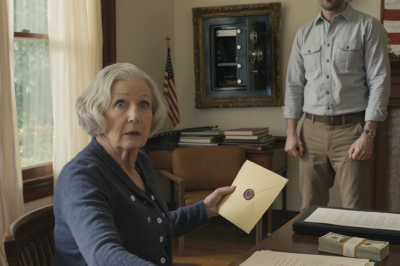
After my husband’s death, I decided to open his old safe. Inside was $500,000 in cash and some documents. But when I saw the third item, a cold wave of terror swept over me… and for the first time in fifty years of marriage, I realized how little I’d truly known the man I’d shared my life with.
After my husband’s death, I decided to open his old safe. Inside was $500,000 in cash and a stack…

On the morning I boarded a packed CTA bus for my divorce hearing at the Cook County courthouse, I thought I was just a discarded wife trying to arrive with my head high—until a frail old man stumbled at the door, I caught him, and the quiet “thank you” he gave me became the first domino in a chain that would make my powerful attorney-husband lose his breath.
What if the path to a divorce hearing turned into the moment that would change your destiny forever? Today, I…

For seven months, every single night at exactly 2:47 a.m., my husband would rise from our creaking bed, cross the dark room, and stand on my side just watching me breathe—until the night I pretended to sleep and finally heard what he was whispering, and the truth behind that 2:47 ritual shattered everything I thought I knew about my life.
For seven months, every single night at 2:47 in the morning, my husband would stand right next to my…

My son and his wife left me for a seven-day cruise with my “mute” 8-year-old grandson, but the second the lock clicked, he looked up and whispered, “Grandma, don’t drink the tea Mama made for you”—and that was the moment I realized this week wasn’t babysitting… it was a test I might not survive.
My son and his wife flew off on a cruise, leaving me alone for a week with my 8-year-old grandson,…
End of content
No more pages to load