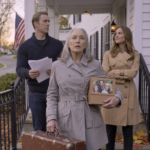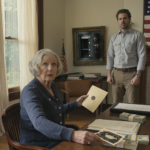
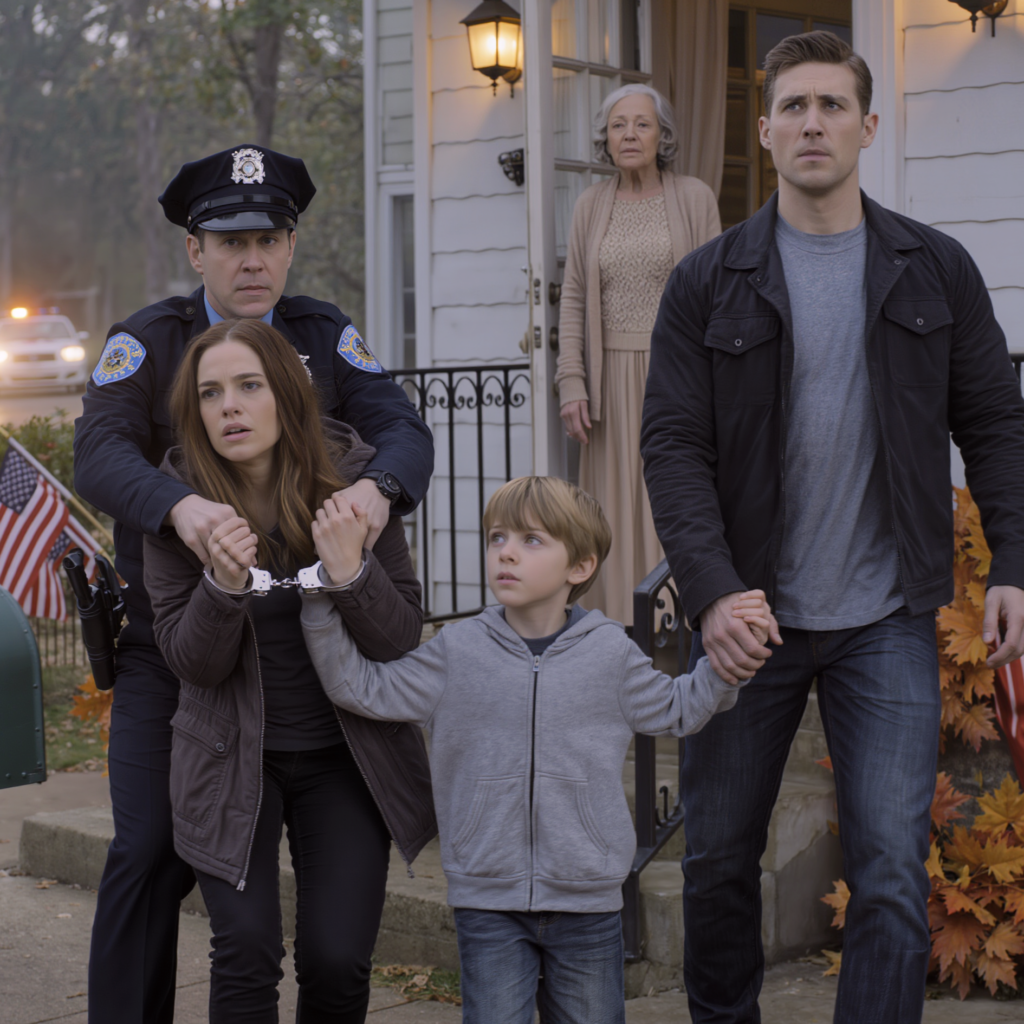
My son and his wife flew off on a cruise, leaving me alone for a week with my 8-year-old grandson, who had been considered mute since birth.
As soon as the lock clicked behind them, he stopped rocking in his chair, looked up at me, and whispered in a perfectly clear, pure voice,
“Grandma, don’t drink the tea Mama made for you.”
At that moment, my blood ran cold.
My name is Eloise Van, and I am 66 years old. I’m glad you’ll listen to this story to the end, and afterwards please write in the comments what city you are from. I really want to see how far my story reaches.
I never imagined that an ordinary week with my grandson would turn my life upside down. It seemed that at my age, nothing could surprise me anymore.
I was wrong.
That morning, when Marcus and Vanessa were getting ready for their 7-day cruise, I felt a mix of two familiar emotions—joy and exhaustion. Joy that Jordan would be with me, and the exhaustion that always comes with caring for a child, especially a special-needs child.
My grandson had been listed as nonverbal since birth. Doctors, commissions, diagnoses—the whole nine yards. I loved him to the point of pain, but our visits always passed in silence.
Just gestures, long pauses, guessing by his eyes, and an eternal ache inside. What is he thinking? What is in his head? What is hiding behind those dark, attentive eyes?
“Mom, are you sure you can handle him for a week?” Marcus asked for the third time, stuffing suitcases into the trunk of their expensive car.
There was that familiar, painfully understandable tone in his voice—both love and a sense of duty, as if caring for his own aging mother was just another item on a to-do list that was already packed tight.
“I was raising babies before you were even born,” I reminded him, pulling my cardigan tighter against the cool October morning air. “Jordan and I will manage just fine.”
Vanessa walked out of the house. She was striking, wearing a platinum-blonde weave that was laid to perfection. Not a single hair was out of place, even though it was still early on a damp morning.
She always carried herself as if the world was obligated to move aside if she needed to pass. At 34, she was one of those women heads turn for on the street, and one of those women who is never satisfied with what she already has.
“Eloise, I prepared a special tea for you,” she said in that sweet, honeyed voice of hers, the one I had long learned to hear the falseness in.
“Chamomile. The kind you like. I made enough for the whole week. Just pour hot water over the bags. They’re sitting on the kitchen counter.”
I nodded and thanked her, although something about her smile—tight as a mask—didn’t mesh with genuine care.
“Very thoughtful, thank you,” I answered aloud.
“And remember,” she continued, placing a manicured hand on my shoulder, “Jordan’s schedule. He goes to bed exactly at 8. If he gets off track, he gets very nervous. The pediatrician said with his condition, a strict routine is key.”
Jordan stood nearby, holding my hand. He was wearing his favorite dinosaur T-shirt. Under his arm, he squeezed a worn-out soft elephant he hadn’t parted with since he was two.
From the outside, he looked like a typical special-needs child—quiet, withdrawn, completely dependent on adults.
“We will stick to the schedule,” I assured her.
But privately, I wondered how much these strict rules were actually needed for Jordan, and how much they were just another way for Vanessa to keep everything under control, even when she wasn’t there.
After the tenth reminder and a quick hug, Marcus and Vanessa finally drove off. Their black car turned the corner and disappeared down the road leading to the highway, from where they would head to the port—to their ocean liner, to champagne and the buffet.
I stood on the porch waving after them until the car was out of sight. Jordan’s small palm was hiding in my hand the whole time.
“Well, baby,” I said to him as we turned back toward the house, “now it’s just the two of us for seven whole days.”
He looked up at me with eyes that were smart—very grown-up for his eight years. And for a second, it seemed to me that something flashed in that look. Something conscious. Too conscious for a child who everyone thought didn’t understand anything.
But he immediately pulled me into the house, hurrying to his toys, and I chalked it all up to my imagination.
We spent the morning in the living room. I was working on a crossword puzzle, and Jordan was painstakingly arranging his action figures on the coffee table into some complex schemes.
The house without Marcus and Vanessa seemed different—quieter, calmer—as if an invisible smog of tension that usually hung in the air had dissipated, leaving only the quiet comfort of two people who are genuinely good together.
Around 11:00, I decided to finally brew that special tea from Vanessa.
In the kitchen, on the counter, the bags lay in a perfectly straight row. On each one, in neat handwriting: For Eloise, chamomile, calming blend.
The gesture was nice, of course, but for Vanessa, it was almost too attentive. Usually, she was more interested in how things looked from the outside than how people actually felt.
I filled the kettle with water, put it on the stove, and opened one bag. The dry herbs smelled good. Chamomile, yes.
But there was another note, a faint chemical smell, like a hospital ward. It clearly didn’t belong in chamomile tea.
While the water was boiling, I could hear Jordan walking around the living room. Usually, he sat quietly, capable of sorting through toys for hours, as if in his own world.
But today, he was restless. By the creak of the old floorboards, I knew he was pacing back and forth, then freezing, then pacing again.
The kettle whistled. I poured boiling water over the bag and watched the water slowly darken.
The color turned out to be thick amber, much darker than regular chamomile tea.
I was already reaching for the honey when suddenly it happened.
A sound that nearly made me drop the mug.
“Grandma, don’t drink the tea.”
The voice was quiet but absolutely clear—a completely normal child’s voice.
I turned around sharply.
Jordan stood in the kitchen doorway. He was looking at me with his dark brown eyes so intently that for a second, it became hard for me to breathe.
For eight years, this child hadn’t uttered a word. For eight years, I had only imagined what his voice might sound like, and what he would say if he could.
“Jordan,” I whispered, feeling my heart pounding somewhere in my throat. “Was that you speaking just now?”
He walked closer, his fists clenched so tight his knuckles turned ashy.
“Grandma, please don’t drink that tea,” he said more confidently now. “Mama put something in it. Something bad.”
The mug slipped from my hands, hit the tiles, and shattered into pieces. Hot tea splashed across the floor, spreading in a dark stain.
The sound echoed loudly in the silence, but I barely heard it. My head was buzzing, thoughts scattering.
“You speak?” I squeezed out, sinking onto a chair before my legs gave out completely. “All this time, you could speak.”
Jordan nodded seriously and came closer, almost right up to me.
“I’m sorry, Grandma,” he said quietly. “I wanted to tell you for a long time, but I was scared. Mama said if I spoke to anyone at all, except when she allowed it, something very bad would happen to you.”
“What do you mean?” I asked, although a part of me was already starting to understand everything.
The puzzle pieces were falling into a picture that made me nauseous.
“She makes me pretend,” Jordan said quietly, but his lips were trembling. “When people are around, especially doctors, I have to act like I don’t understand anything. But I hear everything, Grandma. I see everything.”
I reached out to him and pulled him close—a small warm body, that familiar child scent.
For eight years, I thought my grandson lived somewhere behind glass where I couldn’t reach him. For eight years, I watched Vanessa play the role of the caring mother of a special-needs child. For eight years, I believed the doctor’s reports, the conclusions, the endless courses and consultations.
“What did she put in my tea?” I asked, though I didn’t want to hear the answer.
Jordan pulled back and looked me straight in the face. His expression was serious, beyond his years.
“Medicine,” he said. “The kind that makes a person sleepy all the time and makes their head think poorly.”
He swallowed and added, “She’s been doing it for a long time, Grandma. That’s why lately you are always tired and forgetting things.”
The room swam before my eyes. I felt physically dizzy.
Vanessa—for many months, years—drop by drop, bit by bit, careful like a schedule.
And all this time she used my own grandson as part of the show, forcing him to support the lie that formed our entire family’s understanding of him and me.
“How long have you known all this?” I asked, barely audible.
“A long time,” Jordan said. “I learned to read when I was four, but I pretended I didn’t know how. I listen when Mama and Daddy talk at night. They think I’m asleep, but I’m not sleeping.”
I looked at him and thought: What kind of strength must a child possess to play mute for eight years? To live in silence, allowing everyone to consider him incapable of speaking or understanding, while clearly realizing every detail of what was happening around him.
“Why did you decide to tell me everything now?” I asked.
“Because they aren’t home,” he answered simply. “And because yesterday I heard Mama on the phone saying it was time to speed everything up while they were gone. She said she made the bag stronger for this week. Much stronger, Grandma.”
I looked at the puddle of dark tea spreading across the white tile.
If not for that voice—if my grandson hadn’t spoken—I would have calmly finished the mug, praised Vanessa for her thoughtfulness, and then laid down to rest as usual, and no one would have suspected a thing.
“We need to be very careful,” I said, feeling my thoughts finally beginning to gather into a line. “If your mother finds out you told me everything—”
“She won’t find out,” he interrupted unexpectedly, confidently. “I know how to pretend. I’ve been doing it all my life. Just now, we will do it together. Grandma, we can stop her.”
There was such determination in his voice that my heart ached.
A child who lived in silence for eight years out of fear was standing there now, defending us both.
I got down on my knees and started picking up the shards of the mug, wiping up the warm puddle. My hands were still shaking—from shock, from fear, from sudden clarity.
And while I ran the rag over the floor, a simple hard thought hit me.
Everything I thought about my family had just shattered into smithereens along with this mug.
These seven days wouldn’t be a quiet week babysitting my grandson.
This would be a fight for my life—and his future.
And for the first time in many months, despite the fear and confusion in my head, I felt truly awake.
After all that, I sat in the kitchen for a long time until my hands stopped shaking and my heart calmed down.
Then I forced myself to make us lunch.
The sun was breaking into the kitchen through the curtains, laying a rectangle on the table. Jordan and I sat at the small round table eating grilled cheese sandwiches and thick tomato soup from a box.
The scene was ridiculously ordinary, domestic, and yet somehow unreal.
I looked at him and still couldn’t get used to the fact that we were talking. For eight years, I only guessed what he was thinking.
And here he was, sitting calmly opposite me, answering, asking, reasoning like a completely normal child.
“Tell me about this medicine,” I asked quietly, cutting his sandwich into small squares out of habit. “How long has your mother been putting it in my tea?”
Jordan chewed, thought, and only then answered.
“I think about two years.”
He looked at me closely.
“It started back when you began falling asleep at our house all the time, and Mama started saying that you were getting confused, forgetting things.”
Two years.
I replayed that period in my head. That was exactly when Marcus and Vanessa started cautiously, with such concern, talking about my memory.
At first, it was little things. I left my car keys in the wrong place. I didn’t remember what we talked about a couple of days ago.
Or suddenly, such fatigue would roll over me that I could fall asleep in the armchair during the day like after a hard shift.
Back then, I wrote it all off as age. Honestly, in our family, the elders did have that happen. Toward old age, the head isn’t what it used to be.
I thought, I guess my turn has come.
“What exactly does she put in there?” I asked, though the answer scared me to the bone.
“Different pills,” Jordan said calmly, the way children speak about something ordinary. “She crushes them very finely. I saw how she does it.”
He lowered his voice slightly.
“Through the crack in the door to their room, she has a little jar with powder. She sprinkles the teabags with this powder using a tiny spoon.”
My insides tightened.
This didn’t look like some emotional breakdown where she slipped something in out of anger. No.
This was a practiced scheme—calm, precise, premeditated work.
“Do you know what kind of pills?” I asked anyway.
He nodded, and his next words sent a chill down my spine.
“Strong sleeping pills, the kind that knock you right out. And some other white pills. Mama said they are for old people to keep them calm.”
He looked at me.
“I heard her telling Daddy, ‘If you give them for a long time, old people’s brains rot and the doctors will think it’s just age.’”
I put down my spoon, pretending my appetite wasn’t working anymore.
What Jordan was painting for me wasn’t just doping me up so I wouldn’t be a nuisance.
This was systematic, deliberate work to turn me into a helpless, confused old woman whom no one would listen to.
And it wasn’t just about health anymore.
It meant that at any moment, they could have me declared incompetent—strip me of the right to decide for myself, manage my house, my money, my life.
“And your father? Does he know?” I tried to keep my voice steady.
Jordan’s face twitched. I saw in it the pain a child feels when they have to face the truth about their parents.
“At first, he didn’t want to listen,” Jordan said quietly. “Mama kept talking and talking about how expensive it is to care for you as you age, and that everyone would be better off if you just went to sleep and didn’t wake up.”
These words hit me like a fist to the chest.
My own son was discussing my death as an item of financial planning.
“Daddy yelled,” Jordan added quickly, seeing how pale I had turned. “He gets mad when Mama talks like that. But he’s afraid of her, Grandma, just like me. She gets very angry when people don’t do what she wants.”
I reached across the table and took his small hand.
“What does she do when she gets angry?”
“She doesn’t hit,” he shook his head.
It seemed like that should have been comforting, but for some reason, it didn’t calm me at all.
“But she knows how to make everyone regret not listening.”
He sighed and looked away.
“When I was five, I accidentally said ‘Mama’ in front of a doctor,” he spoke evenly, but I could see him reliving it. “And afterwards, she said if I ever spoke again when I wasn’t supposed to, she would send me to a special hospital.”
He looked up at me.
“A place where I would never see you or Daddy again.”
My breath caught.
“She said,” he continued, “that the doctors there give shots that make you sleep all the time, and that if I tried to tell anyone, they wouldn’t believe me anyway. They’d think I was making it up, and that kids end up there and their families forget about them completely.”
My eyes stung. I almost cried—not from self-pity, but from rage and pain for him.
A little child just beginning to understand the world was simply silenced by fear.
He was shown a terrifying picture: Speak and you lose everyone.
This wasn’t just cruelty anymore.
This was true torture of a child’s psyche.
Manipulation of the most natural childhood dependency.
I, a grown woman, was having trouble digesting this.
How did he endure it?
“You are a very smart boy,” I said, squeezing his hand tighter. “Much smarter than she thinks.”
“I had to be,” he answered simply. “After that, I started noticing everything, listening to every word. Learned to read when no one was looking.”
He shrugged.
“I started understanding not just the words adults say, but what they really mean.”
I looked at him and thought: While other 8-year-olds are arguing over toys and staring at phones, this child ran a real intelligence operation.
He lived in someone else’s game by someone else’s rules, but at the same time, gathered information that could save both our lives.
“What else did you find out?” I asked.
“Mama looks at a lot of stuff on the internet,” he said. “She doesn’t know I can read, so sometimes she leaves her laptop open when she goes for coffee.”
He took a bite, chewed, and only then continued.
“I saw pages about how old people get abused and how hard it is to prove—about natural causes and expected deterioration in the elderly.”
Every word was another piece of the puzzle falling into place.
Vanessa wasn’t just crossing the line a bit with pills. She was purposefully studying how to do it so it looked natural, like old age. How to make doctors wave their hands—age. What do you expect?
“She also read about kids like me,” Jordan continued. “About those with diagnoses, and that such kids are bad witnesses. Hardly anyone believes them if something happens.”
I shuddered.
She didn’t just force him to be silent. She separately studied how his fabricated diagnosis could be used to her advantage if he ever did speak up.
“There’s something else,” Jordan moved closer to me, almost whispering. “She’s making the tea stronger.”
“How is it stronger?” I felt everything inside me tighten.
“Every time she puts more powder,” he explained. “Yesterday, when she was packing the bags for this week, I heard her on the phone saying, ‘How long can we wait for it to happen by itself? It’s time to speed it up.’”
He literally repeated the intonation like an actor.
“She said this time she made the bags very strong. Grandma.”
My stomach went cold.
If Vanessa decided to speed up the process, then this week—while she and Marcus were beautifully relaxing on a liner—could very well have been intended as my last.
They had an alibi. Hundreds of witnesses. Cameras. Tickets.
While I was supposed to quietly pass away in my sleep in my own home.
“Who was she talking to on the phone?” I asked.
“I don’t know,” Jordan shook his head. “But that person was helping her calculate. They discussed how much medicine was needed to be enough, and how to make sure no one would investigate afterwards.”
I felt a cold anger rising inside.
So it wasn’t just Vanessa’s greed.
There was someone else giving her advice—on how, how much, and over what time frame.
“Jordan,” I looked at him very seriously, “do you understand what your mother is trying to do to me right now?”
He didn’t look away.
“I understand,” he nodded. “She wants you to die. She thinks if you die, Daddy will get the house and all your money. Then she will command all of it because Daddy does whatever she says.”
That was it—clear, on the shelves, without extra words.
An 8-year-old child saw what I, a grown woman, didn’t want to admit to myself.
I loved my son and grandson too much to allow the thought that I was being kept near them not out of love.
For Vanessa, I wasn’t a person—or her child’s grandmother.
I was an obstacle.
A house worth about $600,000, plus my savings, plus insurance.
“But she doesn’t understand one thing,” I said quietly, and a stubborn spark suddenly flared up inside. “I’m not as simple as she thinks. And now I have something she definitely didn’t expect from us.”
“What?” Jordan asked.
I smiled at him for the first time in days with a real, living smile.
“You,” I answered. “You are the smartest and bravest person I know.”
He was a little embarrassed, but a light appeared in his eyes.
Not a child’s light anymore.
An adult one.
And I realized we would still fight her.
And this time, I wouldn’t be alone.
After our conversation with Jordan, I was silent for a long time. I just sat opposite him, listening to him breathe, hearing the spoon hit the bowl.
We were both finishing the soup now cold, and one thought kept circling in my head.
Alive.
Still alive.
And I have a chance.
“What are we going to do now, Grandma?” he finally asked.
I looked at him—small, thin, but with eyes so grown-up it was sometimes scary.
“First, we will be very careful,” I said calmly. “Second, we will document everything—every piece of paper, every word—and make sure that after this week, your mother answers for everything she did to us.”
“But how?” Jordan frowned. “Adults rarely believe kids, and someone like me—well, the way I’m supposed to be—even less.”
“Don’t worry about the adults,” I said. “That’s my part, and your job is to keep playing your role.”
“Which one?”
“The one you’ve been playing for eight years,” I answered quietly. “In front of people, you are the same quiet, nonverbal Jordan. No words. No extra glances. Understood?”
He sighed, but nodded almost without a pause.
“I know how,” he said. “I’ve lived like that all my life.”
On the second day, without Vanessa’s special tea, the house seemed to exhale along with me.
I woke up in the morning and for the first time in a long time didn’t feel like my head was full of cotton. Thought connected to thought. Nothing was unraveling.
There was none of that sticky fog I had almost resigned myself to deciding was age.
Turns out, no.
It wasn’t old age.
It was the pills.
Jordan and I had come up with our safety plan the day before.
During the day, when someone might look in the window or stop by for business, he was the same child everyone was used to seeing. Quiet. Distant. Immersed in his toys.
No words. No reactions.
But as soon as we were alone and the doors were locked, he was the real Jordan again—with his questions, thoughts, fears, and with that mind his mother so diligently hid from the world.
In the morning, we sat in the kitchen. I poured him hot chocolate, and for myself, regular black tea—this time from a new box I had bought myself at the nearest corner store.
Jordan crumbled a biscuit into his mug, swung his legs under the chair, and suddenly said,
“Grandma, I need to show you something, but very carefully.”
“Show me what?” I became alert.
He looked around, even though we had already checked that no one was home, and whispered,
“Mama’s papers. The stuff she printed from the internet. She hid them in my room. She thought I couldn’t read and no one would find them.”
My heart gave an unpleasant jolt.
“Let’s go,” I said. “Just stay calm.”
We went upstairs to the small room that Marcus and Vanessa called the guest room, but in fact, it had long become Jordan’s when he stayed with me.
On the wall were the same dinosaur wallpapers I had put up when he was four. Back then, I hoped it would somehow stir him—make him talk.
Now, these painted beasts seemed like witnesses who saw much more than I did.
Jordan walked to the dresser, carefully moved a stack of folded clothes.
Under the T-shirts, wrapped in an old swaddling blanket, lay a thick yellow folder.
He picked it up with such seriousness as if he were holding not paper, but evidence in some major case.
Essentially, that’s what it was.
“She looks in here sometimes,” he whispered. “She thinks I just like messing with this blanket because it’s soft, but I check to see if she moved the papers.”
He handed me the folder.
I sat on the bed.
He sat next to me.
The first sheet was a printout from a medical website. The headline in large font: Signs of natural memory decline in the elderly.
Some paragraphs were highlighted with a yellow marker.
Gradual memory loss, increased confusion and disorientation, changes in sleep and appetite, difficulty performing multi-step tasks.
I read, and everything inside me went cold.
Every highlighted spot.
That was me for the last two years.
The exact symptoms Marcus would later speak to me about with pity.
Mom, you forgot something again.
Mom, you’re probably tired.
Maybe you should go to the doctor to check your memory.
The second sheet was even nastier.
When elderly parents become a burden: how to make difficult decisions.
In the margins, neat notes in Vanessa’s even handwriting.
Private nursing home from $5,000 a month.
Difficulties with declaring incompetence.
Issues accessing accounts.
Timelines while nothing is finalized.
I felt my fingers cramp while holding the paper.
The third sheet was about medicine.
Drug interactions in the elderly: how to avoid overdose.
Here, almost everything was underlined or circled, especially the paragraph stating that a combination of strong sedatives and tranquilizers can cause respiratory depression, a sharp drop in blood pressure, and a quiet death resembling natural causes.
In the margins—numbers, dosages, intervals of intake—all in that same neat handwriting.
This wasn’t just curiosity anymore.
It was the textbook she was working from.
“That’s not all,” Jordan said quietly.
He took the last sheet from the folder—regular lined notebook paper.
At the top was written: Notes on progress — EV.
Below was a list of dates from the last two years. Next to them, short notes.
I read aloud, and my voice trembled.
March 15th: first dose. No immediate reaction. Looks tired. Blames age.
April 2nd: slightly increased dose, complains of fog in the head, no suspicions.
June 10th: noticeably increased compliance, argues less, easier to direct.
September 3rd: episode of unexpected clarity, asks questions about memory, expresses anxiety, reduced dose for a week to avoid attracting attention.
Every line was like a blow.
My life, my states, my doubts—carefully recorded and sorted on shelves like an experiment on a lab rat.
And then new months.
October 1st: need to accelerate. Financial pressure growing. Object needs to be removed before the next financial audit.
Remove the object.
That’s how she wrote about me.
But the scariest part was at the very bottom.
October 10th: prepared concentrated doses for cruise week. Calculation sufficient for a final solution within 48 to 72 hours after start of intake.
Final solution.
My hands shook so much the paper rustled.
Vanessa wasn’t just poisoning me a little bit.
She chose a specific week, a specific time, calculated the dose so that I would die right now while she and Marcus were on a cruise—with an alibi, with photos from the liner, and check-ins on social media.
“Grandma, are you okay?” Jordan’s voice brought me back to the room.
I looked at him—the child who had lived next to this nightmare all this time, seen and heard more than anyone, and carried it inside.
I took a deep breath.
I am alive.
And it seems I’m in much greater danger than I thought.
I put the sheet on top of the others.
“We need to be even more careful than we planned,” I said. Steadier now.
“Why?”
I showed him the last entry.
He ran his finger along the lines, lips moving while he read. When he got to the words about the final solution, his face went pale.
“Does that mean…” He looked up at me. “She wasn’t going to wait for it to happen by itself.”
“No,” I answered quietly. “She intended to end everything this week, here in this house.”
Jordan was silent, then said very clearly,
“Then we have to stop her before they get back.”
I looked out the window.
Behind the glass was a normal, quiet yard—the neighbor’s cat on the fence, yellow leaves on the path.
But for us, the countdown was running.
Only a few days remained until Marcus and Vanessa returned.
In the second half of that same day, when Jordan and I decided we had to stop Vanessa before their return, I realized we couldn’t drag it out any longer.
While he was sleeping in his room—for the first time in a long time, a normal child sleep without a pill fog—I sat in the kitchen by the phone and began making calls on which our lives depended.
First, I called my lawyer, Margaret Sterling. She had handled my affairs—will, house, accounts—for fifteen years.
Her voice was warm and calm as always.
“Eloise, how nice to hear you. How are you feeling? Marcus said you were having some memory problems.”
At those words, everything inside me flipped.
So he discussed my senile confusion not only with doctors, but with the lawyer too—preparing the ground in case they needed to declare me incompetent.
“I feel better, Margaret, than I have in months,” I said. “But I want to ask you something important.”
I hesitated a little and phrased it so it sounded general, although it was specifically about me.
“If someone systematically gives an elderly person medication without their knowledge, what is needed to prove it?”
There was a pause on the other end.
“Eloise,” she said cautiously, “do you have specific suspicions?”
“It’s possible,” I answered, “but I don’t want to give details over the phone. Just know that I will likely need your help soon.”
“I understand,” Margaret said. “In that case, the strongest evidence is medical tests—the presence of drugs in blood and urine that no one prescribed to you—plus papers showing intent. Notes, printouts, calculations. Ideally, of course, video.”
I immediately thought about how there were no cameras in the house, and it was too late to install them.
“Now, what about audio?” I asked. “If the person says what they are doing themselves.”
“In many cases, recordings of conversations are accepted too,” she answered. “It depends on local laws, but at a minimum it is strong additional evidence.”
Then her voice turned firm.
“Eloise, if you are in immediate danger you need to call the police, not me.”
“Right now nothing threatens me,” I said honestly. “As long as I don’t drink anything Vanessa prepared, I’m safe. But soon, I will need to act fast. Please be ready.”
We said goodbye, and I immediately dialed the number of my doctor, Dr. Caldwell, whom I had seen for many years.
“Doctor,” I said when she picked up, “I want to talk about the memory problems I’ve had the last two years. Tell me, could that be not age but medication?”
“It certainly could be,” she answered immediately. “Especially in the elderly. A combination of sleeping pills, sedatives—sometimes even vitamins—gives a picture similar to dementia. Did you take something new?”
“That’s just the thing,” I said. “I’m not sure I was taking only what was prescribed to me. If I want to check if there are extra drugs in my blood, what needs to be done?”
“A complete blood count with an expanded screening for drugs and toxicology, plus urine,” she explained calmly. “But the timing is important. Some substances leave the system quickly.”
Then she paused.
“Eloise, do you suspect someone is spiking your drink?”
“It’s possible,” I answered. “Can you run the tests if I come in tomorrow morning?”
“Of course,” she said without hesitation. “I’ll ask the nurse to put you in for the earliest slot.”
And then, her voice became serious.
“If suspicions are confirmed, this is no longer medicine. This is a criminal case.”
I hung up, feeling both the chill of realization and a new long-forgotten vigor.
For the first time in a long time, I had not only fear, but a plan.
Jordan and I had already found Vanessa’s papers—her notes, her calculations.
Soon there would be tests.
One piece of the puzzle remained.
Make her say too much herself.
We needed a trap.
And for it to work, Vanessa had to be sure everything was going according to her script—that the old woman, heavily drugged, was quietly drifting toward the grave.
When Jordan woke up, I sat next to his bed and calmly explained everything.
“We need not only papers and tests,” I told him. “We need her to spill the beans herself, and for it to be recorded.”
He listened seriously, not like a child. Then he nodded.
“She calls today.”
“Why are you so sure?”
“She always calls on the second day,” he said. “Checks how the process is going.”
He said it just like that, almost with the same tone she used on the phone.
“Well,” I said, “that’s excellent. That means tonight we will put on a little show for her. You act as usual. I act a little worse than I really am.”
By evening, I was already sick of myself from rehearsing. I walked around the kitchen saying the same thing out loud, trying out how it sounded.
If I dragged words slightly.
If I got confused.
If I repeated myself.
Jordan corrected me like an experienced director.
“Here you are acting too hard. She won’t believe that. When you were tired from the pills, you just forgot. You didn’t pretend. And speak a little as if you have no strength.”
It was funny, of course—an eight-year-old child teaching a grown woman how to correctly portray the effects of poisoning.
But he really knew better.
He had watched me for two years when I felt bad, and distinguished ordinary fatigue from drug-induced fatigue by the smallest details.
By 8:00 in the evening, the house seemed especially quiet.
Jordan and I sat in the living room—he with toys on the rug, me in the armchair.
On the table nearby, neatly hidden under a napkin, lay a cell phone on speaker and a small digital voice recorder, the one I managed to buy at the electronic store during the day.
A small black thing, seemingly unremarkable.
Professors record lectures.
Students use them.
But for us, this recorder was life insurance.
Exactly at eight, the phone rang.
“Remember,” I whispered to Jordan, “you are as usual. Don’t look at me. Play with the figures.”
He nodded, lowered his head, and again became that silent child everyone was used to seeing.
I pressed accept, made my voice weaker, and picked up the phone.
“Hello, Eloise,” Vanessa’s sweet, steady voice sounded in the receiver. “So, how are you and Jordan managing there?”
I sat a little hunched, as if it was really hard to keep my back straight.
“Oh, hello, Vanessa, honey,” I said. “Yes, sort of. Managing.”
“Is that so?” A sympathetic note sounded in her voice, but I heard something else underneath.
Satisfaction.
“Maybe you’re drinking my tea,” she said. “I bought it especially for you, the one that helps well with such conditions.”
“Drinking it, of course,” I lied. “Like you said—morning and evening. It’s kind of strong this time, but you know better.”
A short pause hung on the other end.
I almost physically felt her there on the line—counting, estimating the dose, time, effects.
“And how is your appetite?” she asked.
I recognized this move.
Through my answers, she was checking if her poisoning was working as needed.
“Not very good,” I told the truth. “These days with all the emotions I don’t particularly want to eat. Sometimes I even feel nauseous. And it happens that I get confused about time—morning, then evening.”
I paused a bit and added what I had come up with beforehand.
“Just this morning I found the car keys in the refrigerator. Can you imagine?”
Actually, that was a lie—but exactly those kinds of bells she herself had discussed with doctors more than once.
“Oh,” Vanessa said, and a nearly joyous note was ringing in her voice now, “that is unfortunately normal at your age.”
Then she said the last part louder, apparently for Marcus, so he would hear too.
“Yes, Mom. We were just thinking…”
Her voice softened like silk.
“After we get back, we need to seriously discuss how to help you further. Maybe invite a caregiver. Maybe look at a good facility with care. You don’t want to be a burden to Marcus and me and to Jordan, right?”
“Don’t want to be a burden,” I repeated quietly, putting both fear and confusion into my voice.
Partly real.
The rest was acting.
“If you and Marcus decide what’s best,” I said, “I will listen to you.”
“That’s a good girl,” Vanessa said. “Family must support each other.”
When the word family is pronounced by a person who has been quietly poisoning you in your own kitchen for two years, it sounds especially vile.
“And how is Jordan?” she asked next. “Not acting up, not bothering you.”
I glanced at my grandson. He was sitting on the floor with toys, but I saw he heard every word.
“Quiet,” I said. “Sits to the side, watches. Sometimes it seems to me he is peering right into me.”
“All the better,” Vanessa dropped. “Fewer unnecessary irritants. The main thing is that he doesn’t bother you and doesn’t make you nervous.”
I squeezed the handset so hard my knuckles turned white.
For her, her own son was an irritant—extra noise in the picture that prevented her from calmly solving issues.
“Eloise,” her voice became even softer, almost like honey, “promise me one thing. If you suddenly feel worse, feel dizzy, find it hard to breathe—don’t drive anywhere yourself. Don’t get behind the wheel. Don’t go to the clinic. Just lie down and rest, okay? At your age, that is the most correct thing. The body will do what is needed itself.”
She was prescribing me a scheme right over the phone.
Quietly die at home.
Don’t call anyone.
“Okay, Vanessa, honey,” I said. “You are so caring to us.”
“I just want everything to be as it should,” she answered. “Okay, I won’t tire you. Rest. Drink your tea. Marcus and I are thinking about you here.”
She asked a little more about how I felt, about how Jordan and I were, and finally hung up.
I sat motionless for some time, feeling cold, pure anger trembling in my chest.
“Grandma,” Jordan appeared next to me so quietly I jumped.
“You acted great,” he said. “She believed it.”
“How do you know?”
“Her voice is different,” he explained. “When she feels bad, it’s flat and so mean. And when she is pleased, it’s like she’s singing. Just now she was singing. She is glad you sounded stupid.”
I suddenly thought: How much did the child have to train to guess Mama’s mood by intonation and understand in advance what to expect?
“What now?” he asked.
“And now we record everything,” I said. “Every case, every observation of yours. Tomorrow there will be tests, and then we will need one more step.”
That evening, we sat at the table with a notebook.
I asked questions.
He remembered by days, by weeks.
When did you first see those white pills?
When did Mama first talk to Daddy about how expensive it is to care for old people?
When did she buy medicine from the neighbor?
Who did she talk to on the phone most often when she thought you were sleeping?
His memory was amazing.
He remembered even such small things as the color of the packaging, the smell of the pills, what words she used.
“And also,” Jordan said when my hand was already tired of writing, “Mama has a diary.”
“What diary?”
“A small blue book. It sits in the nightstand next to her bed. She writes something in it every day about money, about you, about me.”
He swallowed.
“I saw her writing something in there the night before the cruise.”
It was like another ray of light toward evidence.
But we couldn’t open their bedroom and climb into the nightstand yet.
Too risky.
But now I knew where to send the police later.
In the morning, I went to Dr. Caldwell.
I didn’t tell her everything to the end—that Vanessa was behind this. What exactly was my evidence?
I said exactly as much as was needed for the case.
“Doctor,” I told her, “I have serious suspicions that there are medicines in my system that no one prescribed to me.”
She looked at me attentively, already without the perfunctory smile.
“Then it is right that you came,” she said. “We’ll draw blood for an expanded screening and urine. If there are sleeping pills and sedatives that I didn’t prescribe you, that is already serious.”
While the nurse took blood, I thought about how every such step brings the resolution closer—whatever it may be.
“Eloise,” Dr. Caldwell said when we finished, “if someone is truly giving you medicine without your knowledge, that is a crime. Have you thought about going to the police?”
“I’m thinking,” I answered, “but I want to come not with just suspicions, but with a proper file. Otherwise, this will all tear our family apart, and there will be no use.”
She sighed, but nodded.
“I understand. Just be careful. If you are right, then you are truly in danger.”
When I returned home, Jordan was already waiting by the window, his nose pressed against the glass.
He saw me approaching and ran out into the hallway barefoot.
“How did it go?” he asked first thing.
“Results should be in tomorrow,” I said, taking off my coat. “If the blood has everything we think, it’s confirmed.”
I put my purse on the table and took out that same small voice recorder.
“And today we have a new task,” I said. “Recording.”
I showed him how the recorder turns on and off, how it quietly blinks a light when it records sound.
“When they come back,” I explained, “we will need to make it so your mother says everything we need herself, and this little guy will record everything.”
We spent the rest of the day rehearsing.
I portrayed a confused, inhibited old woman, pretended to forget what I had already asked, asking the same thing over and over.
Jordan watched closely and sometimes said,
“No, Grandma. When you were on the pills, you didn’t gesture like that. You, on the contrary, sat quieter and sort of listened all the time, and your voice was softer, as if you didn’t trust yourself.”
“How do you know all this?” I asked.
He shrugged.
“I needed to understand when you felt bad for real,” he said. “When it was from the pills. Then I sat closer, brought water, walked you to the bathroom. And when you were just tired, I knew I could sit quietly, and you would rest on your own.”
I suddenly remembered all those times when he unexpectedly appeared nearby at the hardest moment—slipped a glass of water under my hand, helped me stand, brought a blanket.
Back then, I thought it was his silent thank you.
But it turned out he was protecting me as best he could.
In the evening, we had dinner with something simple—leftover meatloaf and green beans, salad from whatever was found in the fridge.
I looked at Jordan’s face in the dim kitchen light, and thought how much had changed in just three days.
My head was clear, as if someone had finally opened a window in a stuffy room.
I could think normally again.
Plan.
Remember.
And most importantly, I wasn’t alone in this war anymore.
When we were clearing the table together, he suddenly asked,
“Grandma, what will happen to me when we stop her?”
I had been chasing this question away from myself because I didn’t have an answer.
If Vanessa goes to jail and Marcus is deemed an accomplice, he would need a guardian.
The thought that such a child could be sent into the system—to a group home or some foster family where no one knows what he survived—made me physically sick.
“I don’t know exactly,” I said honestly. “It’s a complicated question, but I can promise you one thing.”
I turned to him and held him by the shoulders so he could see I wasn’t dodging or lying.
“Whatever happens, I won’t let anyone hurt you anymore, and I won’t let anyone force you to be silent again. Never.”
He nodded very seriously.
In his eyes was understanding, fear, and most importantly—trust.
Trust that we would deal with this together.
He was silent and said quietly,
“Two more days.”
Two days until the moment Marcus and Vanessa would cross the threshold of this house, confident their plan worked.
And two days for Jordan and me to prepare for a meeting so their lives would never return to the way they were.
The morning of the day Marcus and Vanessa were supposed to return from their cruise began with a call, after which I had not the slightest doubt left that all this time I had been not an aging mother, but a victim.
The phone rang early before Jordan even woke up.
On the display was the clinic’s number.
I immediately understood who it was.
“Eloise,” Dr. Caldwell’s voice was unusually heavy, without the usual jokes and polite phrases. “The test results are ready. We need to meet urgently and ideally bring in the police.”
“What did you find?” I asked, though I already understood.
“Dangerous concentrations of several drugs at once in the blood which no one prescribed to you,” she spoke clearly as if by protocol, but I heard that inside she was seething too. “Several in doses that can cause severe memory impairment, drowsiness up to respiratory arrest.”
She paused and added,
“Eloise, someone was systematically poisoning you.”
The word poisoning sounded like a verdict.
But honestly, the verdict for me wasn’t even that.
It was that specific people stood behind that word.
My family.
“How long,” I squeezed out, “judging by the concentration, could this have been going on?”
“Judging by the picture,” she said, “you haven’t taken these drugs for about the last three or four days, hence the clarity in your head that returned. But before, the doses were regular—if someone continued to increase them…”
She didn’t finish, but everything was clear anyway.
“It could have ended fatally,” she said anyway, “and it would have looked like natural death due to age and a weak heart.”
I squeezed the phone so hard my fingers turned white.
“Doctor,” I said quietly, “are you ready to confirm all this officially?”
“Of course,” she answered firmly. “I already prepared the discharge papers and was going to call the police myself if you hadn’t gotten in touch. But since you have the situation under control, let’s agree like this. I will be available, and you try not to be left without protection today.”
“I’m not alone,” I said.
And I surprised myself with how calm that sounded.
“I have Jordan.”
We said goodbye.
When Jordan came downstairs, I met him in the kitchen.
“Well?” he asked first thing. “Did they find something?”
“Everything you talked about,” I answered. “And even more.”
I briefly retold him Dr. Caldwell’s words—about what medicines were found, that the doses were dangerous, that over the last few days I seemed to have cleansed myself, and could therefore think.
He listened, nodded seriously, and pointed to the small black voice recorder lying on our table, covered by a newspaper.
“That means we have papers, bases,” he said. “Soon there will be official confirmations. Now, we need the most important thing.”
I knew what he meant.
That which no paper is enough for.
Vanessa’s live voice—admitting herself.
Even if not directly.
But enough for any investigator to form a picture.
By lunch, we had everything prepared.
We turned on the recorder in advance and hid it on the bookshelf in the living room between old volumes, so it wasn’t visible, but could hear the whole room.
Checked it.
Recording is on.
The little light is blinking.
Sound is clear.
“When I ask you to go get water,” I said quietly to Jordan, “that will be the signal. You will walk to the shelf and take it out. Got it?”
He nodded.
“I will tell them the truth.”
About two hours remained until Marcus and Vanessa arrived.
There was such silence in the house you could hear the clock ticking.
I caught myself staring at my hands, trembling slightly, but overall holding up, and thought:
Well, Eloise. All your life you stood up for others.
Now stand up for yourself.
And for him.
Around half past two, the familiar sound of an engine was heard in the driveway.
The car pulled onto the lot, tires crunching on gravel.
I purposely settled into the armchair in the living room beforehand, messed up my hair a bit, threw the cardigan on carelessly, sat slightly hunched like a person exhausted to the limit.
Jordan sat on the rug at my feet, laid out toys.
For a second he looked at me like an adult with a very clear gaze, and then immediately dimmed—becoming that same distant boy everyone considered to be in his own world.
The lock on the door clicked.
The door opened without a doorbell.
They had their own key.
“Eloise,” Vanessa’s voice rang out in the hallway, steady, caring. “We’re back. How are you two here?”
“We’re here,” I answered, making my voice weaker and slightly dragging.
Vanessa entered the living room first—tanned, with perfect styling, in expensive light-colored clothes.
One look, and I saw her eyes quickly, professionally assess the picture.
Me in the chair.
Pale.
Jordan on the floor.
Silent.
For a fraction of a second, satisfaction flashed in her gaze before she pulled a mask of anxiety over her face.
“Oh my God!” she almost screamed, running up to me. “Eloise, you look terrible. You didn’t take care of yourself at all.”
“Yes,” I said.
She put her palm on my forehead, a gesture that was supposed to look caring.
“Marcus, look at Mom,” she called over her shoulder. “In one week—just a different person.”
Marcus entered right behind. His face was tired, crumpled, as if he hadn’t rested all this time, but suffered.
“Mom, how are you?” He sat opposite, clasped his hands. “Are you okay?”
I lowered my gaze, slightly broke my breathing as if it was hard for me to even formulate a thought.
“I get tired,” I pronounced slowly. “Forget. Sometimes I don’t understand what day it is here.”
“See,” Vanessa picked up, turning to him. “It’s the same old story. Cognitive decline. Age. This is normal.”
She turned to me again with feigned softness.
“You drank the tea, right? The one I left you.”
I looked at her, pretended to be slightly confused.
“Yes, yes, of course,” I nodded. “Morning and evening, like you said. It’s kind of strong this time, but you are smart. You know what’s best.”
I intentionally emphasized strong to look at her reaction.
Something sparked in Vanessa’s eyes—a mixture of weariness and satisfaction.
“Did you use all the bags?” she asked matter-of-factly.
But I heard the tension.
“I made enough for the whole week, I think.”
“Yes,” I answered. “I tried so hard not to get confused.”
She relaxed slightly.
For her, this meant one thing.
The dose went into me completely.
The plan should have worked.
“Mom,” Marcus intervened, “maybe we need to take you to Dr. Caldwell. Let her take a look. This is serious, after all.”
I noticed how Vanessa flinched slightly at this suggestion.
“Marcus,” softly but very quickly, she said, “we were already at Caldwell’s. Did you forget? She said further is for dementia specialists. A therapist won’t help much here.”
“Dementia?”
She was already hanging a diagnosis on me herself.
“I just—” Marcus started.
“You just need to accept reality,” Vanessa interrupted him. “Your mother is aging. It’s normal, and we need to think about what’s best for everyone.”
She turned to me, putting on care again.
“Eloise. Marcus and I were talking. You don’t want to be a heavy burden for Marcus and me and for Jordan, right?”
“Don’t want to be a burden,” I repeated quietly.
And in its own way, that was also true.
“There,” she nodded. “That means we need to look at options. A good private facility. A caregiver. Filing for guardianship.”
Every word sounded like a step toward taking everything from me—both the house and the right to speak.
“I… if you think so,” I muttered. “I don’t know what’s right anymore.”
“We know,” she said quickly. “We will do everything as needed.”
She was at the peak of confidence.
Saw the picture before her.
Aging, confused mother-in-law.
Silent special-needs boy.
A husband too weak to argue.
Just what was needed for her final step.
I felt that now was the moment Jordan and I were waiting for.
“Vanessa, honey,” I said, raising a slightly moist gaze to her, “thank you for everything. For the care. For the tea. Especially for the tea. Without it, probably it would have been totally hard.”
She froze for a moment, as if trying to understand if some mockery was hidden behind my words.
But in my voice—and I tried very hard—there was only grateful weakness.
“Of course,” she said, smiling slightly. “I take care of you.”
“What do you say, Mom?” Marcus asked. “We… we just want you to be better.”
“If you think that is right,” I whispered, “I don’t want to interfere.”
Inside, at that moment, I had not humility, but icy anger.
But on the outside, I was exactly the woman they wanted to see.
Tired.
Confused.
Ready to give my life to their disposal.
“Jordan,” I said quietly, dropping my hand on his shoulder, “bring Grandma a glass of water, please. My head is spinning a bit.”
He looked up at me.
We met eyes literally for a split second.
That was enough for him to understand.
It’s time.
Jordan got up from the rug and went not to the kitchen, but to the bookshelf.
“Jordan, the kitchen is in the other direction, I think,” Vanessa threw out automatically, still more occupied with pushing the nursing home topic than with what the child was doing.
He didn’t answer.
He walked to the shelf, stuck his hand between the books, felt the small black rectangle, and turned to them, holding it in his palm.
A heavy silence hung in the living room.
“Jordan,” Marcus said, confusedly, “what is that you have?”
And then my mute grandson spoke aloud in front of his parents for the second time in his life.
“This is a voice recorder,” he said calmly. “I am recording on it for Grandma everything Mama said about the medicine in her tea.”
Vanessa froze as if she had been hit.
Her face went white.
Her lips twitched.
Marcus looked at Jordan as if seeing him for the first time in his life.
“What did you say?” he exhaled.
“This is a voice recorder,” Jordan repeated calmly. “I am recording everything for Grandma, including how Mama talked about the drugs she puts in her tea.”
The silence in the room became simply ringing.
“This is nonsense,” Vanessa almost hissed, coming to her senses. “He—he can’t speak.”
She looked at Marcus as if expecting support.
“You know yourself. Doctors said severe developmental disorder.”
“I can speak,” Jordan interrupted her.
His voice trembled but held.
“Always could. You just forbade me to do it.”
Marcus stumbled over his own thought.
“Jordan… son. You’ve known how to talk for a long time.”
“All my life,” he said simply, and walked closer to me. “I said ‘Mama’ in front of a doctor when I was five. And then she said, ‘If I said even one more word in front of people, they would send me to a special hospital where I would never see you and Grandma again.’”
He spoke, and everything inside me clenched.
“She said,” he continued, looking straight at his father now, “that they give shots there that make you sleep all the time, and that even if I tried to tell the truth, everyone would think I was making it up.”
“He’s fantasizing,” Vanessa said sharply.
Her voice became shrill.
“Marcus. Well, say something. You see, this is some kind of hysteria.”
I rose from the chair slowly, but without the frailty I had portrayed.
“The hysteria is over,” I said calmly. “And the games, too.”
Vanessa turned sharply to me.
“And what are you spouting now? You just… you could barely speak. You’re having another episode.”
“The episode is yours, Vanessa,” I answered. “It’s been five days since I drank your special tea. Without it, you see, the head clears up.”
She blinked as if disbelieving.
“You didn’t drink the tea?”
“Not a sip,” I said. “And you know—amazing thing. As soon as I stopped, I stopped getting confused and forgetting and hiding keys in the refrigerator.”
Marcus looked at me as if everything he told himself the last few years was collapsing inside him.
“Mom,” he quietly sank back into the chair.
“Are you saying—”
“I want to say that your wife has been poisoning me right in front of your eyes for two years,” I interrupted. “And you preferred to believe it was age.”
“That’s a lie,” Vanessa cut off. “You just—you’re having another episode. Old people often make things up.”
And she nodded at Jordan.
“And he… a child with a diagnosis. No one will believe the two of you.”
“A child with a diagnosis,” I repeated calmly.
“Who taught himself to read at four years old. Listened to your conversations at night and collected your papers while you thought he was in his own world.”
I reached into my cardigan and pulled out the folded folder with the sheets Jordan and I found in his room.
Unfolded it.
Looked Vanessa straight in the eyes and began to read.
“October 10th: prepared concentrated doses for cruise week. Calculation sufficient for a final solution within 48 to 72 hours after start of intake.”
My voice didn’t waver.
Vanessa’s face turned gray.
“What is this garbage?” she asked, her voice breaking. “Those aren’t my notes.”
“Your handwriting,” Jordan said quietly. “I saw you writing every day.”
I continued.
“October 1st: necessary to accelerate. Financial pressure growing. Object needs to be removed before the next financial audit.”
“Object?” I repeated. “That’s me. Yes, Vanessa.”
Marcus went pale.
“Vanessa,” he turned to her, “what does this mean?”
“Nothing,” she said sharply. “Those are just notes. I was reading articles, making excerpts. You know, I like to systematize everything. Eloise is turning everything upside down.”
“And also,” I said calmly, “we have printouts from sites about natural memory decline in the elderly. When elderly parents become a burden. Drug interactions and accidental overdoses.”
“With all your notes,” I shook the folder.
“And blood tests,” I added. “Dr. Caldwell has already seen everything and is ready to confirm. There were strong sleeping pills and sedatives in my system that no one prescribed to me.”
“You… you went to Caldwell?” Vanessa looked at me as if all this time I was a piece on her chessboard, and suddenly made an unexpected move.
“Yes,” I nodded. “And not just to her.”
I took out my phone.
“And we also have a voice recorder where my mute grandson speaks quite legibly and where you can be heard discussing doses and deadlines on the phone.”
“That’s illegal,” Vanessa exploded. “You can’t just record people. It proves nothing.”
She didn’t look like that soft, sweet Vanessa she showed the world anymore.
Now another woman stood before us—angry, cornered.
“But Detective Miller,” I said calmly, “and the district attorney will be very interested to look at your papers, listen to the recordings, and compare them with the test results.”
I started dialing the number I had entered in advance—the police station.
“You aren’t calling anywhere,” Vanessa exhaled, and suddenly lunged not at me, but at Jordan.
She rushed forward, hand outstretched toward her grandson—either for the recorder, or simply to grab him and shut him up.
But I stood between them as quickly as I honestly didn’t expect from myself at my age.
“Just try touching him,” I said quietly.
But in a way that made her stop.
“You broke him enough.”
For a second we stood almost nose to nose.
I saw in her eyes not only anger but fear.
Real animal fear.
Somewhere in the background, Marcus finally tore himself from his spot.
“Enough!” he shouted. “Both of you, shut up!”
He shifted his gaze from me to Vanessa, then to Jordan.
“I… I don’t understand anything. Mom, do you really think Vanessa wanted to harm you?”
“I don’t think,” I answered.
“I know. And I have proof.”
I pressed the call button.
Anyway.
“Hello, police station,” I said, not taking my eyes off Vanessa. “This is Eloise Van. It seems my daughter-in-law tried to poison me. I have tests, papers, and a recording of the conversation on hand. Yes, the address is…”
Vanessa listened to me calmly, as I dictated the address.
Her face became hard as a mask.
“You won’t prove anything anyway,” she hissed when I hung up. “An elderly woman with decline. A child with special needs. Who will listen to you at all?”
“We’ll see,” I said. “Dr. Caldwell. Lawyer Sterling. Your diary in the nightstand. And Miss Hattie from the pharmacy down the street, from whom you kindly picked up pills. I think the detective will have plenty to do.”
Vanessa twitched when she heard the neighbor’s name.
“You dug through my things?”
“No,” I answered.
“This son of yours turned out to be more observant than you,” Jordan said quietly, but very clearly.
“I’m not afraid anymore.”
He stood next to me, not hiding.
At that moment, a distant siren wail was heard outside the window.
It was getting closer.
After that day, when sirens wailed in the yard and people in uniform entered the house, life split into before and after.
The before had already been dissolving little by little in a medicinal fog anyway.
But the after began for real nine months later, when Jordan and I stood in my kitchen rolling out cookie dough.
Sunlight fell on the table in a strip.
Flour was on everything.
On him.
On me.
On the counter.
A normal picture.
Grandma and grandson baking cookies.
And only the two of us knew how much blood and nerves stood behind this normal.
“Can I pour the vanilla now?” Jordan asked seriously, holding a small bottle like some laboratory test tube.
“Just don’t overdo it,” I said, and caught myself still being surprised every time.
He asks.
Clarifies.
Comments.
Objects.
A child who was considered mute for eight years.
Over these nine months, we never got used to the silence without Vanessa, but I willingly accustomed myself to it.
The trial was heavy.
Even remembering it is unpleasant to this day.
Lawyers.
Investigators.
Endless papers.
Psychiatric evaluations.
Recordings from the voice recorder where Vanessa discusses doses and speeding up the process almost in plain text.
Receipts from pharmacies where strong drugs popped up that no one prescribed to me.
Dr. Caldwell calmly listing, point by point, what was found in my blood, what doses, what this could have led to.
And separately, their attempt to blame everything on age, on my suspiciousness, and on the child’s peculiarities.
But when psychologists examined Jordan and came out into the hall with the conclusion that the boy not only speaks, but is ahead of his peers in development, Vanessa’s defense essentially had the ground cut from under their feet.
Turns out, forcing a child to pretend to be sick isn’t the best idea if everything is revealed later.
The judge sat, listened to all these stories, flipped through her diary where I was listed as an object, and at some point simply asked—do you understand?
She addressed Vanessa.
“That you are not alone on the defendant’s bench. Here is also a mother who poisoned her mother-in-law for years, and a mother who forced her own son to live in fear and silence.”
She had no answer.
In the end, she got fifteen years—attempted murder, elder abuse, child endangerment.
The judge was especially enraged that she positioned herself as a caring guardian all this time.
The court didn’t jail Marcus, but battered him heavily.
He was found guilty of essentially turning a blind eye to what was happening.
He cooperated with the investigation, told everything, admitted he didn’t want to fully believe the truth, even though it was banging on the door.
Instead of prison, he was assigned five years probation and mandatory psychotherapy—for a father who couldn’t protect either his mother or his son.
He made the hardest decision later when he voluntarily gave up custody of Jordan in my favor.
“Mom,” he told me after court when we were sitting in the corridor on hard benches, “I understand that right now the best adult in his life is you. I… I don’t have the right to drag him back to where all this happened to him.”
His eyes were red. His voice cracked.
I looked at him and thought that I love him anyway, no matter what.
But forgiving so quickly won’t happen.
Custody paperwork took several months, but in the end, the paper is in our hands.
I am the official guardian.
The fear that he would be sent into an orphanage or somewhere to a foster family is gone.
Other fears remain, but we closed this main one.
The psychologist said,
“I’ll catch up with the school program by next year,”
Jordan informed me, carefully pouring vanilla into the bowl.
“And that my head works even better than many kids. Just didn’t let me talk and go to school normally.”
I chuckled.
“Well, about the head, I knew without a psychologist.”
He smiled, but quickly became serious.
“Dr. Martinez said I am very resilient,” he added. “Like… withstood a lot.”
“Withstood,” I agreed, stirring the dough, “more than adults withstand sometimes.”
He and I go to this same Dr. Martinez once a week. She doesn’t just work with him.
She explained a lot to me too.
For example, that I couldn’t protect Jordan better while I was barely living in a fog myself.
That I will have guilt anyway.
But it doesn’t change the facts.
We were both victims of the same woman.
Sometimes I sit on her couch, listen to her explain in a calm voice about trauma, boundaries, responsibility, and I think—strange times. Sitting at a psychologist’s and learning to be a grandmother anew.
Financially, we managed too.
The money Vanessa counted on after my death is now working against her plan.
Part goes to treatment, Jordan’s classes, lawyers—all of this.
The house stays with me.
The will is rewritten so Jordan won’t be left with nothing, even if I’m gone.
“Grandma,” his voice brought me out of my thoughts, “do you think Daddy will come again?”
It wasn’t the first time he asked like that.
Over these nine months, Marcus visited only twice.
Sat on this same kitchen stool.
Twisted a mug in his hands.
Tried to say something.
Apologized.
Stumbled over words.
Jordan talked to him politely, but kept guarded like with a stranger.
I sighed.
“I don’t know,” I answered honestly. “It’s very hard for him to look at himself right now. He was supposed to protect you, and it didn’t work out. That’s hard to admit.”
“I don’t hate him,” Jordan said unexpectedly, licking the spoon. “Just sorry he turned out to be weak.”
I looked at him—small, covered in flour, in an old T-shirt.
But speaking like an adult who already understood more about people than many at forty.
“Weakness comes in different forms,” I said. “You are strong in your own way, and he now has to learn a different strength—to honestly admit that he turned away all this time.”
Jordan was silent, then asked quietly,
“What if he comes one day and says he wants to take me back?”
I had been running from the conversation, but I realized there was no getting away from this question.
Sooner or later, it would have sounded anyway.
“What if he comes one day and says he wants to take me?” he repeated, looking straight into my eyes—not like a child.
I was silent for a bit.
Running from the conversation means leaving him alone with fear again.
“Look,” I said calmly, “by law, you are under my guardianship right now. There are papers, signatures, court decisions. He can’t just come take you by the hand and lead you away.”
“For that, he has to prove he changed himself, that he can be responsible for you, that you will be better and safer with him.”
Jordan thought, picking at the dough with a spoon.
“Will you let me go?”
A simple question.
But everything inside me tightened.
“If I see that he truly became a different person,” I said honestly, “and if you want it yourself, we will discuss it. Not in one day, not rushing, but calmly—and with your psychologist.”
I put my hand on his shoulder.
“But one thing I definitely won’t give him, ever—the right to force you to be silent. That was taken from us once, and there won’t be a second time.”
He nodded, sighed, somewhat relieved, and returned to the bowl.
“Okay,” he said quietly. “Then let him cure himself first, and then think about what to do with me.”
A couple of days after our cookies, Margaret Sterling, my lawyer, called.
We are almost on a first-name basis with her.
We’ve been through so much.
“Eloise,” she said in a business-like but warm voice, “wanted to notify you personally. Vanessa’s appeal was denied.”
I sat down on a stool.
Seemed everything was already decided, but still something twitched inside.
“So that’s it?” I asked again.
“The decision stays as is,” she confirmed. “Fifteen years remain—fifteen.”
“Theoretically, in twelve she can ask for parole, but honestly, with such a character reference and such a case, her chances are slim.”
I thanked her, hung up, and sat in the kitchen in silence for a long time.
In twelve years, Jordan will be twenty-one.
A grown man who decides for himself who to talk to and who not to.
I, God willing, will be near eighty.
If I live—good.
If not, he will already have documents, education, and an understanding of how to protect himself.
In the evening, we sat on the bench by the porch.
I told him about the appeal.
“So she definitely won’t come back soon,” he clarified.
“Definitely,” I answered. “And even if she gets out someday, you will already be an adult, and you will have a choice whether to communicate with her or not.”
He shrugged.
“Maybe by that time, I won’t even be interested anymore,” he said calmly.
Life was slowly getting on track.
“A neighbor from our street, Miz Hattie, had stopped me in the yard somehow,” I told him.
“‘Eloise, I look at you and rejoice. Honest word, because lately I thought—that’s it. Gave up completely. And now you walk just like before, fast, and your eyes are different.’”
I smiled.
“Yes, Hattie. It worked out. Reviewed the medicine, let the head go. Now baking with the grandson, catching up on studies.”
She, of course, didn’t know all the details, but it was enough for her that I was greeting her again, not like a shadow, but like a living person.
Sometimes Jordan brings up the topic of Vanessa himself. Not often, but it happens.
“Do you think about her?” he asked once when we were clearing the table in the evening.
“Sometimes,” I answered honestly. “Less often than before, but I think sometimes anger rolls in. Sometimes I have dreams where she stands in the kitchen again with those bags of hers. Dr. Martinez said that’s normal.”
He nodded.
“That when you are scared for a long time, the brain still waits for some time that something will happen again, but it passes.”
“It passes,” I agreed. “Only not by itself. You have to work on it.”
It’s not all simple for him either.
There are nights when he wakes up, listens to sounds in the apartment, checks if the front door is locked, still flinches if someone raises their voice too abruptly.
But there are fewer of these nights, and every time after such dreams, in the morning he still sits down for lessons, for books, for his blocks.
And I see—breaking him completely didn’t work.
Once over tea, I asked,
“Listen, have you thought about what you want to be when you grow up?”
Before, somehow my tongue wouldn’t turn to ask such a simple question to a child who wasn’t allowed to be himself at all.
“Thought about it,” Jordan answered without a pause. “I want to be a doctor.”
“What kind?”
He thought a little and said,
“Like Dr. Martinez. Only for kids who are silent. Not because they can’t speak, but because they are afraid. I want to help them find their voice.”
I looked at him and realized—here it is, the real victory.
Not that Vanessa is sitting in jail.
Not that I kept the house.
But that a child who was forced to live a stranger’s role for eight years wants, growing up, to help others climb out of similar pits.
“Good profession,” I said. “Hard, but necessary.”
“Will you help me study?” he asked.
“As long as I breathe,” I answered, “I will.”
And further, I already arranged everything so you have money for both school and life.
He nodded and, strangely enough, didn’t ask further.
Right now, it was important to know that in the coming years we have everything under control, and that is enough.
Evenings, we often go out on the porch, or just sit on the bench by the house.
He reads with his legs tucked under him.
I knit—or just watch the sky darken.
On one such evening, he suddenly slammed the book shut and asked,
“Grandma, are we truly safe right now?”
Well, honestly, I didn’t answer right away.
Complete safety in this world, I already realized, doesn’t exist.
Illnesses.
Other people’s mistakes.
Bad people can always happen.
I am too old to lie to a child about now everything will be good forever.
“You know,” I said after a pause, “one hundred percent safe doesn’t happen for anyone.”
“But right now, we have three things we didn’t have before.”
“What things?”
“First,” I answered, “we know what evil looks like. We won’t close our eyes anymore when something inside whines.”
“Second, we have people on our side. Doctors, lawyers, a psychologist. You are not alone, and I am not alone.”
“And third, we now have voices. You were forced to be silent. I wasn’t listened to seriously. But now we know how to speak and know how to get heard.”
He thought a little, nodded slowly.
“Then probably yes,” he said. “We aren’t under glass, but we can stand up for ourselves.”
I smiled.
“Exactly.”
He opened the book again, but a minute later put it aside, moved closer, and said quietly,
“I love you, Grandma.”
“And I love you,” I answered, “very much.”
“Dr. Martinez says,” he continued, “nightmares go away when you truly feel there is a person nearby who won’t let you be lost.”
“I think she’s right,” I said, and kissed him on the top of his head.
That night, he slept peacefully.
And so did I.
Now, when I tell all this to you—who is listening to me somewhere far away, in another city, maybe in another country entirely—I think about this.
Jordan and I didn’t become a fairytale, ideal family.
We have scars.
There is distrust.
There are questions.
For the closest person, Marcus, life didn’t turn back as if nothing happened.
That doesn’t happen.
But something else appeared for us.
The ability to say no in time, if someone tries to softly kill you under the guise of care.
And the understanding that silence is rarely a good exit, especially when you are forced to be silent by fear.
Now, about you.
If you were in my place, would you start digging like I did? Go to a doctor, a lawyer, the police?
Or try to keep the family together and pretend nothing is happening?
Were there stories in your life when you were quietly hooked on dependency, on someone else’s will, on the feeling that you are a burden?
How did you get out of it?
Write in the comments what you think about this—and what city or country you are from.
I am really interested in how far my voice and my grandson’s voice fly.
And on the final screen, I will leave two more stories from our channel.
They are also about how truth comes out, even if they try to bury it for many years.
Thank you for listening.
Take care of yourself, and please don’t let anyone decide for you when it’s time for you to leave.
And if you liked my story and want to hear more, go ahead and subscribe to my channel.
If you’d like to support me, you can do it through Superthanks. It would mean a lot.
In the comments, tell me which city you’re watching from and what time it is so I can see how far my story reaches.
I’ve added two more life stories on the screen just for you.
Click one now and let’s keep spending time together.
Much love.
See you soon.
News
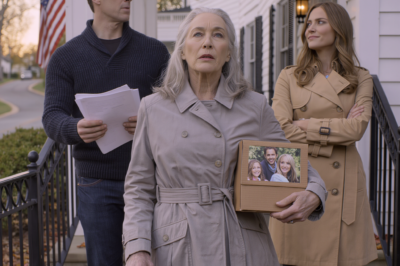
My son looked me dead in the eye and said he’d sell the Connecticut house my late husband and I built, just to buy his wife a shiny new Mercedes—then gave me 24 hours to pack—because “she matters more.” I smiled, nodded, and started folding sweaters, while the truth sat in a folder he’d never thought to ask about.
My son said, “I decided to sell your house to buy a new car for my wife. She’s more important…
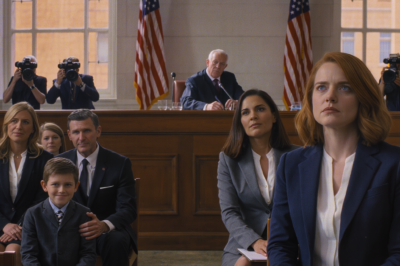
In a Chicago courtroom filled with reporters and family friends, my parents tried to bankrupt me in public—just to make sure the whole city believed I was broke. They wanted humiliation, headlines, and the end of my name. But when the judge asked one single question, their lawyer went pale—and my father’s empire began to crumble before everyone’s eyes…
I sat in a bankruptcy courtroom packed with strangers—not because I was out of money, but because my parents…
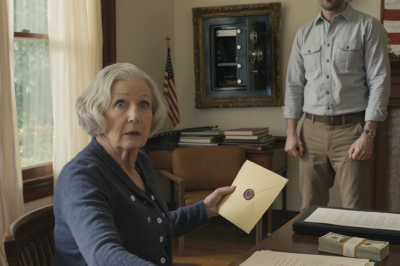
After my husband’s death, I decided to open his old safe. Inside was $500,000 in cash and some documents. But when I saw the third item, a cold wave of terror swept over me… and for the first time in fifty years of marriage, I realized how little I’d truly known the man I’d shared my life with.
After my husband’s death, I decided to open his old safe. Inside was $500,000 in cash and a stack…
On the morning I boarded a packed CTA bus for my divorce hearing at the Cook County courthouse, I thought I was just a discarded wife trying to arrive with my head high—until a frail old man stumbled at the door, I caught him, and the quiet “thank you” he gave me became the first domino in a chain that would make my powerful attorney-husband lose his breath.
What if the path to a divorce hearing turned into the moment that would change your destiny forever? Today, I…
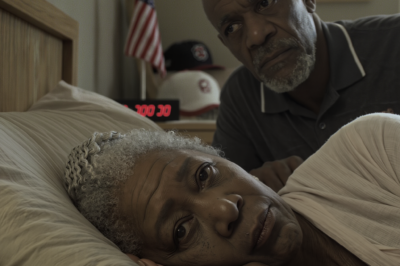
For seven months, every single night at exactly 2:47 a.m., my husband would rise from our creaking bed, cross the dark room, and stand on my side just watching me breathe—until the night I pretended to sleep and finally heard what he was whispering, and the truth behind that 2:47 ritual shattered everything I thought I knew about my life.
For seven months, every single night at 2:47 in the morning, my husband would stand right next to my…
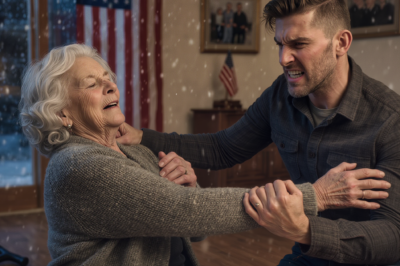
My name is Eleanor, I’m 70, and for years I let my own son believe I was the kind of fragile widow you could steer with pity and pressure. Three days ago, he tried to force my signature onto a $200,000 loan for a “dream house,” and when I refused, he hurt me badly enough that he thought I’d finally fold. The next morning, at a bank in our little American city, one screen proved how wrong he was.
My name is Eleanor. I am seventy years old. And until three days ago, my own son believed I…
End of content
No more pages to load