My son texted me, “Don’t expect me to be your caretaker when you’re old and sick. Ashley and I have our own lives to build.”
I stared at those words for a full minute before I calmly replied, “Okay, I understand.” Then I called my lawyer and rewrote my will. When Brandon found out what I’d done, everything exploded.
I’m glad you’re here with me. Please follow my story until the end and comment the city you’re watching from so I can see how far this has traveled. You won’t believe what happened next.
Let me start from the beginning.
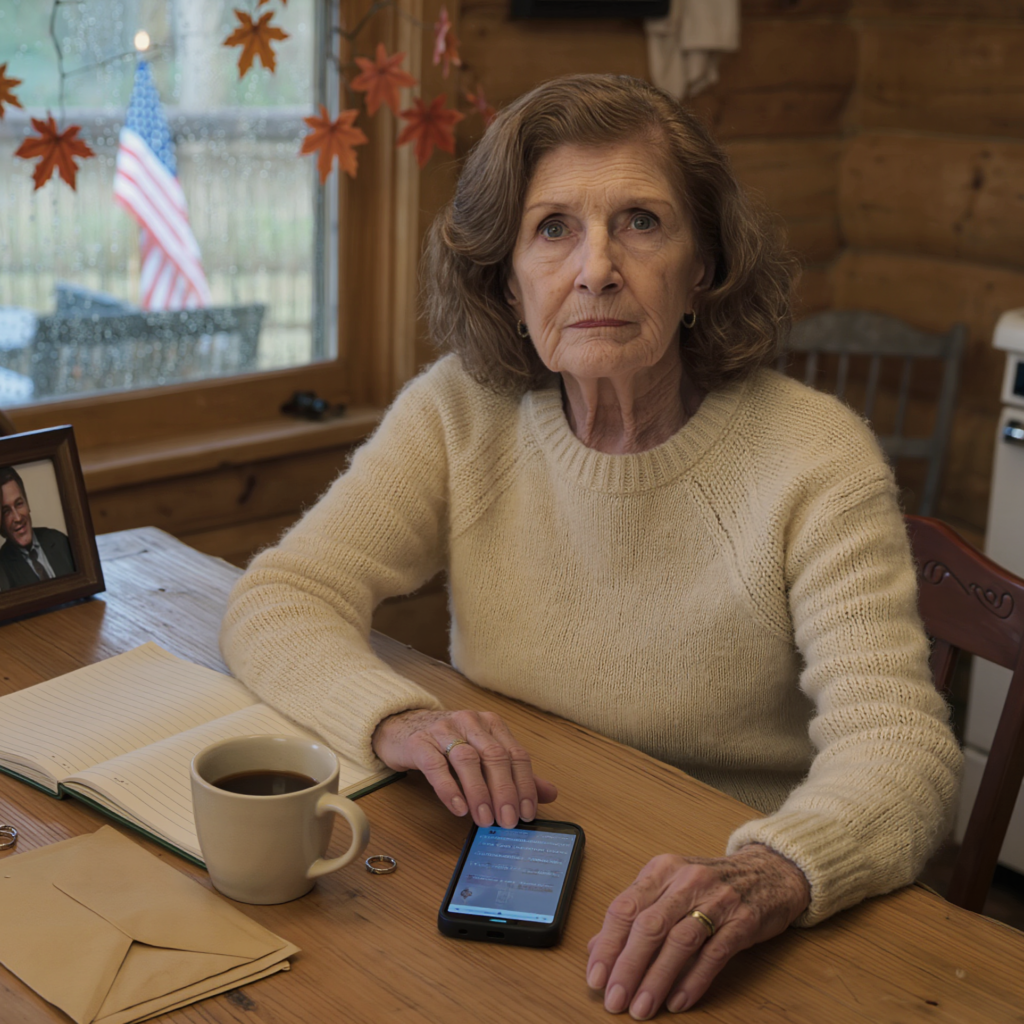
It was a Saturday morning in early October, the kind of crisp Portland morning that reminds you why people moved to Oregon in the first place. I was sitting at my kitchen table, the same oak table Robert and I had picked out 32 years ago at an estate sale in Beaverton. The morning light streamed through the windows he’d installed with his own hands, creating patterns on the worn wood. I had my coffee, black, two sugars, the same way I’d been drinking it since 1975.
My phone sat next to my cup, screen-side up, a habit I’d developed after Robert died five years ago from a sudden heart attack at 68. I kept the phone close because Brandon was the only family I had left, and I didn’t want to miss his calls.
The phone buzzed. Brandon’s name lit up the screen.
My heart did that small lift it always did when I saw his name. Despite everything that had happened over the past few months—the strange distance, the odd requests, the tension I couldn’t quite name—he was still my boy, the child I’d rocked through colic, the teenager I’d stayed up worrying about, the man I’d helped build a life.
I picked up the phone expecting maybe a photo of my grandchildren. Noah had just turned seven last month, and Lily would be five in December. Brandon and Ashley usually sent me pictures on weekends: the kids at the park, eating pancakes, building Lego towers.
Instead, I read the text message that would change everything.
“Mom, I need to be honest. Don’t expect me to be your caretaker when you’re old and sick. Ashley and I have our own lives to build. You need to make other arrangements.”
I read it once, then twice, then three times.
My hands started to tremble—not from age. I was 71 and ran three miles every morning—but from the shock of seeing those words from my own son. There had been no argument, no preceding conversation about care or expectations. We’d had dinner together just three days ago: Sunday roast at my house, the way we’d been doing since Ashley and Brandon got married nine years ago.
Everything had seemed normal. Ashley had complimented my pot roast. Brandon had helped me clear the table. The kids had played in my backyard while we had coffee.
What had triggered this? Or had this resentment been simmering beneath the surface all along, hidden behind Sunday dinners and birthday phone calls?
I sat there for nearly an hour. The coffee grew cold in my cup. Outside, I heard Mrs. Chen from next door starting her car, heading to her Saturday morning yoga class. Life was continuing normally for everyone else while mine had just tilted sideways.
How was I supposed to respond to this? Beg for his love? Apologize for being a burden I hadn’t even asked to be? Defend myself against accusations I didn’t understand?
No. I wouldn’t do that.
I took a deep breath, straightened my spine the way Robert had always admired, and I typed two words.
“Okay, I understand.”
I hit send and set the phone down.
My heart was pounding, but my hands were steady now. If Brandon wanted to draw this line in the sand, I would respect it. But respect works both ways, doesn’t it?
I picked up my phone again and scrolled through my contacts until I found William Foster’s number. William had been our family attorney since Robert and I first drafted our wills in 2003. He’d helped me update everything after Robert died, making sure the estate was properly settled, the life insurance paid out, the house transferred into my name alone.
William answered on the third ring.
“Elizabeth, how are you this fine Saturday morning?”
“William,” I said, my voice surprisingly calm. “I need to revise my will. Can you fit me in this week?”
There was a pause.
“Of course. Is everything all right?”
“Everything is perfectly clear,” I replied.
And it was.
For the first time in months—perhaps years—I saw my situation with absolute clarity. I wasn’t going to be anyone’s retirement plan, anyone’s eventual payday. If Brandon had his own life and family to worry about, then I had my own life and legacy to determine.
“How about Monday afternoon at two?” William suggested.
“I’ll be there.”
After I hung up, I sat very still. The house was quiet around me—this house that Robert and I had turned from a fixer-upper into a home, this house we’d raised Brandon in.
This house that was paid off, mortgage-free, worth nearly $400,000 in Portland’s current market.
This house that Brandon had been asking about lately.
Subtle questions.
“Mom, have you thought about this place being so big for one person?”
“What would you do if you couldn’t manage the stairs anymore?”
“Have you considered one of those nice senior communities?”
I’d thought he was concerned about me. Now I wondered if he’d been planning something else entirely.
Let me tell you about the months leading up to that text message, because the signs were there. I just hadn’t wanted to see them.
Robert and I had built a good life. Not wealthy, but comfortable. We’d been careful with money, invested wisely, paid off the mortgage early.
When Robert died suddenly from a heart attack in the fall of 2020, I inherited everything we’d built together: the house, his pension, our investment portfolio, his life insurance policy that paid out $200,000.
It wasn’t a fortune, but it was enough for me to live comfortably for the rest of my life and perhaps leave something meaningful behind.
Brandon had always been what I’d call a good son. Or so I thought.
He called regularly—at least once a week. He visited on holidays, brought Ashley and the kids. We had Sunday dinners about once a month. We celebrated birthdays together. I was involved in my grandchildren’s lives.
And I helped when they needed it.
That’s what mothers do. Right?
Three years ago, Brandon and Ashley were trying to buy their first house. The market was competitive. They were a little short on the down payment. Brandon called, stressed, explaining they might lose their dream home.
I didn’t hesitate. I wrote a check for $20,000.
“Mom, we’ll pay you back,” Brandon had said.
“It’s a gift,” I’d told him. “Family helps family.”
Two years ago, Ashley’s car was in an accident. Or that’s what Brandon told me. Major repairs needed, insurance deductible was high, and they were stretched thin with the new mortgage.
“Could you help us out, Mom? Just eight thousand. We’ll pay it back within the year.”
I transferred the money the next day.
Last year, there was a medical emergency. Brandon called, voice tight with worry.
“Ashley’s mother had unexpected medical bills—cancer screening that insurance wouldn’t fully cover. We need twelve thousand immediately.”
“Of course,” I’d said. “Family takes care of family.”
But here’s the thing I didn’t think about at the time.
I never saw any of these emergencies resolved. The house—yes, they bought it. But the car, the medical bills? Brandon never mentioned them again. And I never asked.
I was being a grandmother helping my family, wasn’t I?
Or was I being used?
I didn’t ask myself that question. Not until six months ago, when the requests started becoming more frequent.
Brandon wanted to start a business.
“Could I invest fifteen thousand?”
I said I needed to think about it.
It was the first time I’d ever said anything other than yes.
His reaction surprised me.
“Forget it,” he’d said, voice cold. “We’ll figure it out ourselves.”
From that point on, things changed.
The weekly calls became bi-weekly, then monthly. The Sunday dinners spaced out. When we did see each other, Ashley seemed distant. Brandon was always checking his phone, distracted.
And the questions about my finances increased.
“Mom, do you have everything organized—your will, your accounts, your insurance?”
“Have you thought about what you want for end-of-life care?”
“Do you have a living will, a healthcare proxy?”
I thought he was being responsible, caring about my future, making sure I had my affairs in order.
Now, I wondered if he was just making sure he knew where everything was.
The first real crack in the facade happened about two months before that text message.
We were having one of our increasingly rare Sunday dinners. Ashley had brought a store-bought pie instead of her usual homemade dessert. Brandon barely touched his food, kept glancing at his watch. The kids were unusually quiet, like they could sense the tension.
After dinner, while Ashley was getting the kids ready to leave, Brandon followed me into the kitchen while I was loading the dishwasher.
“Mom, I wanted to talk to you about something.”
I looked up from rinsing a plate. “What’s that, honey?”
“Ashley and I have been thinking about your future. About this house.”
“What about it?”
“It’s a lot for you to manage. The yard work, the maintenance, climbing these stairs every day.” He gestured around the kitchen. “What if something happened? What if you fell?”
“Brandon, I’m 71, not 90. I run three miles every morning. I think I can handle stairs.”
“I know, but…” He ran his hand through his hair, a nervous gesture he’d had since childhood. “We’ve been looking at this great senior living community. Independent living, but with services available if you need them. You’d have your own apartment, no maintenance to worry about. There’s activities, social events.”
“You want me to sell my house and move into a retirement home?”
“It’s not a home, Mom. It’s independent living. And yes, it would make sense. You could downsize. Free up some capital.”
“Free up capital for what?”
He paused.
And in that pause, I saw something I’d never seen in my son’s eyes before.
Calculation.
“For whatever you need,” he said smoothly. “Medical care. Travel. Enjoying your retirement. And you know… it would be good to have resources organized for the future. For your estate.”
There it was. The thing he wouldn’t quite say out loud.
He wanted me to liquidate my house so the money would be accessible, so when I died it would be easier to inherit.
“I’ll think about it,” I said, turning back to the dishes.
He didn’t bring it up again that night, but the seed had been planted in my mind, and I started paying attention—really paying attention.
After I scheduled the appointment with William, I spent the rest of that Saturday thinking.
I thought about Robert, about the life we’d built, about the values we’d tried to instill in Brandon.
Robert had been a high school teacher—forty years at Roosevelt High School—teaching history and coaching track. He’d loved that job, loved those kids, even when the pay was modest and the hours were long.
When he died, the funeral was packed with former students, some of them in their fifties now, coming to pay respects to the teacher who’d changed their lives.
That was the kind of legacy Robert cared about. Not money, not assets—impact, kindness, making a difference.
What would Robert think of what Brandon had become?
I pulled out my phone and scrolled back through my texts with Brandon over the past year, reading them with new eyes, looking for patterns I’d missed.
March.
“Hey, Mom. Just checking in. How are your investments doing? The market’s been volatile.”
May.
“Mom, have you updated your will recently? You should make sure everything’s current.”
July.
“Thinking about you. When’s the last time you had a full physical? Important to stay on top of health stuff at your age.”
August.
“Ashley and I were talking. If anything ever happened to you, we’d want to make sure we could take care of everything efficiently. Do you have all your accounts listed somewhere?”
Every single message, now that I looked at them together, was about my money, my health, my mortality, my estate.
Not one asked how I was feeling emotionally.
Not one asked about my hobbies, my friends, my life.
When had my son started seeing me as a balance sheet instead of his mother?
I set the phone down and walked to Robert’s study. I’d kept it largely unchanged since he died. His books still lined the shelves. His favorite chair sat in the corner, the leather worn in the shape of his body.
I opened the filing cabinet where we’d always kept our important documents and found the folder labeled Estate Planning — Morrison Family.
Inside was our will, last updated in 2021 after Robert died. It was straightforward: everything to Brandon. The house, the investments, the savings, the life insurance proceeds.
I hadn’t spent, at last count, probably close to $60,000 of the life insurance, leaving plenty behind.
After estate taxes and final expenses, Brandon would inherit somewhere in the neighborhood of $700,000 to $800,000.
A fortune to Brandon, who was 38 and struggling financially if the constant emergencies were any indication.
But here’s what he didn’t know.
I didn’t need that money. Not all of it.
Robert’s pension and my Social Security gave me enough to live comfortably. The house was paid off. I had no debt. My monthly expenses were maybe $3,000, including property taxes and utilities.
I could live another twenty years on $50,000 a year and still have money left over.
So what was I saving it for? What was I preserving?
An inheritance for a son who just told me not to expect his care. A son who called to check on my assets more than my well-being. A son who was pressuring me to liquidate my home for capital.
No.
If Brandon had his own life to build, then I had my own legacy to create.
I pulled out a legal pad and started making notes.
By the time the sun set that evening, I had a clear picture of what I wanted to do.
Monday afternoon at two, I walked into William Foster’s office on the fourth floor of a renovated building in downtown Portland.
William was in his early sixties, with silver hair and the kind of calm, measured demeanor that comes from thirty years of practicing estate law. He’d handled everything for Robert and me—our wills, our trusts, the estate settlement after Robert died.
He greeted me warmly, offered me coffee, and gestured to the chair across from his desk.
“Elizabeth, you sounded serious on the phone. What’s going on?”
I pulled out my phone and showed him the text message from Brandon.
William read it, his expression neutral and professional, but I saw his eyebrows raise slightly.
“I see,” he said quietly. “And how do you want to respond to this?”
“I want to change my will. All of it.”
“Before we jump into that,” he said, “let’s talk about what you’re feeling. Making major estate changes while emotional isn’t always—”
“I’m not emotional, William. I’m clear-headed. Probably more clear-headed than I’ve been in years.”
He studied me for a moment, then nodded. “All right. Tell me what you’re thinking.”
“I want to know exactly what my financial situation is. Everything. Then I want to discuss my options for revising my estate plan.”
“Okay, let’s start with the current situation.”
William pulled up my file on his computer.
“We digitized everything after Robert died. Made it easier to track. Your house is worth approximately $410,000 based on recent comps in your neighborhood. You own it free and clear. Your investment portfolio across your various accounts is currently valued at $243,000. You have $87,000 in savings and checking accounts. Robert’s life insurance—you’ve spent about $60,000 of that, leaving $140,000. And you receive his pension, which is $2,800 a month, plus your Social Security of $1,800.”
He looked up.
“You’re in very good shape financially, Elizabeth. Better than most people your age.”
“And my current will leaves everything to Brandon.”
“That’s correct. After estate taxes and final expenses, he’d inherit somewhere in the neighborhood of seven to eight hundred thousand.”
“Eight hundred thousand,” I repeated, tasting the number. “For a son who just told me to make other arrangements for my care.”
I met his eyes. “What are my options, William?”
“Well, you can revise your will to leave your estate to anyone you choose. Charities, other family members, friends.”
“Oregon doesn’t have a forced heirship law,” he added, “so you’re free to disinherit Brandon if you want.”
“Could he challenge it?”
“He could try. The most common grounds are lack of capacity—claiming you weren’t of sound mind—or undue influence, claiming someone coerced you. But from where I’m sitting, you’re clearly competent, and you’re making this decision independently.”
“What would protect me from a challenge?”
William leaned back in his chair, thinking.
“A few things. First, we’d include a no-contest clause. If anyone challenges the will and loses, they forfeit everything. Second, we’d document your competency. I can arrange for a medical evaluation—cognitive testing. Third, we’d include a clear statement of your reasoning. Not emotional, just factual.”
“And fourth,” he paused, considering, “we could set up a living trust and transfer your assets into it immediately. Once assets are in an irrevocable trust, they’re protected. He couldn’t challenge them because they’re no longer technically yours to will away.”
“Tell me more about that.”
We spent the next hour going deep into estate planning options. William explained the difference between revocable and irrevocable trusts, the tax implications, the legal protections.
“The thing about an irrevocable trust,” he said, “is that once you transfer assets into it, you can’t easily get them back. You’d retain enough in your name to live comfortably—your monthly income, a checking account, maybe one of your smaller investment accounts. But the house, the bulk of your investments? They’d be locked in the trust.”
“And I’d name the beneficiaries.”
“Exactly. And once you sign that trust document, those beneficiaries are set. You can’t change them without dissolving the entire trust, which is extremely difficult.”
I sat with that for a moment. It felt final—irrevocable, as the name suggested.
But wasn’t Brandon’s text message final, too?
He’d made his position clear.
I was making mine.
“I need some time to think about the specific beneficiaries,” I said. “But yes. I want to set up a trust, and I want to do it quickly.”
“How quickly?”
“This week, if possible.”
William’s expression shifted from professional to concerned.
“Elizabeth, are you sure? This is a major step. Maybe you should talk to Brandon first. See if—”
“William, I’ve been thinking about this all weekend. I’m not acting rashly. I’m acting deliberately.”
I held his gaze. “Can you help me or not?”
He held my gaze for a long moment, then nodded.
“I can help you. But I want you to do something first.”
“What?”
“I want you to review your finances with me. Really review them. Let’s look at every transaction you’ve made with Brandon over the past few years. I want you to see the full picture before you make this decision.”
“Fair,” I said. “Fair.”
William pulled up my bank statements going back five years. We’d set up online access after Robert died—easier for me to manage everything.
“Let’s start with the large transfers,” William said. “The ones over $5,000.”
He sorted the data, and a list appeared on his screen.
My stomach tightened as I saw the numbers adding up.
June 2021 — $20,000 — Brandon — house down payment.
September 2022 — $8,000 — Brandon — car repairs.
March 2023 — $12,000 — Brandon — medical emergency.
November 2023 — $15,000 — Brandon — business investment.
I’d said no to that one, but seeing it listed made me realize he’d asked.
But William kept scrolling.
“These are the big ones you probably remember,” he said, “but look at these smaller transfers.”
A new list appeared.
Dozens of transactions ranging from $500 to $3,000. Each one labeled with Brandon’s name.
“Add them up,” William said quietly.
I watched as he highlighted the list and hit sum.
Total transfers to Brandon Morrison, 2020–2024: $68,430.
I felt like I’d been punched in the stomach.
“That can’t be right,” I whispered.
“It’s right. These are your records, Elizabeth.”
I scanned through the list.
Birthday money for the kids, but $2,000 per birthday. Emergency “loans” that were never repaid. Temporary help with mortgage payments. Money for Noah’s medical bills when he broke his arm. Money for Lily’s preschool tuition.
Every single one, at the time, had seemed like a reasonable request from a struggling young family.
But seeing them all together, the pattern was undeniable.
“This is more than I gave them,” I said. “I remember twenty thousand for the house, eight for the car, twelve for the medical bills. That’s forty thousand. Where did the rest come from?”
“Small requests that add up.” He pointed. “Look—here’s five hundred for groceries during a tough month. Here’s a thousand for unexpected car registration. Here’s $1,500 for Noah’s birthday party.”
“$1,500 for a six-year-old’s birthday party,” I repeated, stunned.
“I don’t even remember half of these.”
“That’s the thing about small, frequent requests,” William said. “They don’t register as significant in the moment, but over time… $68,000.”
I swallowed hard.
“William, I need you to look into something else.”
“What?”
“I have an old joint checking account with Brandon. We set it up when Robert first got sick, in case I needed Brandon to pay bills if I was incapacitated. I meant to close it after Robert died, but I never got around to it.”
I took a breath. “Can you see if there’s any activity on it?”
William typed for a moment.
“Here it is. Morrison family joint account. You and Brandon both have full access.”
“What’s the activity?”
“Well, you haven’t used it in years. The balance is only about five hundred—minimum to keep it open.” He paused, eyes on the screen. “But Brandon… he’s been checking it regularly.”
“Define regularly.”
“Forty-seven times in the last six months.”
My hands gripped the arms of my chair.
“He’s been monitoring my accounts.”
“Looks like it. Every time you made a large deposit or transfer from your main account, he checked this joint account within twenty-four hours.”
“Like he was tracking your activity,” I said, my voice thin.
I thought I might be sick.
“What was he looking for?” I asked, though I already knew the answer.
“He was probably trying to track your overall financial picture,” William said. “The joint account gives him view access to your main accounts. Not control, but he can see balances and recent transactions.”
“So every time I moved money, he knew.”
“Yes.”
We sat in silence for a moment.
“There’s one more thing I should tell you,” William said carefully.
I looked up.
“I took the liberty of running a basic background check. Just financial stuff. It’s public record on Brandon.”
“Yes?”
“Elizabeth, your son is in significant debt. His mortgage is underwater. He owes more than the house is worth. He has about $85,000 in credit card debt across multiple cards. He took out a business loan last year for $170,000, and the business failed. It’s all coming due.”
The room seemed to tilt.
“How much total—north of three hundred thousand, not counting the mortgage?”
“North of $300,000,” William said.
Three hundred thousand in debt, and he’d been bleeding me for $68,000—probably to service that debt.
“Is there more?” I asked, my voice barely a whisper.
William hesitated.
Then he turned his monitor so I could see it clearly.
“I found something else. Three loans from specialty lenders—companies that provide what they call inheritance advances.”
“What does that mean?”
“It means Brandon borrowed money against your estate. Against money he expected to inherit when you died.”
The words hit me like ice water.
“Show me.”
William pulled up the documents.
I read through them, my vision blurring with each paragraph.
Loan agreement number one: $40,000 at 22% interest. Collateral listed as expected inheritance from Elizabeth Morrison estate. Estimated $800,000. Anticipated distribution within 15 years.
Loan agreement number two: $45,000 at 24% interest. Same collateral.
Loan agreement number three: $40,000 at 18% interest. Same collateral.
$125,000.
Borrowed against my death.
And there, in the email correspondence between Brandon and the loan officer, I saw it.
The message was dated eighteen months ago.
“Regarding timeline concerns, mother is 71 years old, generally healthy, but father died suddenly of heart attack at 68. Based on actuarial tables and family history, estimated timeline for estate distribution is 12 to 15 years—acceptable range for loan terms. Mother is not currently ill, but age-related complications can accelerate timelines. We are comfortable proceeding.”
My son had calculated when I would die.
He’d estimated my lifespan, weighted against his loan repayment schedule, and decided the numbers worked.
I stood up abruptly.
“I need some air.”
“Elizabeth—”
“I’m fine. I just need a minute.”
I walked to William’s window and looked out at downtown Portland. People going about their Monday afternoon. Normal lives, normal problems.
My son had bet on my death.
Behind me, William spoke quietly.
“I’m sorry. I debated whether to show you this.”
“No,” I said, turning back. “I needed to see it.”
I took a breath.
“I need to see who he really is.”
William nodded. “What do you want to do?”
I walked back to my chair and sat down.
My hands were shaking, but my voice was steady.
“I want to set up the trust immediately. I want my house and my main investment accounts transferred into it by the end of this week. I want everything documented—my competency, my reasoning, all of it. And I want to choose my beneficiaries carefully.”
“Have you thought about who?”
“Give me until Wednesday. I’ll have a list.”
William’s voice softened.
“Elizabeth, once you do this, there’s no going back.”
“If I change my mind?” I repeated.
“I won’t change my mind.”
I heard myself say it, and I knew it was true.
“My son calculated my death,” I said. “He borrowed against it. He’s been monitoring my finances and bleeding me dry while pretending to be a loving son.
“I’m done.”
William nodded slowly.
“All right. I’ll start drafting the documents. Can you come back Wednesday afternoon?”
“I’ll be here.”
I stood to leave, then paused at the door.
“William, one more thing. Close that joint account. Today. I don’t want Brandon to have access to any of my financial information ever again.”
“Consider it done.”
I drove home in a daze. The streets of Portland blurred past my windows.
When I got home, I sat in my car in the driveway for ten minutes, just breathing.
Then my phone rang.
Brandon’s name on the screen.
My stomach lurched, but I answered. I needed to hear his voice. I needed to see if I could detect the lies now that I knew the truth.
“Hey, Mom.”
His voice was tight, stressed.
“Hello, Brandon.”
“I, uh… I wanted to talk about my text from Saturday. I think maybe it came across wrong.”
Too late. Three days too late.
“How did you mean it to come across?” I kept my voice neutral.
“I just meant—we’re all getting older. Ashley and I were talking about the future, about what happens when you need more help. And I wanted to be honest that we can’t drop everything to be full-time caregivers. We have the kids, my business, our lives. I didn’t want you to have unrealistic expectations.”
My business. The one that failed. The one he borrowed $170,000 for.
“I appreciate your honesty,” I said.
“So, we’re okay? We’re fine?”
Silence.
He’d expected more. An argument, maybe. Or reassurance that I didn’t expect anything from him.
“How are you doing financially?” he asked. “You haven’t mentioned needing help with anything lately.”
There it was. The real reason for the call.
“I’m managing just fine.”
“Because if you need anything, you know, you can ask. We’re here for you.”
Here for me.
The same son who just told me not to expect his care. The same son monitoring my bank accounts. The same son who borrowed money betting on when I’d die.
“Actually, Brandon, I do have some news.”
“What?”
“I’m reorganizing my finances. Consolidating my accounts. Doing some estate planning. Making sure everything’s in order.”
Another silence—longer this time.
“What does that mean exactly?”
“It means I’m being responsible, taking care of my affairs so there’s no confusion later.”
“Mom, that’s great, but maybe you should talk to me before you make any major changes. I could help you.”
“I have a lawyer, honey. William’s handling everything.”
“William?” His voice sharpened. “You went to see William? When?”
“Today, actually.”
I could almost hear him processing, calculating, worried.
“What did you two talk about?”
“Just estate planning stuff. Boring legal details. Nothing to worry about.”
“Mom, I think I should be involved in these conversations. I’m your son. I’m the one who will have to handle everything if something happens to you.”
If. When.
“Brandon, it’s handled. Don’t worry about it.”
“Don’t worry about it?” He sounded offended. “Mom, this is important. This affects our whole family’s future.”
Our whole family.
Not me. Not my life.
Our future.
His inheritance.
“I have to go, Brandon,” I said. “I have dinner on the stove.”
“Mom, wait—”
“We’ll talk later. Love you.”
I hung up before he could respond.
My hands were shaking again. But this time it wasn’t from fear or shock.
It was anger.
Pure, clarifying anger at being manipulated, at being seen as nothing more than a bank account with a heartbeat, at having my death factored into someone’s loan repayment schedule.
I walked into the house, into Robert’s study, and pulled out the legal pad I’d started on Saturday.
At the top of the page, I’d written: What matters now.
I added to the list.
Portland State University scholarship fund in Robert’s name for education majors. He loved teaching. Let his legacy live on through other teachers.
Humane Society of Portland. We adopted Max from there. Robert cried when he died. They do good work.
Doernbecker Children’s Hospital. I could volunteer there. Read to kids. Be part of something meaningful.
Emma Hartley, my niece. She stayed in touch over the years without asking for anything. She deserves something.
Brandon Morrison.
I stared at that last line for a long time.
Then I drew a box around it and wrote underneath:
Actions have consequences.
Wednesday afternoon arrived faster than I expected.
I’d spent Tuesday reviewing my finances again, making lists, researching charities. I barely slept Tuesday night. Every time I closed my eyes, I saw that loan document.
“Mother is 71 years old.”
“Estimated timeline for estate distribution is 12 to 15 years.”
That’s how long Brandon thought I had left.
Part of me wondered if he was hoping for less.
I arrived at William’s office at 1:30, half an hour early. I couldn’t sit still at home anymore. The walls felt like they were closing in.
William’s secretary, Patricia, greeted me warmly.
“Mrs. Morrison, you’re early. Would you like some coffee while you wait?”
“That would be lovely. Thank you.”
I sat in the waiting area, watching the clock.
At exactly two, William’s door opened.
“Elizabeth, come in.”
His office looked different today—more formal.
There was another man sitting in one of the chairs, older, maybe mid-sixties, wearing a gray suit.
“Elizabeth, this is Dr. James Whitmore,” William said. “He’s a forensic psychiatrist I work with on estate cases. I’d like him to do a competency evaluation today, if you’re comfortable with that.”
Smart. William was covering all the bases.
“Of course,” I said, shaking Dr. Whitmore’s hand.
For the next ninety minutes, Dr. Whitmore put me through a battery of tests: cognitive assessments, memory exercises, logic puzzles. He asked about my daily routine, my hobbies, my social life. He reviewed my medical records that I’d authorized my doctor to send over.
Finally, he set down his pen and looked at me over his glasses.
“Mrs. Morrison, I’m going to be blunt. You’re sharper than most fifty-year-olds I evaluate. Your cognitive function is excellent. Your reasoning is sound. Your memory is exceptional. There is absolutely no evidence of diminished capacity, confusion, or impairment of any kind.”
Relief washed over me.
“Thank you.”
“I’ll file my formal report with William,” he said, “but I wanted you to hear it directly. Whatever decisions you’re making, you’re more than capable of making them.”
After Dr. Whitmore left, William pulled out a thick folder.
“I’ve drafted the trust documents. Let me walk you through them.”
The documents were extensive—page after page of legal language that William translated into plain English for me.
The Elizabeth Morrison Irrevocable Living Trust would hold my house, my primary investment accounts, and the bulk of my savings.
Total value: approximately $720,000.
I would keep my checking account with about $50,000, one smaller investment account with $30,000, and of course my monthly pension and Social Security income—more than enough to live on comfortably.
The beneficiaries were laid out clearly.
Fifty percent: Portland State University Education Scholarship Fund, Robert Morrison Memorial Fund—approximately $360,000 to fund scholarships for future teachers.
Twenty percent: Humane Society of Portland—$144,000 for animal care and adoption programs.
Twenty percent: Doernbecker Children’s Hospital—$144,000 for their family support programs.
Ten percent: Emma Hartley—$72,000 for my niece, who had always stayed in touch without asking for anything.
Brandon’s name appeared nowhere in the document.
“This is irrevocable,” William reminded me. “Once you sign and we transfer the assets, you cannot change these beneficiaries without dissolving the entire trust, which is nearly impossible.”
“I understand.”
“Elizabeth, I need to ask you one more time. Are you absolutely certain?”
I thought about that loan document, about being monitored, about $68,000 in emergencies, about my son calculating my lifespan.
“I’m certain.”
“Then we need your signature here, here, and here.”
I signed.
Patricia and another attorney from William’s firm witnessed my signatures.
It was done.
“The asset transfers will take about a week to complete,” William said. “I’ll handle the paperwork with the bank and investment firms. But, Elizabeth, you should know Brandon has access to that joint account. When he sees major movements of assets out of your accounts, he’s going to know something happened.”
“Let him know,” I said. “I’m not hiding.”
“He’s going to react. Probably badly.”
“I’m ready,” I said.
But I wasn’t.
Not really.
You can never be ready for your own child to turn on you.
Thursday morning, I went to Pacific Coast Bank, where Robert and I had maintained accounts for thirty-two years.
The branch manager, Margaret Chen, greeted me personally.
“Elizabeth, how wonderful to see you. What brings you in today?”
“I need to close my joint account with Brandon and open a new individual checking account.”
Her smile faltered slightly.
“Of course. May I ask why you’re making this change?”
I kept my voice steady.
“I’m simplifying my finances. Consolidating accounts.”
She processed the paperwork efficiently, but I could see the questions in her eyes. You don’t bank somewhere for three decades without people knowing your family situation.
“Your new account will be completely separate,” Margaret said. “Different account number, no joint access. I’ll set up automatic transfers for all your regular payments—insurance, utilities, everything. It should be seamless.”
“Thank you, Margaret.”
As I was leaving, she touched my arm gently.
“Elizabeth, if you ever need anything, please don’t hesitate to call me directly.”
She knew. Maybe not the details, but she knew something was wrong.
By Friday afternoon, the asset transfers were complete.
William called to confirm.
“Everything’s in the trust. Your house, your investment accounts—all transferred. As of four o’clock today, Brandon can’t touch any of it. And the joint account closed yesterday. He no longer has any access to your financial information.”
I exhaled slowly.
It was done.
“Now we wait,” William said.
We didn’t have to wait long.
Saturday morning, 8:45 a.m., my phone rang.
Brandon’s name on the screen.
I let it ring once, twice, three times.
Then I answered.
“Hello?”
“Mom.” His voice was tight, strained. “Where have you been? I’ve been trying to reach you.”
“I’ve been busy. What do you need, Brandon?”
“What do I need?” His voice rose. “Your bank account is gone.”
My heart started pounding, but I kept my voice calm.
“What do you mean?”
“I mean, I tried to check on your finances this morning, and the joint account doesn’t exist anymore. It’s just… gone.”
So he’d been checking daily. Not just monitoring—actively tracking.
“I closed it,” I said simply.
Silence.
“Then you closed it. Our joint account. The one we set up for emergencies.”
“That account was set up when your father was sick, in case I needed help managing bills. Your father is gone. I don’t need help managing bills. So I closed it.”
“Without telling me.”
“It was my account, Brandon. I don’t need permission to close my own account.”
“Where did the money go?” His voice was rising now. “Mom, there were movements this week. Large transfers. Where did everything go?”
“I reorganized my finances. I told you I was doing that.”
“Reorganized how?”
“Mom, what did you do?”
I could hear the panic underneath his anger. He’d been watching my money like a hawk, and suddenly all his surveillance had gone dark.
“Brandon, I moved my assets into a protected trust structure. It’s a normal part of estate planning.”
“A trust?”
“What kind of trust? Who helped you set this up?”
“William Foster. My attorney. The same man who’s been handling our family’s legal matters for twenty years.”
“I need to talk to him. I need to know what you did.”
“You can talk to him if you want, but my financial decisions are private.”
“Private?” He sounded outraged. “I’m your son. I’m your only family. This affects me.”
And there it was.
This affects me.
Not concern for my welfare.
Concern for his inheritance.
“Brandon,” I said, “you sent me a text message telling me not to expect you to be my caretaker. You told me to make other arrangements. I’m making them.”
“That’s not—” He stopped, started again. “Mom, I didn’t mean you should cut me out of everything. I just meant we needed to have realistic expectations about caregiving.”
“And I have realistic expectations now.”
“You have your life. I have mine.”
“Jesus Christ,” he muttered. “Mom, do you have any idea what you’re doing? Do you understand the implications?”
“I understand perfectly.”
“We need to talk face-to-face this weekend.”
“I’m busy this weekend.”
“Busy.” He laughed, but it sounded harsh. “Doing what? Mom, you don’t have anything going on. Don’t lie to me.”
Don’t lie to him.
The irony was almost funny.
“Brandon, I have to go.”
“Don’t hang up on me.”
“Don’t you dare—”
I ended the call.
My hands were shaking.
I set the phone down on the kitchen table and stared at it, waiting for it to ring again.
It did immediately.
I didn’t answer.
He called six more times over the next hour.
Each call went to voicemail.
I didn’t listen to any of them.
Sunday morning, I was in my garden. The roses needed pruning before winter set in fully. It was one of those perfect October mornings—cool air, clear sky, the smell of earth and fallen leaves.
I was kneeling by the flower bed when I heard a car door slam.
Footsteps. Fast. Angry.
I looked up.
Brandon was striding across my lawn, his face red with fury.
“What the hell have you done?” he shouted.
I stood up slowly, brushing dirt from my gardening gloves.
“Lower your voice. The neighbors can hear you.”
“I don’t give a damn about the neighbors.” He was in my face now, looming over me. “I just spent two hours on the phone with banks and investment firms. They all said the same thing. Your accounts are closed. Transferred. Everything’s gone.”
“Not gone,” I said. “Protected.”
“Protected from who?”
I met his eyes.
“From me,” he spat. “If the shoe fits.”
His face went from red to purple.
“You can’t do this. That money was supposed to be mine.”
“That money was never yours, Brandon. It was mine and your father’s. We worked forty years for it.”
“Dad worked his whole life for that. For us. For his family.”
“Your father worked for the life we built together,” I said, voice shaking now, “not for you to borrow against before I’m even dead.”
The words hung in the air between us.
Brandon went very still.
“What are you talking about?”
“The inheritance loans, Brandon. One hundred twenty-five thousand dollars borrowed against my estate. Against money you expected to get when I died.”
His face drained of color.
“How did you—”
“Did you really think I wouldn’t find out? You’ve been monitoring my accounts for months. Did you think I was too old and stupid to notice?”
“Mom, that’s not—You don’t understand the situation. We were desperate. The business failed. We had debts.”
“So you calculated when I would die.”
My voice cracked.
“You estimated my lifespan, weighted against your loan repayment schedule, and decided the numbers worked.”
“It wasn’t like that.”
“Wasn’t it?” I said. “I saw the emails.”
“Brandon. ‘Mother is 71 years old. Father died at 68. Actuarial estimates acceptable.’”
“You bet on my death.”
He opened his mouth, closed it. No defense available.
“Get out of my house,” I said quietly.
“Mom—”
“Get out.”
“You can’t cut me out like this. I’ll fight it. I’ll prove you’re not competent to make these decisions.”
I pulled my phone from my pocket and opened the voice recorder app I’d started when I heard his car pull up.
“Go ahead,” I said. “Threaten me some more. I’m recording everything.”
He stared at the phone, then at me.
“You’re recording me. Your own son.”
“I’m protecting myself from someone who sees me as nothing more than a bank account.”
For just a moment, I saw something in his eyes.
Maybe regret.
Maybe recognition.
Then it hardened again.
“Fine,” he said coldly. “You want to play it this way? Ashley and I were going to wait, but you forced our hand. You’ll never see Noah and Lily again. Ever.”
The words hit like a physical blow.
“You wouldn’t.”
“Watch me.”
“We’re their parents. We decide who they see, and they don’t need to be around someone who’s clearly suffering from dementia or worse.”
“I’m not—”
“That’s what I’ll tell the court when I file for guardianship,” he said, voice like ice. “That you’re making irrational decisions, cutting out family, clearly not of sound mind. I’ll have you declared incompetent, Mom. I’ll take control of everything, and there’s nothing you can do to stop me.”
He turned and walked away, leaving me standing in my garden, shaking.
I watched his car disappear down the street.
Then I went inside and called William.
“He threatened to have me declared incompetent,” I said without preamble. “And he’s using my grandchildren as leverage.”
“Document everything,” William said immediately. “Write down exactly what was said, when, where. If he follows through on either threat, we’ll need that documentation.”
“He’s going to file for guardianship.”
“Let him try. Elizabeth, you have Dr. Whitmore’s evaluation. You have witnesses to your competency. You have evidence of his financial exploitation. Unless he can prove actual incompetence, which he can’t, he has no case.”
“But the stress of fighting it—”
“I know,” William said, and his voice softened. “Which is why I’m going to suggest something. Take a few days. Go stay with a friend. Get out of the house. Clear your head. Let Brandon exhaust himself making threats while you restore your energy, because this is just beginning.”
He was right.
This was war now.
I called my friend Linda Patterson that afternoon.
Linda and I had known each other since college. We’d been roommates at Portland State back in 1972. She’d moved to Cannon Beach years ago, ran a small bookstore called Tidewater Books, and had always offered me a standing invitation to visit.
“Linda,” I said, “I need a favor.”
“Anything. What’s wrong? You sound terrible.”
I gave her the abbreviated version—the text message, the loans, the confrontation with Brandon.
“Pack a bag,” she said immediately. “Come stay with me for as long as you need.”
I threw some clothes into a suitcase, grabbed my toiletries, and left within the hour.
I didn’t tell Brandon where I was going.
I just left.
The drive to Cannon Beach took ninety minutes. Ninety minutes of my hands gripping the steering wheel, my mind replaying Brandon’s threat over and over.
“You’ll never see Noah and Lily again.”
My grandchildren.
Sweet Noah, with his gap-toothed smile and endless questions about everything. Little Lily, who was just learning to read and wanted me to listen to her sound out words from her picture books.
Would Brandon really keep them from me?
Yes, he would, because he’d already shown me what he was capable of.
Linda was waiting on her porch when I pulled up.
She took one look at my face and pulled me into a hug.
“Come on,” she said. “Let’s get you inside. I have wine and soup and absolutely no judgment.”
I spent three days at Linda’s.
Three days of walking on the beach, helping in her bookstore, reading novels I’d been meaning to get to for years.
Three days of sleeping deeply, dreamlessly, without the constant anxiety of waiting for Brandon’s next move.
Linda didn’t push me to talk.
She just let me be.
On the third night, we were sitting on her deck overlooking the ocean, wrapped in blankets against the October chill.
“Tell me about the grandkids,” Linda said gently.
And I did.
I told her about Noah’s obsession with dinosaurs, how he could name every species and tell you what period they lived in. About Lily’s love of drawing, how she’d fill entire sketchbooks with elaborate princess castles.
About the way they’d run to hug me when I arrived for Sunday dinners, shouting, “Grandma’s here!”
“Brandon’s going to take that away from me,” I said, my voice breaking. “He’s going to use those babies as weapons.”
“Then we document it,” Linda said. “We build a case, and when they’re older, they’ll know the truth.”
“But what if they don’t?” I whispered. “What if he poisons them against me? What if they grow up thinking I abandoned them?”
Linda was quiet for a moment.
Then she said, “Elizabeth, you taught high school English for thirty years. How many students do you think you impacted?”
“I don’t know. Hundreds.”
“And how many of them stayed in touch after graduation?”
“Maybe a dozen.”
“But you kept teaching anyway,” she said, “because impact isn’t about everyone remembering you. It’s about doing the right thing and trusting that it matters. Noah and Lily will be okay. And someday they’ll ask questions, and the truth will be there waiting for them.”
She was right.
I couldn’t control Brandon.
I couldn’t control what he told the children.
All I could control was my own actions, my own choices.
And I could make sure there was a record of the truth.
I returned home on Wednesday afternoon.
The house felt different—quieter, but also mine. Fully mine in a way it hadn’t been in years.
There was a letter waiting, slipped under my front door. Expensive stationery.
Ashley’s handwriting.
“Dear Elizabeth,
“I hope you’ll forgive Brandon’s outburst on Sunday. He’s under tremendous stress with work, and when he’s stressed, he says things he doesn’t mean. We both know how much he loves you.
“We want to make this right. We’d like to take you to dinner this Friday at Ringside Steakhouse, your favorite. Let’s talk like family, not like adversaries.
“We miss you. The children miss you. Noah keeps asking why Grandma doesn’t come over anymore. Please give us a chance to fix this.
“Love,
“Ashley.”
I read it twice.
The manipulation was so transparent, it was almost insulting.
Invoke the grandchildren.
Frame Brandon’s threats as stress.
Suggest that I was creating the adversarial situation.
Offer my favorite restaurant as a peace offering.
The old Elizabeth might have wavered, might have thought, Maybe I’m being too harsh. Maybe I should hear them out.
The new Elizabeth—the one who’d spent three days remembering her own worth—simply placed the letter in a folder labeled Documentation and made a note of the date.
Two days later, flowers arrived.
Two dozen red roses.
The card read:
“Mom, I’m sorry. Let’s talk.
—Brandon.”
I photographed the card for my records, then donated the flowers to the nursing home two blocks away. The staff was delighted. I didn’t mention who they were from.
Then came the phone calls.
Not angry ones this time.
Pleading ones.
Ashley called first, her voice soft and conciliatory.
“Elizabeth, please. We made mistakes. Can’t we move past this? Family is supposed to forgive.”
“Family is also supposed to respect each other,” I replied. “To treat each other with basic decency. To not view each other as ATM machines.”
“That’s not fair. We never—”
“Ashley, I have records of every penny I’ve given you over the past four years. Sixty-eight thousand dollars for emergencies that were never fully explained. Should we go through them together?”
She hung up.
Brandon tried next.
His approach was different—wounded, confused.
“Mom, I don’t understand what’s happened to you. You’ve changed. You’re not the person who raised me.”
“You’re right,” I said. “The person who raised you was a doormat who prioritized everyone else’s needs above her own dignity. I’m not her anymore.”
“That’s not—Mom, please. Just have dinner with us. One dinner. If you still feel the same way after, fine. But give us a chance.”
I almost said yes.
Not because I believed them.
Because I was tired.
Because saying no over and over was exhausting.
Because some small part of me still wanted to believe my son could change.
Then I remembered that email to the loan company.
“Actuarial estimates acceptable.”
“No, Brandon,” I said. “We’re done.”
“You’re going to regret this.”
The threat was subtle but unmistakable.
“Is that a threat?” I asked.
Silence.
“Then it’s a prediction,” he said.
He hung up.
I sat in my kitchen, hands folded on the table, breathing slowly.
Was I doing the right thing?
I called Linda and told her about the letter, the flowers, the phone calls.
“They’re trying to wear you down,” she said. “Classic manipulation. They’re not sorry, Elizabeth. They’re sorry they’re losing access to your money.”
“But what if I’m wrong?” I whispered. “What if I’m being too harsh?”
“Did they apologize for the text message? For the loans? For monitoring your accounts?”
I thought about it.
Brandon had said he was stressed, that he didn’t mean it that way.
But he’d never actually said, I’m sorry for hurting you. I was wrong.
Neither had Ashley.
“No,” I said slowly. “They’ve apologized for my reaction to their behavior, not for the behavior itself.”
“There’s your answer,” Linda said.
She was right.
And I needed more than Linda’s support.
I started rebuilding my community.
I attended my church group again, which I’d let lapse after Robert died. I reconnected with old friends I’d neglected. I called my niece Emma in Seattle.
“Aunt Elizabeth,” she said, “I was just thinking about you. How are you?”
“Could you come down for a visit? I’d love to see you.”
She drove down that weekend and took me to lunch at a little café on Hawthorne.
Emma was 28, working as a graphic designer, smart and independent, and refreshingly honest.
I told her everything.
She listened, her young face serious.
“Aunt Elizabeth,” she finally said, “some people are takers. They don’t see relationships as mutual. They see them as transactions. It sounds like Brandon is a taker.”
“He’s my son,” I whispered.
“I know,” she said gently. “And that makes it hurt worse. But you’re still allowed to protect yourself.”
By the end of the second week, the calls from Brandon and Ashley had stopped.
The silence was both a relief and unsettling.
What were they planning?
I found out on a Sunday morning, three weeks after my return from Linda’s.
I was having breakfast when I heard voices in my driveway.
Brandon’s.
Ashley’s.
And children’s laughter.
My heart jumped into my throat.
I opened the door before they could ring the bell.
Noah ran forward, his seven-year-old face lit up with joy.
“Grandma! We brought you cookies. Mom said you weren’t feeling well.”
I hugged him, breathing in his little-boy smell of grass and fruit snacks.
His sister, Lily, hung back shyly, then came forward for her hug too.
Over their heads, I met Brandon’s eyes.
He smiled, but it didn’t reach his expression.
“We thought we’d surprise you,” Ashley said brightly. “It’s such a beautiful day. We could have a family picnic in your backyard. Just like old times.”
“You should have called first,” I said carefully.
“Grandma,” Noah said, confused, hurt, “don’t you want to see us?”
What was I supposed to say to that? That yes, I wanted to see him desperately, but not as a manipulation tool, that his parents had poisoned our relationship by using him as leverage.
“Of course I want to see you, sweetheart,” I said. “But grown-ups should always call before visiting.”
“We did call,” Brandon said smoothly. “You didn’t answer.”
Because I’d seen his name and let it go to voicemail, because I needed to protect my peace.
“Come on, Mom,” Brandon said. “Let us in. The kids are so excited to spend time with their grandma. Unless you’re going to turn away your own grandchildren.”
His tone was light, but the thread underneath was clear.
Reject us and you’re rejecting them.
I stepped aside.
What choice did I have?
They settled into my living room, the children on the floor with coloring books Ashley had conveniently brought. Brandon and Ashley sat on my sofa like they owned it.
Every word was calculated.
Every smile strategic.
After twenty minutes of painful small talk, Ashley stood.
“Noah, Lily, why don’t you go play in the backyard? Grandma has a lovely garden.”
The children scampered out, oblivious to the tension.
The moment the door closed, Ashley’s mask dropped.
“Let’s stop pretending,” she said coldly. “You’re being selfish and vindictive. You have more money than you’ll ever need, and you’re hoarding it while your own family struggles.”
“Struggles?” I kept my voice level. “You drive a Mercedes. Your children go to private school. Where exactly is the struggle?”
“That’s none of your business,” Brandon snapped.
“But my money is your business.”
“We’re your family,” Ashley said. “After everything we’ve done for you.”
“What have you done?” I stood up. “Name one thing you’ve done for me in the past five years that wasn’t motivated by eventual inheritance.”
They couldn’t.
The silence was damning.
Brandon’s face hardened.
“This is what’s going to happen,” he said. “You’re going to call William Foster. You’re going to dissolve that trust. You’re going to restore my inheritance. And you’re going to do it by the end of the month.”
“Or what?”
Ashley delivered the answer calmly, like she was discussing the weather.
“Or you’ll never see your grandchildren again. We’ll move if we have to. We’ll tell them you didn’t want to see them. That you chose money over family.”
The words hit like a knife to the chest.
My grandchildren.
Noah’s gap-toothed smile.
Lily’s off-key singing.
But even through the pain, I saw it clearly.
They would use these children.
Hurt them.
Sacrifice their relationships with me.
All for money.
“Get out,” I said quietly.
“Mom—” Brandon began.
“Get out of my house. Now.”
“And if you ever use those children as leverage again,” I continued, “I’ll document it. I’ll make sure any judge who sees it understands exactly what kind of parents you are.”
Brandon’s face went purple with rage.
“You’re going to regret this. I promise you.”
“The only thing I regret,” I said, “is not seeing who you really were years ago.”
They left, snatching the children from the backyard with barely a goodbye.
Noah’s voice floated back, confused.
“But Grandma—”
Then the car door slammed.
I watched them drive away, my whole body shaking.
Then I ran to the bathroom and was sick.
That evening, my email pinged.
The subject line read: From the kids.
I opened it with trembling hands.
There was a video attachment, two minutes and thirty-four seconds long.
I clicked play.
Noah and Lily sat on a couch I didn’t recognize. They looked uncomfortable, like they’d been told to sit still.
“Grandma,” Noah said, his voice small, “why don’t you love us anymore?”
Lily started crying.
Ashley’s voice off camera.
“Tell Grandma what you told me.”
Noah swallowed hard.
“We miss you. We want to come visit, but Daddy says you’re mad at us.”
Lily threw her little hands up, tears streaming.
“Did we do something bad, Grandma?”
The video ended.
Below it was a message from Ashley.
“Elizabeth,
“The children are heartbroken. Whatever issues you have with Brandon, they’re innocent. If you reverse this cruel decision, we can be a family again.
“But if you continue this path, we have no choice but to protect them from this toxic environment.
“Your choice.
“You have 48 hours.”
I watched the video five times.
Then I cried.
Really cried for the first time since Robert died.
I called Linda sobbing.
“They’re using the babies.”
“Come stay with me again,” she said immediately. “Tonight. You can’t fight this alone.”
“I can’t run every time they attack me.”
“You’re not running,” Linda said. “You’re regrouping. There’s a difference.”
She was right.
But I didn’t go to Linda’s.
Instead, I forwarded the email to William with a single line.
Document this. Use it however you need to.
Then I went to bed, cried myself to sleep, and woke up Monday morning ready for war.
The letter arrived three days later.
Certified mail.
Legal letterhead from Hutchinson & Associates, a downtown law firm with a reputation for aggressive family litigation.
“Mrs. Morrison,
“Our client, Brandon Morrison, has retained our services regarding questions about your mental competency and recent financial decisions made under potential duress or diminished capacity.
“We respectfully request that you submit to an independent psychiatric evaluation within 30 days. Should you refuse, we will have no choice but to petition the court for a competency hearing and possible emergency guardianship.
“Please contact our office at your earliest convenience to arrange the evaluation.
“Respectfully,
“Gerald Hutchkins.”
I read it calmly, sitting at my kitchen table with my morning coffee.
So this was how Brandon wanted to play it.
Fine.
I called William immediately.
“They’re going for incompetency,” I said. “They want a psych evaluation.”
“Let them,” William said, and he sounded almost pleased. “Elizabeth, you’re one of the sharpest people I know. You’ll pass any evaluation they throw at you, and their case collapses.
“But we need to be strategic. Agree to the evaluation, but we select the psychiatrist from a court-approved list. We control the process.
“And then,” he added, “then we go to court. We let a judge see who your son really is.”
The competency hearing was scheduled for November 15th at 2:00 in the afternoon.
I spent the week before preparing with William. We reviewed every document, every piece of evidence, every possible angle Brandon’s lawyer might use.
“They’ll try to paint you as confused, isolated, making erratic decisions,” William explained. “They’ll point to the sudden changes in your estate plan as evidence of diminished capacity. They might even suggest I’ve manipulated you, but we have Dr. Whitmore’s evaluation.”
“We do,” I said. “And it’s bulletproof.”
“But courtrooms aren’t always about facts, Elizabeth,” William said. “They’re about stories. We need to tell yours better than they tell theirs.”
The night before the hearing, I couldn’t sleep. I lay in bed staring at the ceiling, thinking about everything that had led to this moment.
A text message.
That’s all it had taken to unravel thirty-eight years of motherhood.
Fourteen words that revealed my son saw me as nothing more than an obstacle between him and money.
But I’d also spent the past six weeks rebuilding, reconnecting with friends, volunteering at Doernbecker Children’s Hospital, reading to kids going through chemotherapy, attending my book club, living my life with intention and purpose.
If Brandon wanted to paint me as a confused old woman, he was in for a surprise.
The Multnomah County Courthouse was an imposing gray building downtown.
William met me on the steps at 1:30.
“How are you feeling?” he asked.
“Ready,” I said.
We walked through security, took the elevator to the fourth floor, and entered courtroom 4B.
Brandon and Ashley were already there, sitting with their attorney.
Gerald Hutchkins was exactly what I’d imagined: mid-fifties, expensive suit, the kind of slick confidence that comes from winning cases through intimidation.
Brandon looked at me.
Our eyes met across the courtroom.
I didn’t look away.
Neither did he.
Ashley whispered something in his ear.
He nodded, jaw tight.
The bailiff called us to order.
“All rise. The Honorable Judge Patricia Reeves presiding.”
Judge Reeves was a woman in her early sixties with silver hair pulled back in a neat bun. She had the kind of face that had seen everything and wasn’t impressed by much.
“Please be seated,” she said, settling into her chair.
“This is a petition for determination of incapacity filed by Brandon Morrison regarding his mother, Elizabeth Morrison.
“Mr. Hutchkins, you may begin.”
Gerald Hutchkins stood, buttoning his suit jacket.
“Your Honor, this is a deeply unfortunate situation. We have a 71-year-old widow—grieving, isolated—who has recently made dramatic and irrational financial decisions without family consultation.”
He paced slowly, his voice full of practiced concern.
“Mrs. Morrison has suddenly and inexplicably cut out her only son—her only living family—from her estate, transferring nearly her entire net worth to strangers and charities she’s never been involved with before.
“We believe Mrs. Morrison has been unduly influenced by her attorney, Mr. Foster, who stands to benefit significantly from managing her trust.
“We have concerns about early-stage dementia, cognitive decline, and vulnerability to manipulation.
“We’re asking the court to order a comprehensive neurological evaluation, and if necessary, appoint a guardian to protect Mrs. Morrison from further exploitation.”
He sat down.
I felt William tense beside me, but he remained calm.
Judge Reeves turned to us.
“Mr. Foster. Your response.”
William stood.
“Your Honor, this petition is not about protecting Mrs. Morrison. It’s about controlling her assets.
“My client is in perfect mental health, as documented by Dr. James Whitmore, a forensic psychiatrist with twenty-five years of experience.
“She has made thoughtful, deliberate decisions about her estate based on her son’s explicit statement that he would not care for her in her old age.
“She is not incompetent.
“She is not confused.
“She is simply refusing to fund her son’s lifestyle anymore, and he doesn’t like it.”
Judge Reeves made a note.
“I’ve reviewed Dr. Whitmore’s evaluation. It’s quite thorough.
“Mr. Hutchkins, do you have contrary medical evidence?”
“We’ve retained Dr. Richard Peton to review Mrs. Morrison’s case,” Hutchkins said. “He has concerns.”
“Has Dr. Peton examined Mrs. Morrison in person?”
A pause.
“Not yet, Your Honor. Mrs. Morrison has refused.”
“I haven’t refused anything,” I said quietly.
Judge Reeves looked at me.
“Mrs. Morrison, please let the attorneys speak for now. You’ll have your chance.”
“Yes, Your Honor. I apologize.”
Hutchkins called Dr. Peton to the stand.
He was a thin man in his seventies, wearing glasses that kept sliding down his nose.
“Dr. Peton,” Hutchkins began, “based on your review of Mrs. Morrison’s financial records and behavior pattern, what concerns do you have?”
“Well,” Dr. Peton said, “the sudden change in estate planning is unusual. In my experience, when elderly individuals make dramatic changes to long-standing arrangements, it often indicates cognitive impairment or outside influence.
“The fact that she’s chosen to benefit organizations she has no prior relationship with is particularly concerning.”
“And what would you recommend?”
“A full neurological workup. MRI. Cognitive testing. Evaluation for Alzheimer’s or other forms of dementia.”
William stood for cross-examination.
“Dr. Peton, you’ve never examined Mrs. Morrison. Is that correct?”
“That’s correct, but—”
“Yes or no, Doctor,” William said evenly. “Have you ever been in the same room as my client?”
“No.”
“Have you ever spoken to her?”
“No.”
“Have you reviewed her medical records?”
“I’ve reviewed summaries provided by counsel—”
“Not her actual medical records from her physician.”
“No, but—”
“So your entire opinion is based on information provided by the person who’s paying you to say she’s incompetent. Is that accurate?”
Dr. Peton’s face reddened.
“I’m a professional. I don’t allow payment to influence—”
“How much is Mr. Morrison paying you for your testimony today?”
“That’s not relevant.”
“Your Honor,” William said, “I’d like to submit Dr. Peton’s fee agreement for the record.”
Judge Reeves raised her eyebrows.
“Proceed.”
William handed it to the clerk.
Dr. Peton’s jaw tightened.
“He’s being paid fifteen thousand dollars for this testimony,” William said.
Judge Reeves looked at Dr. Peton.
“Fifteen thousand for an evaluation you haven’t actually conducted.”
“It’s a standard consulting fee,” Dr. Peton muttered.
“Thank you, Dr. Peton,” Judge Reeves said. “You may step down.”
William called Dr. Whitmore next.
Dr. Whitmore was everything Dr. Peton wasn’t: confident, precise, unshakable.
“Dr. Whitmore,” William began, “please describe your evaluation of Mrs. Morrison.”
“I spent four hours with Mrs. Morrison conducting a comprehensive forensic psychiatric evaluation,” Dr. Whitmore said. “This included cognitive testing, memory assessment, executive function tests, and evaluation for any signs of dementia, delirium, or other impairments.”
“And your findings?”
“Mrs. Morrison scored in the superior range for her age group on every metric. Her cognitive function is exceptional. Her memory is sharp. She recalled details from fifty years ago with perfect accuracy.
“Her reasoning is sound.
“Her judgment is intact.
“There is absolutely no evidence of diminished capacity, confusion, or impairment of any kind.”
“In your professional opinion, is Mrs. Morrison capable of managing her own financial affairs?”
“Absolutely. She’s more than capable. In fact, she demonstrated above-average financial literacy when I asked her to explain her estate planning decisions. She understood every aspect of what she was doing and why.”
Hutchkins stood.
“Dr. Whitmore, isn’t it unusual for a mother to completely disinherit her only child?”
“Unusual, perhaps, but not incompetent,” Dr. Whitmore replied. “People make estate decisions based on their relationships and values.
“The fact that Mrs. Morrison’s decisions don’t align with her son’s expectations doesn’t make her mentally impaired.”
“But suddenly changing a will that’s been in place for years—”
“Mr. Morrison sent his mother a text message explicitly stating he wouldn’t care for her. That’s a significant change in their relationship.
“It’s entirely rational for Mrs. Morrison to respond by changing her estate plan. If anything, it shows excellent judgment.”
Judge Reeves leaned forward.
“Dr. Whitmore, in your twenty-five years of experience, how many competency evaluations have you conducted?”
“Over three thousand, Your Honor.”
“And where would you rank Mrs. Morrison’s cognitive function compared to other seventy-one-year-olds you’ve evaluated?”
“Top five percent, easily.”
“Thank you, Doctor.”
Judge Reeves turned to me.
“Mrs. Morrison, I’d like to hear from you directly. Can you tell me, in your own words, why you made these changes to your estate?”
I stood. My legs were shaking slightly, but my voice was steady.
“Your Honor, my son sent me a text message on October 7th telling me not to expect him to be my caretaker when I’m old and sick. He told me he has his own life to build and I need to make other arrangements.”
I pulled out my phone and read it aloud for the record.
After receiving that message, I started reviewing my finances.
“I discovered I’d given my son $68,000 over the past four years for various emergencies. I also discovered he had access to a joint bank account I’d forgotten about, and he was monitoring my finances regularly.
“Then my attorney found that Brandon had taken out $125,000 in loans against my expected inheritance.”
There was a stir in the courtroom.
Judge Reeves looked at Brandon, her expression hardening.
“He borrowed money based on when he thought I would die, Your Honor,” I continued. “There were emails discussing my life expectancy—my father’s age at death—actuarial estimates.
“My son calculated my remaining lifespan to determine if his loan repayment schedule was acceptable.”
Brandon’s face went pale.
“So I made a choice,” I said. “If my son has his own life to build and doesn’t want the responsibility of caring for me, then I have my own legacy to create.
“I chose to benefit causes I believe in—education because my late husband was a teacher, animal welfare because we adopted our beloved dog from the Humane Society, children’s health because I’ve been volunteering at Doernbecker and I’ve seen the good work they do.
“And I left something for my niece Emma, who has stayed in touch over the years without asking for anything.”
“And your son?” Judge Reeves asked.
“My son made his position clear, Your Honor. I’m simply respecting his boundaries.”
Judge Reeves was silent for a moment.
Then she turned to Brandon.
“Mr. Morrison, did you send that text message to your mother?”
Brandon stood reluctantly.
“Yes, Your Honor, but I didn’t mean—”
“Did you take out loans against your mother’s estate?”
“I was in financial difficulty and—”
“Yes or no, Mr. Morrison.”
A long pause.
“Yes.”
“Were you monitoring her bank accounts without her knowledge?”
“I had legitimate access to a joint account.”
“Were you monitoring them?”
Another pause.
“Yes.”
Judge Reeves removed her glasses and rubbed the bridge of her nose.
“Mr. Morrison, I’ve been a family court judge for eighteen years. I’ve seen a lot of estate disputes, but I have never seen a case where a child borrowed money betting on when their parent would die.
“That’s not concern for your mother’s welfare. That’s financial planning based on her mortality.”
She put her glasses back on.
“Petition for incompetency is denied. Mrs. Morrison is clearly of sound mind and has every legal right to manage her estate as she sees fit.
“Furthermore, this petition appears to be motivated by financial interest rather than genuine concern for Mrs. Morrison’s well-being.
“I’m considering sanctions for filing a frivolous claim.”
She banged her gavel.
“We’re adjourned.”
In the hallway outside the courtroom, Brandon grabbed my arm.
“This isn’t over,” he hissed.
William stepped between us immediately.
“Mr. Morrison. That could be construed as harassment. I suggest you walk away.”
Brandon released my arm, but leaned close.
“You’ve made a huge mistake, Mother. When you’re old and sick and alone, don’t come crying to me.”
I looked at him.
Really looked at him.
And saw a stranger.
“Brandon,” I said quietly, “I won’t be alone. I have friends. I have community. I have self-respect.
“What do you have besides debt and greed?”
He walked away without answering.
Ashley stood in the hallway crying. She looked at me with pure hatred.
I felt nothing.
Just exhaustion.
William put a hand on my shoulder.
“You did great in there.”
“Then why do I feel so empty?”
“Because love and loss can exist simultaneously,” William said. “He’s still your son. You’re allowed to grieve that.”
We walked out of the courthouse into the November afternoon. The sun was setting, painting the sky in shades of orange and purple.
I’d won.
But it didn’t feel like victory.
It felt like the end of something I’d thought would last forever.
Two weeks after the hearing, I received an unexpected phone call.
“Mrs. Morrison, this is Patricia Reynolds. Ashley’s mother.”
I almost hung up, but something in her voice stopped me.
“What can I do for you, Patricia?”
“I need to talk to you in person. It’s important. Please.”
We met at a coffee shop in Northeast Portland the next morning.
Patricia looked exhausted—older than I remembered from the few times we’d met at family events. She ordered coffee with shaking hands.
“I don’t know how to say this,” she began, “so I’m just going to say it. Ashley has a gambling problem. A serious one.”
I set down my cup carefully.
“What kind of gambling?”
“Online poker. Sports betting. It started about three years ago. She’s lost over one hundred eighty thousand dollars.”
The number hit me like a physical blow.
“Brandon doesn’t know the full extent. She told him she was investing in cryptocurrency, day trading, making smart financial moves, but it was all gambling. And she lost everything.”
“Why are you telling me this?”
Patricia’s eyes filled with tears.
“Because I can’t watch this anymore. I tried to help her. I tried intervention, therapy. She went once and quit.
“The debt collectors are calling my house now because she listed me as a reference.
“And I saw what she’s doing to you, and I can’t—I can’t be part of it anymore.”
She pulled a folder from her bag and slid it across the table.
“Bank statements. Screenshots from gambling apps. Loan documents. Text messages between Ashley and loan sharks. It’s all here.”
I opened the folder.
Page after page of evidence.
Losses of five thousand, ten thousand, twenty thousand at a time.
Desperate messages about needing just one more win to make it all back.
“She’s been manipulating Brandon,” Patricia said. “Telling him they needed money for medical bills, home repairs, the kids’ school—but it all went to gambling.
“She’s the one who pushed him to borrow against your inheritance. She’s the one who came up with the incompetency petition.
“Brandon’s an idiot for going along with it, but Ashley is the one driving this.”
“Why are you showing me this?” I asked.
“Because you deserve to know the truth,” Patricia said. She wiped her eyes. “And because those are my grandchildren too—Noah and Lily.
“They’re growing up in a house full of lies and manipulation.
“Ashley threatened to cut me off from them if I didn’t support her version of events. But I can’t anymore. I can’t sacrifice you to protect her lies.”
I looked at this woman across from me—a mother trying to do the right thing, even when it meant exposing her own daughter.
“What do you want me to do with this?” I asked quietly.
“Whatever you think is right,” she said. “I’m not asking you to forgive them. I’m just giving you the whole truth.”
I sat in William’s office the next day, the folder of evidence spread across his desk.
“This changes everything,” William said.
“If Ashley’s gambling addiction is the root cause of their financial crisis, that explains the pattern of emergencies and the pressure on you.
“Brandon may be more victim than villain here.”
“He still made choices,” I said. “Even if Ashley manipulated him, he chose to lie to me. He chose to take those loans. He chose to threaten me.”
“True,” William said. “But it adds context.
“Elizabeth, what do you want to do with this information?”
I thought about it.
About Brandon as a child—sweet and loving.
About the man he’d become, or been shaped into.
About the grandchildren caught in the middle.
“I want to give him one chance,” I said finally. “One.
“I’ll write him a letter. Lay out what I know. Offer him a path forward—but only if he’s willing to take real accountability: financial counseling, separation from Ashley’s finances, a genuine apology, and acceptance that the inheritance is gone.
“And if he refuses, then I have my answer about who he really is.”
I spent two days writing that letter.
It was the hardest thing I’d ever written.
“Brandon,
“I am now in possession of evidence regarding Ashley’s gambling addiction and the extent of your debt. I understand that Ashley has been manipulating you and that many of the emergencies you claimed were actually covering her losses.
“I want you to know something: I am not without compassion. I understand being deceived by someone you love.
“But I also need you to understand that you made choices. You chose to lie to me repeatedly. You chose to monitor my finances. You chose to borrow against my death. You chose to threaten me and use your children as weapons.
“I am offering you one opportunity to make this right.
“One: separate your finances from Ashley’s.
“Two: attend financial counseling.
“Three: write a genuine apology that takes full accountability for your actions.
“Four: accept that my estate plan will not change.
“Five: rebuild our relationship on terms of mutual respect, not financial expectation.
“If you are willing to meet these conditions, then I am willing to consider supervised visitation with Noah and Lily and a slow rebuilding of trust between us.
“However, this is not negotiable. I will not provide money. I will not change my will. I will not tolerate further manipulation.
“If you are not willing or able to meet these conditions, then I accept that our relationship has run its course. I will love you always, but I will not be abused by you.
“The choice is yours.
“Your mother,
“Elizabeth.”
I sent the letter by certified mail on November 30th.
I waited three weeks for a response.
It arrived by email on December 21st.
I opened it with trembling hands.
“Tell my mother she can take her conditions and shove them. I don’t need her approval or her forgiveness.
“Ashley and I are handling our situation our way. And since Mom wants to play hardball, here’s what’s going to happen.
“One: we’re moving to Arizona with the kids. Mom will never see them.
“Two: we’re filing bankruptcy. Fresh start.
“Three: we’re telling Noah and Lily that Grandma chose money over family.
“Four: I’m done. She can live with her choices.”
Attached was a legal document: Notice of Relocation.
They were moving to Scottsdale, Arizona in ten days.
I read the email three times.
Then I closed my laptop.
I didn’t cry.
I was done crying over someone who’d chosen this path so deliberately.
I called William.
“He made his choice,” I said.
“Document everything,” William replied. “But I’m not fighting the move,” I added. “I won’t chase him.”
“Elizabeth, we could file for grandparent visitation rights.”
“No,” I said. “I’m not going to force my way into those children’s lives while their father is actively poisoning them against me.
“When they’re older, they’ll have questions, and I’ll be here with the truth.
“But I won’t beg.”
Six months passed.
Spring arrived in Portland with an explosion of cherry blossoms and rain-washed mornings.
I’d rebuilt my life into something I barely recognized—and loved completely.
I ran five miles now, not three. Joined a hiking group that did weekend trips to the Gorge. My book club had become a core group of friends who met weekly.
I volunteered at Doernbecker Children’s Hospital every Tuesday and Thursday, reading to kids undergoing treatment.
One little girl, Sophia, age six, asked for me specifically.
“Are you my grandma here? I don’t have one at home.”
“I’m everyone’s grandma here,” I told her.
The scholarship fund at Portland State had awarded its first three scholarships. I’d received thank-you letters from the students—genuine, heartfelt gratitude that made me cry happy tears.
Emma visited twice a month. We’d grown close, developed a real relationship beyond duty or obligation.
And I’d started dating casually.
Richard was a retired architect, 73, kind and funny, and absolutely not interested in my money because he had plenty of his own.
“You’re different than you were six months ago,” Linda said one Saturday as we walked on Cannon Beach.
“How so?”
“Lighter. Like you’ve been carrying something heavy for years and finally put it down.”
She was right.
I had put it down.
The weight of trying to earn love through money.
The weight of being what everyone else needed instead of who I wanted to be.
I was free.
Then, on a Tuesday in late September, I received a registered letter from Patricia Reynolds.
“Dear Elizabeth,
“I wanted to let you know that Ashley and Brandon divorced four months ago.
“Ashley is in court-ordered treatment for gambling addiction after bankruptcy fraud charges.
“Brandon has custody of Noah and Lily. They’re living with me temporarily in Phoenix.
“Brandon is working two jobs, struggling but trying to be a better father. He asks about you sometimes. Won’t admit it, but I see regret in his eyes.
“The children ask about you constantly. Noah wants to know why you don’t call. Lily drew you a picture and cries because she can’t send it to you.
“I’m not asking you to forgive him. I’m just letting you know where things stand.
“Do with this information what you will.
“Patricia.”
I read the letter three times.
Brandon was divorced, struggling, showing regret.
But he still hadn’t apologized.
Still hadn’t taken real accountability.
I put the letter in my documentation folder and went about my day.
I wasn’t ready.
Maybe I never would be.
Four months later, on a cold January afternoon, I was in my garden pruning roses when I heard a car pull into my driveway.
I looked up.
A car I didn’t recognize.
Older model.
Not the Mercedes Brandon used to drive.
The driver’s door opened.
Brandon stepped out.
He looked different—thinner, older. Worn jeans, a plain jacket, no designer clothes.
He was alone.
My heart started racing.
I stood slowly, setting down my pruning shears.
We stared at each other across my lawn.
“Mom,” he said quietly. “Can we talk?”
Every instinct told me to say no. To protect myself. To keep the boundaries I’d built.
But I saw something in his eyes I hadn’t seen in years.
Genuine remorse.
“Five minutes,” I said. “On the porch.”
We sat in the chairs Robert had built, the ones where we used to have morning coffee together.
Brandon held an envelope. His hands were shaking.
“I wrote this six months ago,” he said. “Couldn’t send it. Couldn’t face you.
“But Patricia said… she said if I didn’t try, I’d regret it forever.”
He handed me the envelope.
I opened it.
Three handwritten pages.
“Mom,
“I don’t know how to start this except to say I’m sorry. And I know those words aren’t enough.
“I’m sorry for the text message. I’m sorry for the lies. I’m sorry for monitoring your accounts, for the fake emergencies, for every manipulation and betrayal.
“I’m sorry I calculated when you’d die.
“I’m sorry I used Noah and Lily as weapons.
“I’m sorry I chose Ashley’s lies over your truth.
“I was drowning in debt and fear. And instead of being honest, I tried to manipulate you.
“I convinced myself I was entitled to your money because I was your son.
“But I was never entitled to anything except your love, and I destroyed that.
“The divorce woke me up. Losing everything woke me up. Working two jobs at forty years old, barely making rent, explaining to my kids why we live with Grandma Patricia… it all woke me up.
“I don’t expect forgiveness. I don’t expect anything.
“I just needed you to know that I see what I did. I see who I became. And I’m trying to be better.
“The kids talk about you every day. Noah has your picture by his bed. Lily asks when we can visit Grandma Elizabeth.
“I tell them the truth—that Daddy made terrible mistakes and Grandma might not be ready to see us.
“I’m not asking for money. I’m not asking you to change your will.
“I’m just asking if someday maybe we could start over. Not where we were, but something new. Something honest.
“If you can’t, I understand. You have every right to protect yourself from me.
“I love you. I’m sorry I forgot how to show it.
“Brandon.”
I read it twice, hands shaking.
Then I looked at my son.
“Really?” I asked.
I looked at him.
Really looked at him.
“Are you in therapy?”
“Twice a week,” he said. “Have been for five months. Financial counseling every week. I’m on a debt repayment plan. It’ll take years, but I’m doing it.
“And Ashley—no contact except through lawyers for custody stuff. She’s in rehab. The kids don’t see her until she’s completed treatment.”
I sat with this information.
Processing.
Evaluating.
“I’m not changing my will,” I said finally.
“I know.”
“I’m not giving you money.”
“I’m not asking.”
“And if we rebuild anything,” I said, “it’s going to be slow. Supervised visits with the kids. Therapy together, maybe.
“No guarantees.”
“I understand.”
“Why should I believe you’ve changed?”
He looked at me, eyes filled with tears.
“You shouldn’t,” he whispered. “Not based on words.
“But maybe… maybe you could give me a chance to show you.
“Not for me.
“For Noah and Lily.
“They need their grandma.”
I thought about it.
About the six-year-old who’d asked if I was her grandma at the hospital.
About the legacy I was building.
About second chances earned, not given.
“I have conditions,” I said.
“Anything.”
“You continue therapy. You send me proof monthly.
“You bring the kids to Portland once a month for supervised visits. Patricia can come too, if that makes you comfortable.
“We have dinner.
“And you don’t ask me for anything except my time.
“After six months, we re-evaluate.”
“And, Brandon,” I added.
“Yes.”
“If you ever—ever—use those children as leverage again, if you ever manipulate or lie to me again, I’m done forever.
“Do you understand?”
“I understand.”
“Okay,” I said. “We can try.”
His face crumpled.
“Thank you. God, Mom… thank you.”
“Don’t thank me yet,” I said. “You have to do the work.”
“I will,” he said. “I promise.”
It’s my 74th birthday.
My house is full of people.
Linda and her book club friends.
Emma and her new fiancé.
Richard, who’s become a permanent fixture in my life.
Fellow volunteers from the hospital.
And Brandon.
He arrives at two o’clock with Patricia, Noah—now nine—and Lily—now seven.
The kids run to me, and I hug them tight.
They smell like sunshine and bubble gum.
“Grandma,” Noah says, “I got an A on my science project about volcanoes.”
“That’s wonderful, sweetheart.”
Lily tugs my sleeve.
“I drew you another picture. Want to see?”
“Always.”
Brandon hangs back.
Gives me a small smile.
We’re not where we were.
We might never be.
But we’re somewhere.
Somewhere honest.
He’s been true to his word.
Two years of therapy.
Two years of supervised visits.
Two years of showing up, not just saying sorry.
Last month, he asked if he could take me to lunch.
Just us.
No kids.
No Patricia.
We went to a small café on Division.
Talked about his job. He’s managing a hardware store now, hoping to buy it someday.
About the kids.
About his therapy breakthroughs.
“I’m learning that I spent my whole life feeling entitled,” he said. “To your money. To your support. To inheriting wealth I didn’t earn.
“Therapy is teaching me that I’m only entitled to the life I build myself.”
“That’s growth,” I said.
“I’m proud of you,” he said quietly. “You know? For standing up to me. For protecting yourself.
“I needed someone to set that boundary.”
It was the most honest conversation we’d had in years.
Now, watching him interact with Richard—being polite and genuine—I feel something I didn’t think I’d feel again.
Hope.
Not that we’ll go back to what we were.
But that we might build something new.
Something real.
Emma comes over and hands me a glass of wine.
“You did it, Aunt Elizabeth,” she says. “You chose yourself, and look what happened. You’re surrounded by people who actually love you.”
She’s right.
The scholarship fund has helped eleven students so far.
One of them, a young woman named Maria, sent me a graduation announcement. She’s teaching high school English now, like Robert did.
The Children’s Hospital named their family reading room after Robert and me. I’m there twice a week, reading to kids—being a grandma to children whose own grandparents can’t be there.
The Humane Society sends me updates about the animals adopted through their programs.
And I have friends—real friends—people who call to check on me without wanting anything except my company.
I look around my living room at the life I’ve built from the ashes of betrayal.
At 74, I run marathons.
I paint.
I travel.
I love.
I live.
And I will never, ever apologize for choosing myself.
Later that evening, after everyone’s gone home, I sit on my porch with my journal.
I open to a fresh page and write.
People ask if I regret being harsh with Brandon.
I don’t.
Setting boundaries saved my life.
It might have saved his.
He lost money he never earned.
But he found something more valuable.
Rock bottom.
The place where you either rebuild on truth or stay broken forever.
The inheritance isn’t love.
Love is in the supervised visits where Brandon shows up on time.
In Noah’s science projects.
In Lily’s drawings.
In Richard’s hand in mine.
In the children at the hospital who smile when I read to them.
My legacy isn’t in bank accounts.
It’s in scholarships and second chances and self-respect.
I’m 74.
I run marathons.
I paint.
I love.
I choose myself.
And I will never apologize for that.
I close the journal and look at the stars.
Robert would be proud.
I’m proud.
And that’s enough.
News
My son looked me dead in the eye and said he’d sell the Connecticut house my late husband and I built, just to buy his wife a shiny new Mercedes—then gave me 24 hours to pack—because “she matters more.” I smiled, nodded, and started folding sweaters, while the truth sat in a folder he’d never thought to ask about.
My son said, “I decided to sell your house to buy a new car for my wife. She’s more important…
In a Chicago courtroom filled with reporters and family friends, my parents tried to bankrupt me in public—just to make sure the whole city believed I was broke. They wanted humiliation, headlines, and the end of my name. But when the judge asked one single question, their lawyer went pale—and my father’s empire began to crumble before everyone’s eyes…
I sat in a bankruptcy courtroom packed with strangers—not because I was out of money, but because my parents…
After my husband’s death, I decided to open his old safe. Inside was $500,000 in cash and some documents. But when I saw the third item, a cold wave of terror swept over me… and for the first time in fifty years of marriage, I realized how little I’d truly known the man I’d shared my life with.
After my husband’s death, I decided to open his old safe. Inside was $500,000 in cash and a stack…
On the morning I boarded a packed CTA bus for my divorce hearing at the Cook County courthouse, I thought I was just a discarded wife trying to arrive with my head high—until a frail old man stumbled at the door, I caught him, and the quiet “thank you” he gave me became the first domino in a chain that would make my powerful attorney-husband lose his breath.
What if the path to a divorce hearing turned into the moment that would change your destiny forever? Today, I…
For seven months, every single night at exactly 2:47 a.m., my husband would rise from our creaking bed, cross the dark room, and stand on my side just watching me breathe—until the night I pretended to sleep and finally heard what he was whispering, and the truth behind that 2:47 ritual shattered everything I thought I knew about my life.
For seven months, every single night at 2:47 in the morning, my husband would stand right next to my…
My son and his wife left me for a seven-day cruise with my “mute” 8-year-old grandson, but the second the lock clicked, he looked up and whispered, “Grandma, don’t drink the tea Mama made for you”—and that was the moment I realized this week wasn’t babysitting… it was a test I might not survive.
My son and his wife flew off on a cruise, leaving me alone for a week with my 8-year-old grandson,…
End of content
No more pages to load