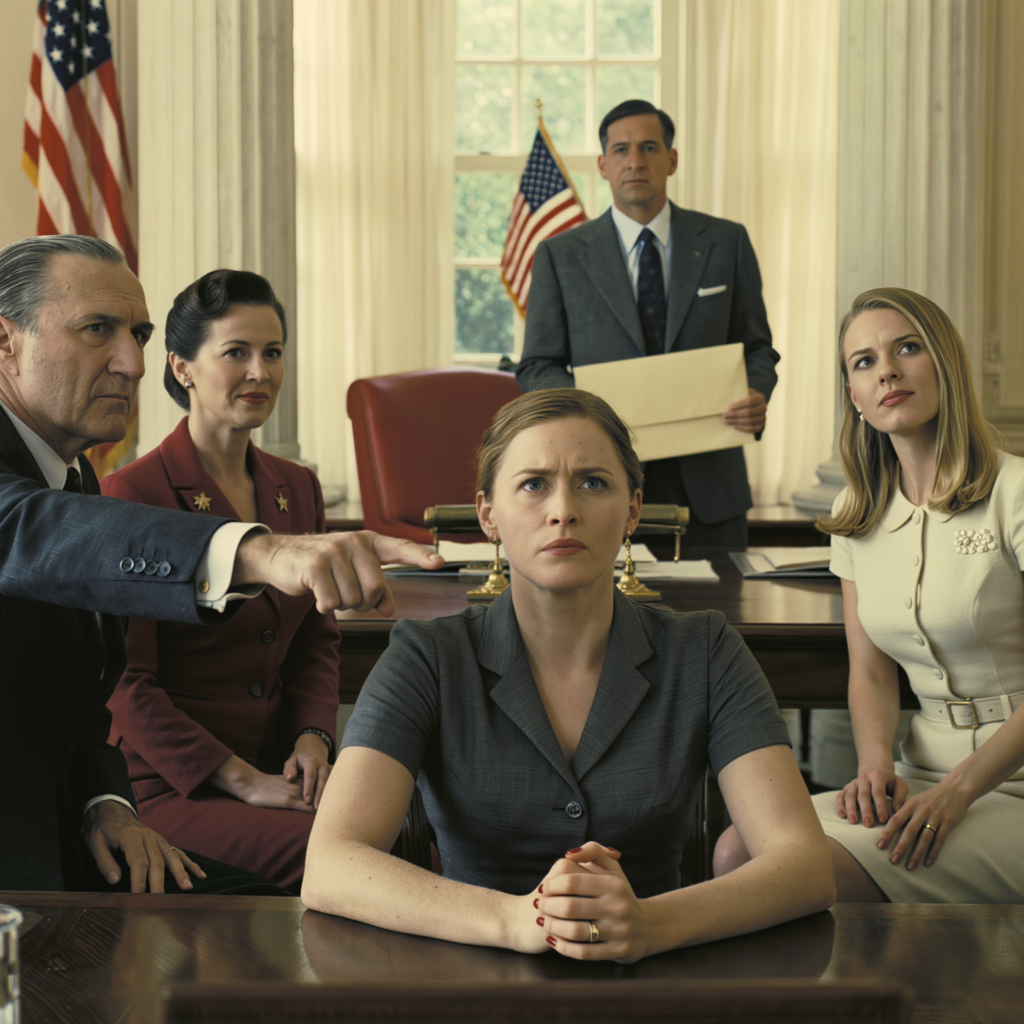
My name is Sophia Hayes. I am 29 years old, and the day my grandfather’s will was read, my parents looked me in the eye and tried to erase me.
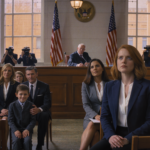
I sat at a long, polished table with my hands folded so tight my knuckles went white. Across from me, my sister, Chloe, smiled in a designer dress, already acting like she owned the room.
The lawyer cleared his throat and started with what my parents called the main part of the will.
My mom leaned forward, all sweetness, and announced that my sister would be receiving $15 million from my grandfather’s estate. My dad slid a stack of documents toward her, and everyone murmured, “Congratulations,” like it was some kind of fairy-tale ending.
Then he turned to me.
No folder. No check. Not even a token.
He just shrugged and said, almost bored, “Your sister gets fifteen million. As for you, Sophia, you can earn your own. Grandpa didn’t want you to have anything.”
My mom nodded and added, “He said he was done with you. You chose your career over family. This is what he wanted.”
I felt the room tilt, but I didn’t argue. I didn’t cry. I didn’t give them the satisfaction of seeing me break. I stared at the table and listened to them rewrite the story of a man who had once been my biggest supporter.
And that was exactly when my grandfather’s own lawyer pushed his chair back, stood up, and said there was a second document—sealed and hidden—that my parents had never been allowed to see. It was meant to be read only when everyone was in the same room, and especially when I was present.
Have you ever sat there while your own family decided you were worth nothing, and wondered if you should walk away or wait to hear the one secret that could blow everything apart?
Because what that lawyer read next is the reason my mother ended up screaming in front of everyone.
Daniel Park—my grandfather’s attorney—didn’t flinch when my mother snapped that there was no second document. He adjusted his glasses, slid a thick sealed envelope out of his briefcase, and set it on the table like a bomb.
“Mr. Arthur Hayes gave me explicit instructions,” he said calmly. “This codicil was to be kept confidential from everyone, including his son, until the day his will was read with all immediate family present—especially his granddaughter, Sophia.”
My mom’s face drained of color. My dad tried to laugh it off.
“Grandpa must have been confused near the end,” he said. “There’s no need to read anything else.”
Daniel ignored him, broke the seal, and unfolded several pages covered in my grandfather’s careful handwriting and legal print. My heart hammered so loud I could barely hear him at first, but then the words cut through as if the room had gone silent.
“To my granddaughter, Sophia Hayes,” Daniel read, “I leave full controlling interest in Harbormind Analytics, the company I have quietly built and invested in over the last several years, as well as my personal investment accounts associated with it, held separately from my joint accounts with my son.”
He went on to explain that Harbormind wasn’t some small side project. It was a growing tech company based out of Atlanta, built around an AI platform to help small businesses manage inventory, cash flow, and marketing decisions. It already had partnerships, contracts, revenue.
It was worth far more than the fifteen million my parents had just handed to Chloe.
My dad finally stopped smirking.
“That’s impossible,” he blurted out. “Dad barely knew how to use his phone. He didn’t build a tech company.”
Daniel looked straight at him.
“With respect, Mr. Hayes,” he said, “he learned. He sought outside expertise. He invested in the right people. And he insisted everything connected to Harbormind stay in his name only, so there would be no confusion about his intentions.”
My mother leaned forward, her voice sharp.
“He was not in his right mind when he did that. He was old. He was sick. He was forgetting things. He told us Sophia wanted nothing to do with him.”
Daniel’s expression tightened.
“That is addressed here as well,” he said.
He lowered his eyes to the page and continued.
“I am fully aware,” he read, “that Mark and Linda have kept Sophia away from me—changing plans, telling me she is too busy with her big city life, and telling her I am too tired or too confused to see her. They have told me she is ashamed of this family, that she does not call, that she does not care. I do not believe this. I have seen her messages disappear. I have had my calls redirected. I have watched them put Chloe in front of me with cameras and smiles while telling me Sophia wants nothing to do with an old man.”
My throat closed up. I remembered all the texts I sent that never got answered, the calls that went straight to voicemail, the times my mother said Grandpa was sleeping, or at a doctor’s appointment, or having a bad day—always when I tried to come home on short notice.
Daniel kept reading.
“I have also noticed large transfers from my joint accounts into personal cards and accounts controlled by Mark and Linda, used to fund travel, vehicles, and lifestyle expenses primarily for Chloe. These were never discussed with me. When I asked questions, I was told I had already approved them—even when I had not. I may be old, but I am not stupid.”
My mother shot to her feet so fast her chair screeched across the floor.
“That’s a lie!” she shouted. “He signed everything. We took care of him. We did everything for him.”
Then she jabbed a finger at me like I was the problem, like my existence was the insult.
“While she was off in Chicago chasing some computer dream…”
My dad tried a different angle, his voice cooler.
“Dad clearly wrote that under pressure,” he said. “He had moments of paranoia. You know how it is at the end. People get suspicious.”
Daniel didn’t move. His tone never rose, but every word sounded heavy.
“Mr. Hayes, this codicil was drafted and signed in my office,” he said, “with medical clearance from his physician stating he was fully competent. I am prepared to present those records if necessary.”
Across the table, Chloe’s mascara was starting to streak. She clutched the folder with her fifteen million like it might disappear if she loosened her grip.
“So what?” she snapped, voice shaking. “He just gives her some random company and leaves us looking like thieves. I took care of him. I was there. I posted about him. People loved our videos.”
Her choice of words hit me harder than I wanted to admit. I had been edited out of my own grandfather’s life while she turned him into content.
I stared at Daniel, hoping there was more, needing proof that I hadn’t just imagined every email, every call, every time I tried.
He sighed, glanced over the last page, and then looked up at my parents again.
“Arthur knew there would be pushback,” he said. “He anticipated that you would question his memory, his capacity, his decisions. He left further instructions and additional evidence, which I will present if this goes to court.”
My mom’s hands were visibly shaking now. She grabbed my dad’s arm.
“Mark, do something,” she hissed. “We can’t let this stand. He can’t just rewrite everything we agreed on.”
For the first time, my dad didn’t have a quick answer. He stared at the papers in front of Daniel like he was doing the math and realizing too late that the numbers didn’t favor him anymore.
Sitting there listening to all of it, pieces in my head started snapping into place—the missed holidays, the last-minute canceled visits, the way my parents always insisted on handling any banking “to make things easier,” the way Chloe flaunted trips and designer bags with no real job to back it up.
Maybe you think you would have screamed or flipped the table or stormed out right then. But all I did was sit a little straighter and wait, because one question burned in the back of my mind.
If this was only the beginning of what Grandpa had hidden from them, what else was about to surface that they couldn’t talk their way out of?
When Daniel said my grandfather had seen his messages disappear, it snapped something loose in my memory. Suddenly I wasn’t in that conference room anymore.
I was back in Savannah, sweating through my T-shirt on the front porch while my sister twirled in a brand-new dance costume in the driveway. My mom was filming her with her phone, yelling, “Give me a spin, baby. Followers love this.”
While my dad loaded suitcases into the trunk for their weekend trip to Orlando, I stood there at fourteen holding a flyer for a summer coding camp at the community college.
When I tried to hand it to my mom, she barely glanced at it.
“We already told you that thing is too expensive,” she said, eyes still on Chloe. “Maybe next year. Besides, you spend enough time on that computer of yours. Go outside or something.”
She shoved the flyer back into my hands like it was junk mail.
That was the pattern. Money for Chloe’s dance competitions, for her ring light, for her brand, for another pair of limited-edition sneakers because it would look good on camera.
For me, it was always maybe later, maybe next year, maybe when things were less tight.
Except things never seemed tight when it came to my sister.
At school it was the same script in a different room. Teachers would stop my parents at conferences to gush about Chloe’s stage presence in the talent show, about how confident she was. When they got to my name, the comments shifted.
“Sophia is very bright,” they would say, “but she needs to participate more. She hides behind her projects.”
My mom would sigh and joke, “She’d marry that laptop if she could.”
And my dad would add, “We’re working on getting her out of her shell,” like who I was needed correcting.
The first person who handed me anything that looked like a real investment was my grandfather, Arthur.
One afternoon he showed up in his old pickup truck with a beat-up laptop he’d bought from a closing office-supply store. It was slow and ugly and perfect.
“They say the case is scratched,” he told me with a wink. “The processor is old. But I say it just means it already has stories. Now it can help you write yours.”
He set it on the kitchen table like it was made of glass.
My mom frowned and muttered something about more screen time, but Grandpa ignored her.
He started bringing me books the way other grandparents bring candy—Intro to Python, Data Analysis for Small Business Owners, Excel for Dummies, which he thought was hilarious. He hardly knew any of it at first, but he would sit with me at that same kitchen table and read the chapters out loud anyway, asking questions, making me explain what a loop was, what a data set was, what it meant to clean data.
He would nod seriously, then look over his glasses and say, “So in English, kiddo, how does that help somebody running a store like mine?”
My parents rolled their eyes whenever they walked past.
“She is never going to use that in real life,” my mom would say. “At least Chloe’s dance gives her some presence. That matters.”
One night I remember clearly: Chloe was trying on outfits for a video, sequins scattering across the bedroom floor, and my mom was zipping her up, telling her how gorgeous she looked.
I came in excited, holding a printout of a little chart I had made, showing how Grandpa’s store could save money by reordering certain items only once a month instead of every week.
“Look,” I said. “If he does this, he could save like eight hundred dollars a year just on nails and screws.”
My dad glanced at it for half a second and said, “That’s nice, honey, but you can’t run a business on pretend math from a teenager.”
Chloe laughed.
“Wow,” she said. “Nerd attack.”
And she went back to practicing her poses.
The thing is, Grandpa did look at it.
The next day he took me to his store, walked me down the aisles, and pointed at the shelves.
“Show me again,” he said. “Where would we change the order?”
We stood there between paint cans and power tools with my wrinkled piece of paper, and he listened like I was some consultant he’d hired. Later he patted the top of my head and said, “You see patterns the rest of us miss, Sophie. Don’t forget that.”
When I was seventeen, I entered a local hackathon on a whim. The prize was a small scholarship and a little recognition—nothing life-changing. I built a crude dashboard that helped a hardware store track which items sold best in different seasons and which ones just sat there.
It was basic, ugly, and half-held together by duct-tape code, but it worked.
I remember standing on that stage in an ill-fitting blazer I bought from a thrift store, scanning the crowd for my parents. They had promised to come. They said they were so proud. When the organizers announced my name and I stepped forward to accept the certificate, the only person cheering loud enough to cut through the polite applause was my grandfather.
He was in his old plaid shirt, clapping like he was at the Super Bowl.
Afterward he hugged me so hard I could barely breathe and said, “You just built something useful, Sophie. Do you understand that? If you can help one store, you can help ten. If you can help ten, you can help a hundred.”
He dragged me over to the judges to make me explain my project again, peppering me with questions.
“Could this tell a guy when he’s about to run out of concrete mix?”
“What about when paint goes on sale? Can it warn him ahead of time?”
My parents texted me a picture of Chloe at the mall that same night, showing off a new pair of shoes.
“Sorry, honey,” they wrote. “Traffic was crazy. We will celebrate later.”
We never did.
What we did do was repeat the same dynamic over and over. Chloe’s milestones came with balloons and dinners out. My milestones came with a quick good job thrown over a shoulder.
Meanwhile, Grandpa kept talking about ideas.
“What if there was a tool that told small shops when to reorder paint before they ran out?” he asked.
“What if you could tell a bakery which cupcakes actually made them money, not just looked pretty?”
He would sit at the counter of his store after closing, ledger open, and ask me what I thought about different numbers. At the time I thought he was just humoring me, making my little experiments sound bigger than they were.
Now I knew better.
He was thinking like an owner, like someone who had spent his life trying to keep shelves stocked and bills paid.
My parents said I was weird—too intense, too focused on things no one cared about. Chloe laughed and told me I would end up alone in a dark room with a bunch of screens that no one liked.
“Data people,” she would say, like it was an insult.
Grandpa told me I was going to change the way people ran their shops. He started mentioning things like partners and investors and platforms—words that sounded too big for our small-town kitchen.
Once when I joked that no one would ever trust a twenty-year-old girl with their business data, he shook his head.
“They don’t have to trust you at first,” he said. “They just have to see it works.”
Sitting in that conference room years later, listening to Daniel read words my grandfather wrote about messages disappearing and money moving without his consent, it hit me that the only person who had ever truly seen value in what I was building had realized long before I did that the rest of my family never would.
Maybe that was why he built Harbormind in secret. Maybe he knew that if he gave them access, they would strip it for parts, slap Chloe’s face on it, and leave me with nothing but an empty congratulations post and a smile for the camera.
Instead, he tucked it away, tied it to my name, and waited for a day just like this—when their version of the story would finally collide with his.
When the memories finally loosened their grip, I was back at that table with everyone staring at me like I had just been dragged in as evidence instead of family.
Daniel was still holding the papers, but now he was watching my parents instead of reading.
“You said I wanted nothing to do with him,” I heard myself say, my own voice sounding strange in my ears. “You told me he was too tired to see me, that he was confused, that visits would upset him.”
My mom crossed her arms, defensive.
“Because he was,” she shot back. “You live in Chicago, Sophia. You don’t know what it was like day to day.”
I leaned forward.
“I bought a last-minute ticket home two Christmases ago. Remember that? I showed up at the house and you stopped me on the driveway and told me he was at some facility. No visitors allowed. Then I found out later he’d been at home the whole week.”
My dad’s jaw tightened.
“We were following doctor’s advice,” he said. “Stress wasn’t good for him.”
“Funny,” I said quietly. “He somehow had the energy to appear in all those videos Chloe posted.”
Chloe bristled.
“Those videos made him happy,” she snapped. “People in my comments loved him. He smiled. He laughed. He got to feel special, not like some old man rotting in a recliner.”
Daniel shifted his attention to her.
“Chloe,” he said evenly, “did your grandparents ever know you were being compensated for some of those posts?”
Her head jerked back.
“What brand deals?”
“Affiliate links,” he clarified. “Sponsored trips tied to the content you filmed with Arthur. Did you ever disclose the amounts to him, or to Sophia?”
Her cheeks went red.
“That has nothing to do with this,” she said. “I was building my career. Mom and Dad said Grandpa wanted to help. They told me it was all part of the plan.”
She threw a desperate look at my parents, and in that instant something in her eyes flickered—like she suddenly realized she might be out on a ledge all by herself.
I swallowed and kept going.
“What about the emails?” I asked. “The ones I sent asking to visit. The times I offered to bring my laptop and show him what I was working on. You answered from his account. Mom, you wrote, ‘Grandpa is proud of you, but he doesn’t understand that stuff, sweetheart. Just focus on your life.’”
My mom slammed her palm on the table.
“So now it’s a crime to protect an old man’s peace?” she shouted. “You didn’t see him crying when you chose Chicago over law school here. You didn’t hear him say he didn’t recognize you anymore.”
Daniel cleared his throat.
“For what it is worth,” he said, “Arthur never told me he did not recognize you, Sophia. He did tell me very clearly that he felt like his relationship with you was being managed for him.”
My dad scoffed.
“Managed is what you do for an elderly parent,” he said. “You should know that. You draft enough wills, they get paranoid. They imagine conspiracies. They think everyone is stealing from them.”
Daniel set the papers down and reached into his briefcase again. This time he pulled out a small black flash drive and laid it on the table between us.
“Arthur thought you might say that,” he replied, “which is why he asked me to record a video when we prepared this codicil. It’s dated, timestamped, and accompanied by a statement from his physician. If you intend to suggest he was incompetent, you should see what that looks like.”
My mother’s hand shot out.
“You are not playing some edited clip to smear us,” she hissed. “Turn that thing off.”
Daniel didn’t even glance at her.
He plugged the drive into a slim laptop the paralegal had brought in, turned the screen so everyone could see, and clicked play.
My grandfather’s face filled the screen—older and thinner than I remembered, but his eyes were clear. He sat in the same conference room we were in now, wearing a pressed button-down shirt, hands folded loosely in his lap.
“All right, Arthur,” a younger version of Daniel’s voice said off camera. “Just say in your own words why you’re here.”
Grandpa took a breath.
“My name is Arthur Hayes,” he said. “I am choosing to change my will because I have become aware that my son and his wife have been using my trust in ways I did not approve. I have seen money leave my accounts that I never agreed to. When I ask questions, I am told I am confused.”
He looked straight into the camera.
“I am not confused. I am old, but I know what I’ve earned, and I know who I want it to go to.”
My dad muttered something under his breath, but no one stopped the video.
Grandpa continued.
“I love all my grandchildren,” he said. “But only one of them shares the way my mind works. Sophia understands numbers. She understands systems. She built a little thing on her computer that helped a store like mine and never even bragged about it.”
He chuckled softly.
“Mark never listened when I talked business, and Linda loves appearances, but Sophie—Sophie listens.”
My chest hurt. I didn’t realize I was holding my breath until the room started to spin again.
On the screen, Grandpa’s expression darkened.
“I have also seen how they keep her away from me,” he said. “Visits canceled. Calls dropped. I get told she is too busy with her big city job. Then I hear from Ruth that Sophia drives all the way down and my son sends her home from the driveway. I know what that is. That is control. That is fear that the two of us will talk and compare stories.”
He shifted in his seat, anger flashing across his features in a way I had rarely seen.
“If they are watching this, it means they are contesting my decision,” he said. “It means they are once again trying to take what does not belong to them. So let me make it plain. Harbormind Analytics—every share, every related account—is for Sophia. Not because she is my favorite, but because she is the only one who can use it for what it is meant to do.”
He paused, eyes glistening.
“Help the little guys. Help the people running shops like I did, who never had these tools.”
Daniel’s voice came back in the recording.
“Arthur, are you making this decision under pressure from anyone?”
Grandpa gave him a look like the question insulted him.
“The only pressure I feel is time,” he snapped. “I am making this choice now while I can, because I know if I wait, they will convince some doctor to write me off as senile and sign whatever they put in front of me. I want this on record before that happens.”
The screen froze on his face, then went black.
No one spoke.
The only sound was the low hum of the air conditioner and Chloe’s uneven breathing. My mother’s mascara had fully surrendered, black streaks cutting down her cheeks. She looked at my dad like he was supposed to have some way out of this—some legal loophole or clever line that would undo what we had all just seen.
Instead, he stared at the blank screen, fingers drumming a frantic rhythm on the table.
“You can take that to court,” he said finally, voice tight, “but it doesn’t change the years we spent taking care of him. A jury will see that. They will see what we sacrificed.”
Daniel closed the laptop with a quiet click.
“You are free to challenge the will,” he said. “If you do, the video, the financial records, and the physician’s statement regarding Arthur’s capacity will become part of the public record.”
He glanced briefly at Chloe, whose influencer life depended on public perception.
“And given the nature of the transfers we have documented,” he added, “there may also be questions raised that go beyond probate court.”
That was the moment my dad’s fingers stopped tapping, the moment my mother stopped shouting, and the moment I realized this was not just about who got what.
This was the beginning of something much bigger.
And for once, they were the ones who should be afraid of what came next.
The fight my parents promised never made it to some dramatic jury trial with witnesses crying on the stand. Once Daniel filed the codicil, the video, and the bank records, their bluff collapsed under the weight of numbers.
They couldn’t charm or cry their way around it.
There were meetings, of course. They hired a lawyer who walked into the first conference room loud and confident, shaking hands too hard, telling my parents not to worry, that these things were always negotiable. He walked out after the first disclosure hearing looking like he needed a strong drink and a different client.
The court appointed a forensic accountant to go through years of transactions on my grandfather’s joint accounts. Every family expense that had quietly padded Chloe’s brand and my parents’ lifestyle started showing up in spreadsheets and exhibits instead of Instagram stories.
The judge didn’t care how many videos Chloe had posted holding Grandpa’s hand or how many heartfelt captions she’d written about cherishing moments. He cared about the power of attorney my dad had used to move money out of those accounts for unspecified personal expenditures.
He cared about timing—transfers right before luxury vacations, right before a new SUV, right before Chloe’s sponsored trips that somehow got paid partly out of Grandpa’s funds.
He cared about the fact that when Arthur questioned those withdrawals, emails mysteriously vanished.
When their attorney tried to argue that Arthur had verbally approved everything, Daniel slid the video across the table and the judge watched the part where my grandfather looked straight into the camera and said, “I have seen money leave my accounts that I never agreed to. When I ask questions, I am told I am confused. I am not confused.”
After that, there wasn’t much room left to spin.
The medical report attached to the file confirmed he’d been evaluated as competent when he changed his will. The accountant’s report laid out the misuse of funds in columns that didn’t care about anyone’s feelings.
The court validated the codicil and confirmed Harbormind Analytics and the associated accounts were mine exactly as Arthur intended.
On top of that, the judge ordered my parents to repay what they had taken from the joint accounts—plus interest and penalties.
They didn’t have it.
They had been living like the money would never run out.
To even begin making a dent, they had to sell the big house in Savannah with the white columns and perfect lawn my mom used to pose on for holiday photos—the house she once called our legacy.
They sold the two high-end cars they loved to park in the driveway just to be seen, the ones Chloe used as props in her “day in my life” vlogs.
Word got out because of course it did. Small towns are cruel and efficient that way. The same neighbors who used to rave about Linda’s taste in decor started whispering at the grocery store about mismanaged funds and financial abuse of an elder.
People who once envied them now crossed the street to avoid awkward conversations.
Mark was put on leave from his job at the logistics company pending review, and it didn’t take long before that became terminated for cause. No company in town wanted the CFO whose father’s estate was now tied up in a public record of financial misconduct.
Chloe’s fall was quieter and louder at the same time—quiet in the way doors closed to her behind the scenes, loud in the way screenshots and clips began circulating online. People dug up old videos of Grandpa in her feed and suddenly noticed the way he sometimes looked off-camera—distracted, uncomfortable.
A former friend leaked messages where Chloe bragged that she was set for life because her parents were making sure the will was in her favor.
Brands that had been sending her free clothes and checks sent her emails instead with phrases like reputational risk and we’re going in a different direction.
Her follower count started sliding, then plummeting.
The comments under her old posts turned from heart emojis to questions she couldn’t delete fast enough.
She posted a teary video about misunderstandings and online hate, but without the glossy trips and endless hauls, the algorithm moved on.
And so did her audience.
While all of this unfolded, I signed papers in a different courthouse room—ones that formally separated my financial life from theirs. No more shared anything. No more emergency contacts with their phone number “just in case.” No more backdoor access to accounts “for safekeeping.”
Daniel slid the last form across to me.
“Once you sign this,” he said, “they have no legal claim to Harbormind or to any assets that come from it. Not now, not later.”
My hand shook for a second, not from doubt, but from the weight of cutting the last invisible cord.
Then I signed.
And for the first time, their disappointment was no longer something that could cost me money or freedom.
I moved into a modest apartment in Atlanta at first, close to where Harbormind’s tiny team was already working out of a rented office that still smelled like paint and new carpet.
Grandma Ruth refused to stay in the Savannah house while it was being gutted for sale. So she packed her life into a couple of suitcases and came with me—her photo album stacked on top of my boxes of cables and old notebooks.
She left behind the fancy furniture and took the framed picture of her and Arthur at the store on opening day instead.
My parents, stripped of the image they had worked so hard to project, slipped out of town not long after the sale closed. Through distant relatives and the occasional slip on social media, I heard they ended up in a small rental in Nevada, chasing cheaper rent and anonymity.
No more charity galas. No more club memberships. No more curated Christmas cards on thick glossy paper.
They didn’t call. They didn’t text.
If they talked about me at all, it wasn’t to my face.
And for the first time, the silence between us was something I chose rather than something they controlled.
On one of the last days before Ruth and I left Savannah, I walked through the empty house alone. The echo of my footsteps sounded wrong in rooms that used to be packed with decorations and noise.
I stood in the doorway of the den where I had once sat on the floor with that beat-up laptop, where Grandpa had leaned over my shoulder to ask what all those numbers on the screen meant. I could almost hear his voice, low and amused.
“Show me how this helps a guy like me, Sophie.”
The walls no longer felt like they belonged to my parents’ version of our family. Without the furniture and framed illusions, the place felt hollow—like a stage after the show is over. Props carried off. Audience gone home.
Whatever performance they had been putting on here was finished.
The real legacy Arthur left wasn’t the wood and plaster they were losing.
It was the code, the company, and the conviction that I never had to beg to be valued again.
They had spent years using his money to build an image. He had spent those same years using his mind to build a future for me.
In the end, their image crumbled.
His future stood.
Four years later, if you had walked into Harbormind’s office in downtown Atlanta, you would never have guessed it started as a side project on a beat-up laptop and a promise made in a will that almost got buried.
We had real glass doors now, a logo on the wall, a team of fifty engineers, analysts, and support staff who spent their days building tools for people who looked a lot more like my grandfather than like my parents’ country club friends.
Our platform helped small hardware stores, bakeries, barbershops, corner bodegas—you name it—track their inventory, forecast demand, and understand which products actually made them money.
When a storm was coming, Harbormind could tell a tiny coastal shop exactly how many generators to order. When a bakery wanted to know which cupcakes to stop making, our dashboards answered in plain language.
Every time a client called to say, “We didn’t go under this quarter because of your software,” I heard my grandfather’s voice the way he had said, “Help the little guys.”
We hosted free workshops twice a month, inviting local business owners into our space, feeding them pizza, walking them through their numbers in a way no bank ever had.
I set up a scholarship fund in Arthur’s name for students from working-class families who wanted to study data or computer science. Every year we handed out a stack of refurbished laptops like the one he had bought me—except these actually booted up in under ten minutes.
Chloe reached out the second year after the will reading.
It started with a long email that sat in my inbox for weeks before I opened it.
She didn’t ask for money. She didn’t ask for a shout-out. She just wrote about how her follower count had tanked, how sponsorships dried up, how she had gone from flying out for brand trips to clocking in at a small marketing agency where no one cared how many likes she used to get—only whether she could meet deadlines.
She said she had started volunteering at a community center, teaching teenage girls basic content creation skills, but also talking to them about reading contracts and not treating their lives like something to be packaged and sold.
She admitted she had been jealous of me for years—that watching Grandpa look at me the way he never looked at her had felt like an open wound.
She didn’t excuse what she did.
She just said she was sorry.
I called her.
The conversation was awkward, full of long pauses and nervous laughter, but we talked—not as influencer and invisible sister, but as two women who had finally run out of people telling them who to be.
We were not close. Not yet.
But the door was cracked open instead of bolted shut.
My parents never called.
Through Grandma Ruth and an occasional relative, I heard scraps of updates. Mark picked up a job doing basic bookkeeping for a small firm out west, nowhere near the executive level he used to brag about. Linda stayed at home mostly, rarely posting online anymore.
The glamorous life replaced by discount furniture and generic coffee.
They went from being the couple everyone envied to the couple people lowered their voices to talk about.
Ruth and I built our own quiet rhythm in Atlanta. She claimed the sunny corner of my living room for her rocking chair and her knitting.
Every evening we would sit on the balcony with takeout and watch the city lights blink on. Sometimes she would tell me stories about Arthur in the early days when he was just a kid stocking shelves long before he owned anything.
Other times we sat in comfortable silence—the kind you only get with someone who has seen you at your lowest and never once tried to edit you.
People like to say success is the best revenge. Maybe they are right.
But sitting there with my grandmother, knowing Harbormind was giving families like ours a fighting chance without anyone needing to steal or lie to make it happen, I realized something else.
The real revenge wasn’t the money or the growth charts or the press articles.
It was knowing that the part of me my parents dismissed as useless—the girl with the pointless computer obsession—was the part that built a life they could no longer touch.
The first time I told the whole story out loud to strangers was on a stage in New York, under a red circle of light, with cameras pointed at my face and TED glowing behind me. My palms were sweating around the clicker, but my voice was steady when I started the way it had all started for me.
“At my grandfather’s will reading, my parents gave my sister fifteen million and told me to earn my own. They said Grandpa didn’t want me. They were wrong.”
The audience laughed in the right places and went dead quiet in the heavy ones as I walked them through it. Not every messy detail, but enough—how my family decided I was the weird one, the difficult one, the one who didn’t fit the picture they wanted to post, how my grandfather quietly bet everything on the part of me they tried to erase, how greed and manipulation almost buried that bet for good.
I told them about Harbormind. About the small-town shops now using our tools. About the bakery owner who cried on a Zoom call because she thought she would lose the business her mother started, and then didn’t.
I put up a slide with my grandfather’s handwriting—his notes about helping the little guys—and felt something in my chest loosen that had been tight for years.
When I finished and the applause washed over me, it didn’t feel like vindication so much as confirmation that his belief in me had landed somewhere real.
Later that night, back in my apartment, I took off the blazer and heels and sat on the edge of my bed with the one object from Grandpa I carry everywhere now—his old wristwatch.
The leather band is cracked, the face a little scratched. But when you pop the back open, there’s a tiny photo of me at seventeen standing next to my hackathon project with my hair frizzing out, grinning like an idiot.
On the metal around it, he had paid someone to engrave one sentence for his granddaughter.
“They never understood, but I always believed in you.”
I ran my thumb over the words until they blurred.
For a long time, I thought the only way to win was to make my parents eat their doubts, to force them to admit they were wrong about me. But somewhere between the courtroom and that stage, I realized that wasn’t the point.
The point was that I stopped auditioning for people who had already decided not to see me.
The point was that I took the love and belief I got from one old man and multiplied it—turning it into jobs and scholarships and second chances for people who came from families a lot like mine.
If there is any lesson in what happened, it is this: being the unwanted child does not mean you are unworthy. It usually just means the people around you are too afraid or too small to handle who you really are.
You do not have to stay in rooms where your value is up for debate.
You are allowed to build new rooms with new people who don’t need to be convinced you matter.
And if you have ever been the Sophia in your family—the one who got overlooked, blamed, or cut out—I hope you remember this part more than the money or the scandal.
One person believing in you at the right time can change everything.
Be open to finding that person.
And when you can, be that person for someone.
News
My son looked me dead in the eye and said he’d sell the Connecticut house my late husband and I built, just to buy his wife a shiny new Mercedes—then gave me 24 hours to pack—because “she matters more.” I smiled, nodded, and started folding sweaters, while the truth sat in a folder he’d never thought to ask about.
My son said, “I decided to sell your house to buy a new car for my wife. She’s more important…
In a Chicago courtroom filled with reporters and family friends, my parents tried to bankrupt me in public—just to make sure the whole city believed I was broke. They wanted humiliation, headlines, and the end of my name. But when the judge asked one single question, their lawyer went pale—and my father’s empire began to crumble before everyone’s eyes…
I sat in a bankruptcy courtroom packed with strangers—not because I was out of money, but because my parents…
After my husband’s death, I decided to open his old safe. Inside was $500,000 in cash and some documents. But when I saw the third item, a cold wave of terror swept over me… and for the first time in fifty years of marriage, I realized how little I’d truly known the man I’d shared my life with.
After my husband’s death, I decided to open his old safe. Inside was $500,000 in cash and a stack…
On the morning I boarded a packed CTA bus for my divorce hearing at the Cook County courthouse, I thought I was just a discarded wife trying to arrive with my head high—until a frail old man stumbled at the door, I caught him, and the quiet “thank you” he gave me became the first domino in a chain that would make my powerful attorney-husband lose his breath.
What if the path to a divorce hearing turned into the moment that would change your destiny forever? Today, I…
For seven months, every single night at exactly 2:47 a.m., my husband would rise from our creaking bed, cross the dark room, and stand on my side just watching me breathe—until the night I pretended to sleep and finally heard what he was whispering, and the truth behind that 2:47 ritual shattered everything I thought I knew about my life.
For seven months, every single night at 2:47 in the morning, my husband would stand right next to my…
My son and his wife left me for a seven-day cruise with my “mute” 8-year-old grandson, but the second the lock clicked, he looked up and whispered, “Grandma, don’t drink the tea Mama made for you”—and that was the moment I realized this week wasn’t babysitting… it was a test I might not survive.
My son and his wife flew off on a cruise, leaving me alone for a week with my 8-year-old grandson,…
End of content
No more pages to load